Red light therapy encyclopedia
Best Red Light Therapy Beds: Evidence-First Buying Guide
The best red light therapy beds cannot be identified from LED count, peak irradiance, or affiliate rankings alone. Use this evidence-first framework to compare exact models by coverage, access, installation, serviceability, and total cost.
There is no single best red light therapy bed for every buyer. A commercial studio, a home wellness room, and an accessible-care setting have different needs. The best-documented option is the one whose coverage, optical output, installation, service plan, intended use, and total cost match the actual setting.
Commercial disclosure: Yamuri sells red and near-infrared light devices. This guide uses model-neutral comparison criteria and does not assume a Yamuri product is suitable for every use discussed.
Quick Q&A: What Most People Want to Know First
| Option or question | Practical answer |
|---|---|
| Best for repeatable geometry | A measured lie-down bed, if space, access, and service are acceptable. |
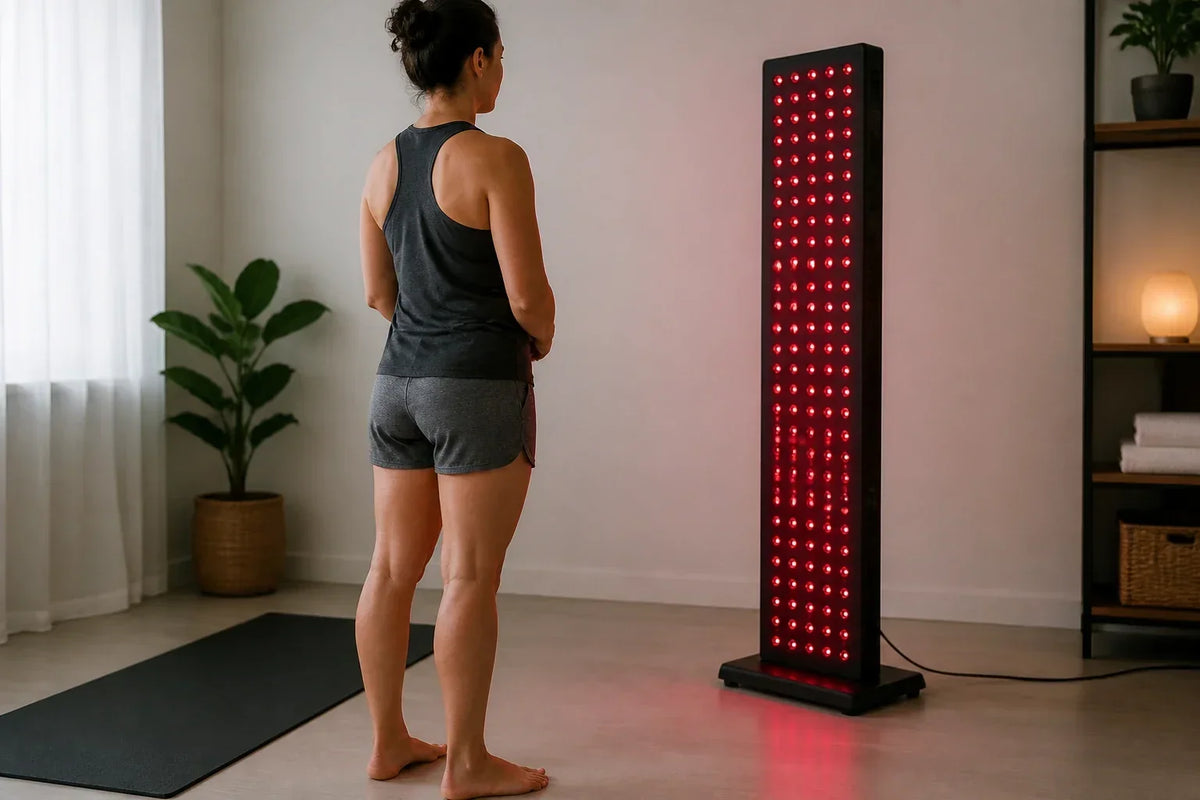
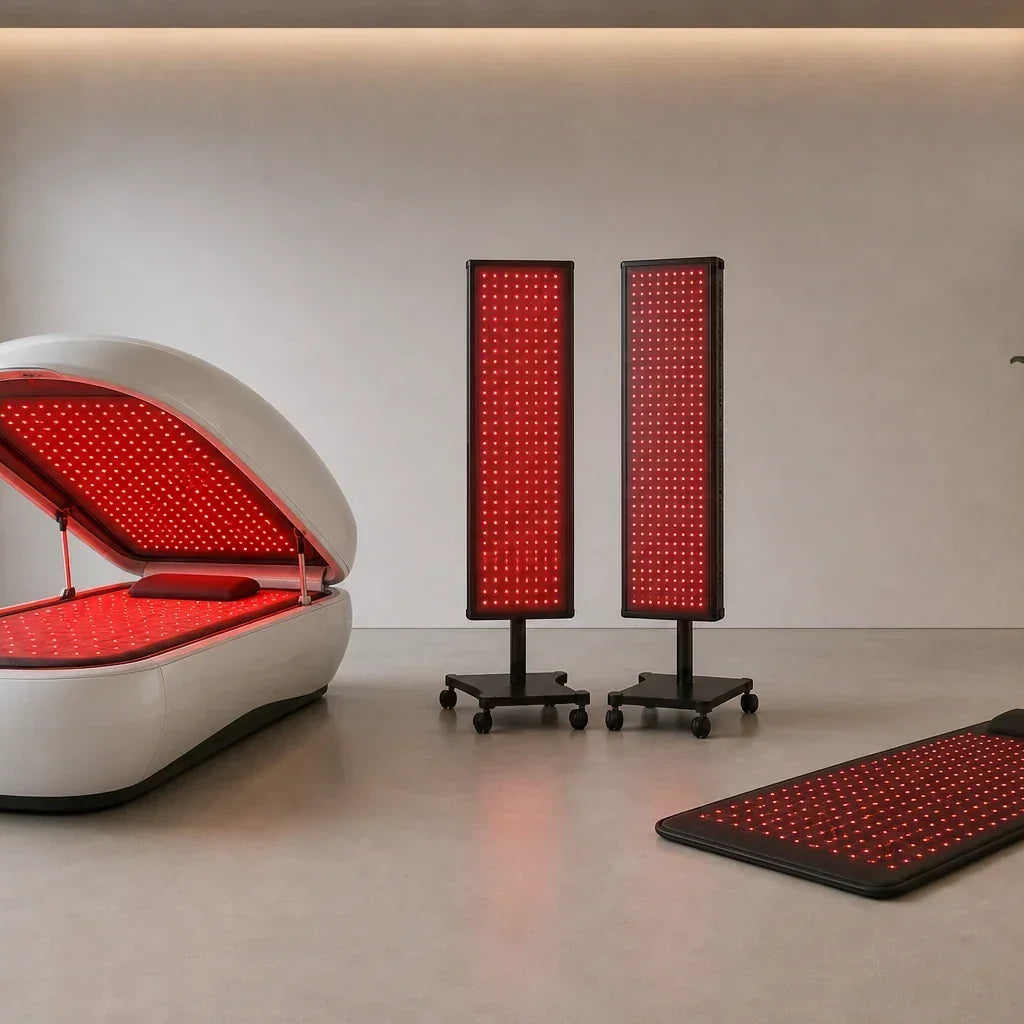
| Best for home flexibility | A modular full-body panel system with a stable stand. |
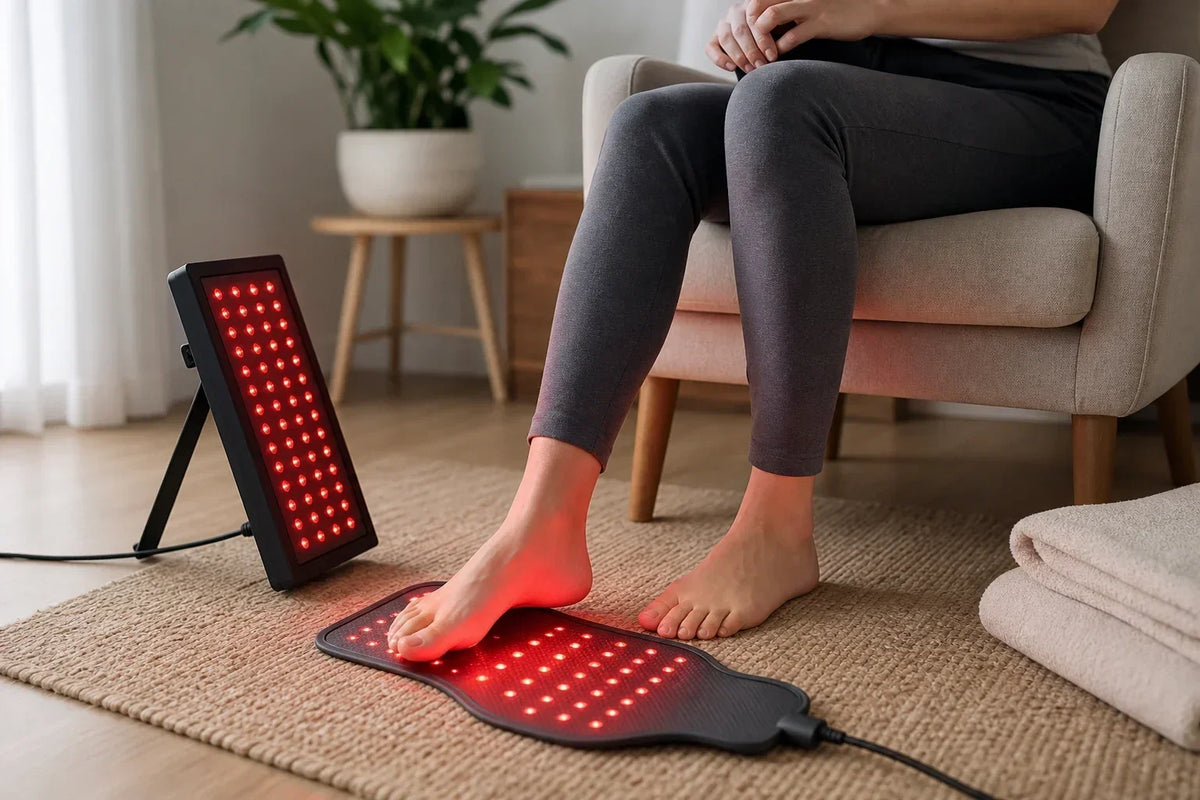
| Best for limited storage | A flexible mat or blanket, with clear output and heat documentation. |
| Best for mobility limitations | The format with safest entry, positioning, and reachable controls—not a universal shape. |

Why ranked lists often mislead
Many “best” pages compare products with manufacturer numbers measured under different conditions. Maximum irradiance, electrical watts, LED count, or number of wavelengths cannot independently establish uniform coverage or suitability.
Our comparison framework
We prioritize intended use, exact wavelength, irradiance at a stated user distance, coverage and uniformity, session control, eye guidance, physical access, electrical and ventilation needs, cleaning, warranty, repair network, return terms, and total installed cost.
Beds, panels, and flexible systems
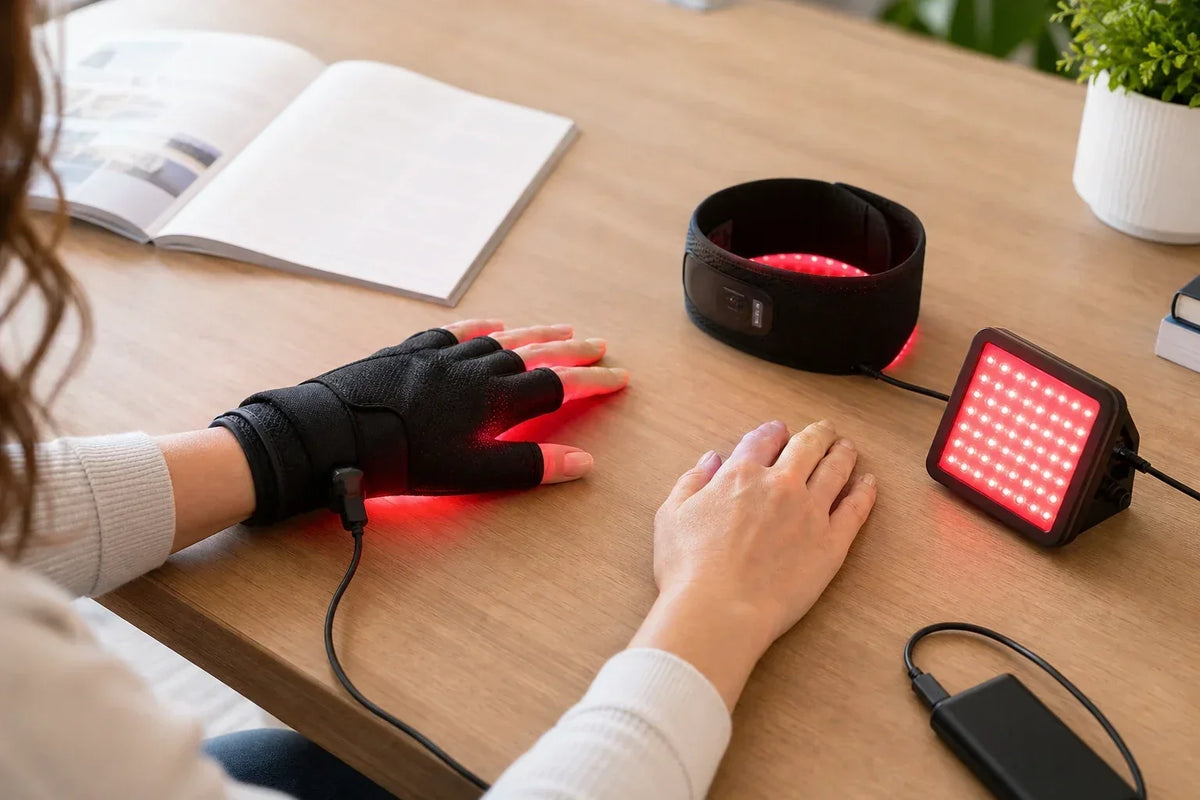
Beds deliver fixed geometry but are expensive and difficult to move. Modular panels are easier to replace and reconfigure but may require turning. Flexible systems store easily and sit close to the body, yet their heat, cleaning, and output measurement need separate scrutiny.
How to verify a regulatory claim
Ask for the exact model number and regulatory reference. Read the FDA summary rather than relying on a badge. The record tells you the device and intended use reviewed; it does not turn all similarly shaped products into equivalent devices.
Questions for a sales call
Request a user-position coverage map, output measurement method, electrical drawing, installation requirements, maintenance schedule, replacement-part lead times, warranty exclusions, return shipping terms, and a copy of the manual before paying a deposit.
My practical take
I would rather buy the second-most glamorous system with clear measurement conditions and replaceable parts than a sealed luxury bed whose strongest evidence is a long feature list. Documentation remains useful after the showroom glow wears off.
A Deeper Decision Framework
There is no universal best red light therapy bed. A defensible shortlist depends on intended use, measured coverage, room and access constraints, model-specific documentation, serviceability, and total installed cost. Rankings that ignore those variables mostly reward the strongest marketing page.
A reliable comparison separates four layers: what the device is, what it measurably delivers, what evidence supports the intended use, and what ownership requires. Mixing those layers lets a true specification imply an unproven outcome. For example, a wavelength can be measured accurately while the promised benefit remains unsupported for that model, dose, or population.
Translate the sales page into verifiable questions
| Decision area | Evidence worth requesting | Weak substitute |
|---|---|---|
| Eligibility | Exact intended use and model documentation | Brand reputation alone |
| Performance | User-position irradiance and uniformity | Highest advertised number |
| Usability | Entry, controls, session repeatability, cleaning | Feature count |
| Ownership | Installation, warranty labor, parts and returns | Purchase price only |
Ask for dated documents tied to the exact model: the user manual, electrical label, test conditions, warranty, and—when a medical claim is made—the named regulatory record. A distributor's badge or a statement that a facility is registered does not establish that every product it sells was cleared for every claim. FDA's PBM guidance and device database both reinforce the importance of device-specific intended use and testing.
Evidence Versus Marketing
| Statement type | What it can establish | What it cannot establish |
|---|---|---|
| Measured specification | Output under the disclosed setup | Clinical effectiveness by itself |
| Regulatory record | Status and intended use for the named device | Approval of a whole product category |
| Published study | Results for its participants, device and protocol | Equivalent results from another consumer product |
| Testimonial | A person's reported experience | Causation, typical results, or safety for others |
Evidence quality is not a yes-or-no badge. Laboratory measurements answer whether output is present; usability testing answers whether people can operate the system; controlled clinical research addresses a specified outcome; post-market records can reveal operational problems. Marketing often collapses all four into “clinically proven.” We recommend tracing every important claim back to the kind of evidence capable of supporting it.
Match the Format to the Real Scenario
| Scenario | More defensible starting point | Reason |
|---|---|---|
| Premium fixed bed | Only with strong coverage and service records | Luxury finish is not performance data |
| Modular panel array | Good when flexibility and repairability matter | May require repositioning |
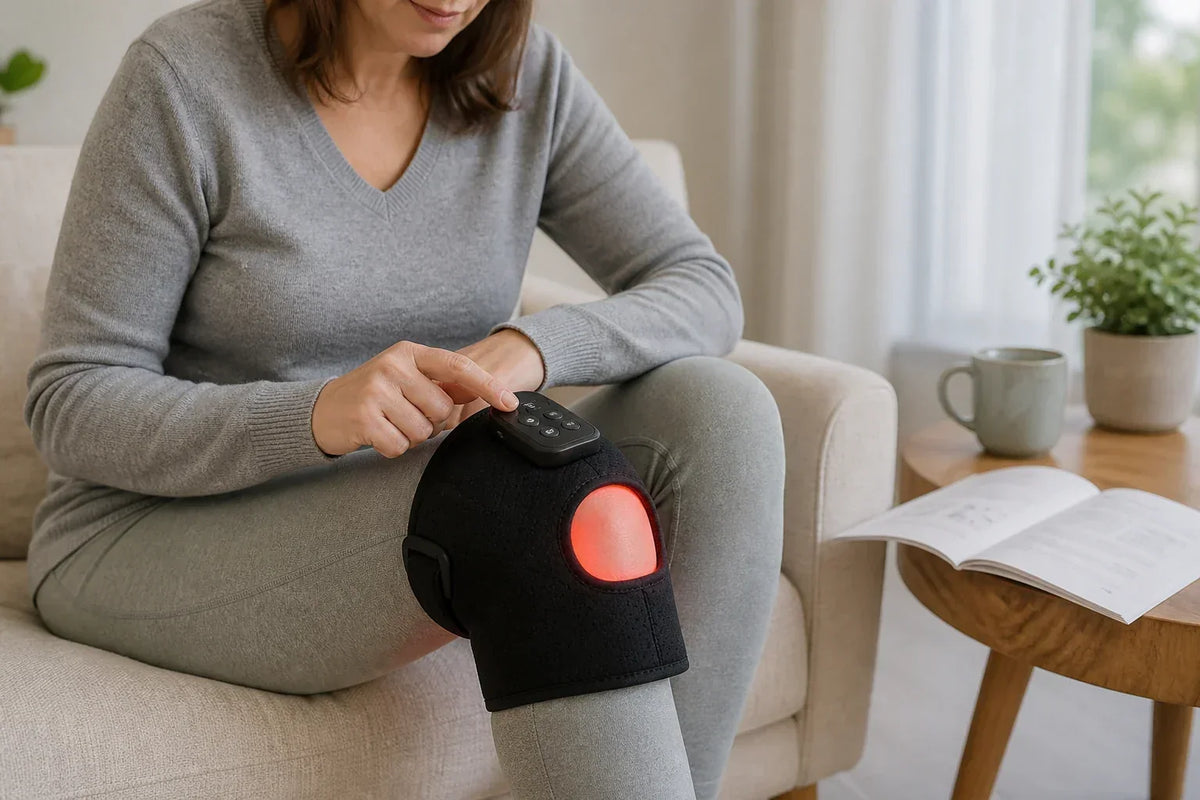
| Flexible mat or wrap | Useful for storage and close contact | Check heat, hygiene, and measurement method |
| Clinic session instead of purchase | Useful before a large commitment | Lets the buyer test workflow, not efficacy guarantees |
These are starting points, not prescriptions. Room dimensions, mobility, electrical service, medications, eye sensitivity, pregnancy status, plant species, or other context may change the decision. Follow the exact manual and obtain professional guidance when the use involves a health condition, unusual sensitivity, or a time-sensitive medical choice.
Total Cost and Verification Worksheet
| Before purchase | At delivery | During ownership |
|---|---|---|
| Save the exact model and quoted specifications | Verify labels and contents against the order | Keep sessions and maintenance consistent with the manual |
| Confirm dimensions, circuit, ventilation, and return terms | Inspect damage before accepting freight | Record service contacts and replacement parts |
| Request measurement conditions and safety instructions | Test controls, timer, stability, and shutoff | Reassess if the product, goal, or health context changes |
| Calculate accessories, tax, assembly, and likely freight | Retain packaging through the return window | Track electricity, cleaning, downtime, and warranty labor |
Total cost is especially easy to underestimate for large hardware. Installation work, mounting, a dedicated circuit, return freight, inaccessible replacement parts, and downtime may outweigh a small difference in advertised output. For bulbs and strips, the same principle applies at smaller scale: sockets, fixtures, timers, power supplies, heat management, and replacement frequency belong in the comparison.
Editorial Judgment: Evidence-Weighted Comparison
Our editorial shortlist would begin by eliminating products with untraceable regulatory badges, unstated measurement distance, or vague warranty labor. We would then compare only systems that fit the room and user. This feels less exciting than naming a winner, but it produces a recommendation that remains rational after delivery fees, electrical work, and replacement parts enter the calculation.
That judgment is deliberately conservative. It does not assume that absence of evidence proves a product ineffective; it recognizes that a buyer cannot responsibly price a claim whose dose, coverage, intended use, or support is undefined. The strongest product page makes limitations easy to find and gives the reader enough detail to reproduce the claimed setup.
How to Build a Shortlist Without Inventing a Winner
Use an elimination round first
Remove any bed that lacks an exact model number, accessible manual, user-position output conditions, installed dimensions, electrical requirements, warranty labor terms, and a credible service contact. Also remove products whose regulatory badge cannot be traced to the same model and intended use. This prevents a glossy enclosure or unusually large number from compensating for missing basics.
Normalize what can be normalized
Compare irradiance only when distance, instrument method, active channels, and measurement position are sufficiently similar. Keep manufacturer-reported values labeled as such. Do not rank LED count, electrical watts, peak irradiance, or number of wavelengths as if each independently predicted performance. A lower peak with better uniformity may deliver a more repeatable full-body exposure than a high center point surrounded by weak areas.
Score the ownership fit
Create a weighted worksheet for access, setup time, cleaning, noise, footprint, circuit work, warranty labor, parts, return freight, and expected sessions. I would give heavy weight to the factors that can stop use entirely. This captures the unused-session penalty: a theoretically impressive bed has poor value if entry is uncomfortable, the room becomes unusable, or a failed driver cannot be replaced.
Why this article does not publish a 2026 winner
Current search pages often mix commercial beds, mats, pods, and panels, then rank manufacturer numbers collected under different conditions. Prices and configurations also change. Without independent comparable testing and a defined user scenario, naming one universal best would create confidence unsupported by the data. The more defensible outcome is a documented shortlist that a buyer can update when quotes, manuals, or room constraints change.
How to keep a shortlist current
Date every quote and save the manual version, model number, measurement conditions, warranty, and return terms. Recheck the FDA database directly when clearance is relevant. Score unknowns as unknowns instead of awarding the seller an average value. This simple discipline makes the shortlist resilient to changing prices and configurations and prevents a later marketing revision from becoming remembered as verified evidence.
Before a deposit, request a written change-control process: will substituted LED boards, drivers, firmware, or wavelengths keep the same model designation? A review is only current for the configuration examined. Confirming delivered hardware against the quote protects the comparison from silent component changes.
A Decision Checklist
- Define the intended use before comparing features.
- Request the exact wavelength or spectrum and its tolerance.
- Look for output measured at the actual use distance.
- Check coverage, uniformity, timer, eye guidance, and heat management.
- Read installation, cleaning, warranty, return, and service terms.
- Verify any regulatory statement against the exact model and record.
Frequently Asked Questions
Does more electrical wattage mean more useful light?
No. Electrical input, optical output, and energy reaching the target are different measurements.
Is visible brightness a reliable output test?
No. Human vision and camera processing are not calibrated meters, especially for near-infrared light.
Does a longer session always provide more benefit?
No. Follow the model-specific instructions. Exposure depends on output, distance, time, and area.
Is red or near-infrared light ultraviolet?
No. They occupy different spectral regions, but product-specific eye and skin guidance still matters.
What makes a source claim credible?
The source should identify the device, population, exposure, outcome, and limitations. General wavelength research does not validate a particular product.
When is professional guidance appropriate?
Seek qualified guidance for pregnancy or fertility decisions, photosensitivity, relevant medicines, eye concerns, significant health conditions, or uncertainty about a device’s intended use.
Related Yamuri Guide
Sources and Further Reading
- FDA LED phototherapy bed 510(k) summary
- FDA home-use device questions
- JAAD photobiomodulation overview
Editorial Standards and General Information
This article separates general light education from model-specific documentation. Regulatory records apply only to the devices and intended uses named in those records; they are not automatically applied to Yamuri or other models. The content supports consumer education and specification literacy, not personalized medical advice. Follow the exact device manual and seek qualified guidance when individual health circumstances affect the decision.
Continue reading