Red light therapy encyclopedia
850 Nanometers in Red Light Therapy: What Near-Infrared Means
850 nm falls within the near-infrared range used in photobiomodulation research and in some FDA-cleared combination devices. It may penetrate tissue differently from visible red wavelengths, but “deeper” does not mean universally better. The right wavelength and dose depend on the target and evidence.
850 nanometers is near-infrared light, not visible red light. It sits just beyond the wavelengths human eyes can normally see and is commonly paired with visible red wavelengths such as 630 nm or 660 nm in home red light therapy panels.
The most important point is that 850 nm describes a wavelength, not the overall quality or strength of a device. It does not tell you how much light reaches the user, how evenly the light is distributed, how far away the panel should be placed, or how long a session should last.
In practical terms:
- 850 nm is usually invisible or only faintly visible.
- A dim-looking 850 nm LED is not necessarily weak.
- 850 nm is different from 630 nm and 660 nm visible red light.
- 850 nm is often included in dual-wavelength panels.
- “Deeper” does not automatically mean better.
- Visible brightness cannot be used to compare near-infrared output.
850 Nanometers: Quick Answers
| Question | Practical answer |
|---|---|
| Is 850 nm red light? | It is usually grouped under the broader “red light therapy” category, but technically it is near-infrared rather than visible red light. |
| Can you see 850 nm? | Not clearly. The main output is outside normal human vision, although some LEDs may show a faint red glow. |
| Why is it paired with 660 nm? | The combination gives a device both visible-red and near-infrared output instead of relying on one wavelength region. |
| Is 850 nm stronger than 660 nm? | Not necessarily. Wavelength and output strength are separate specifications. |
| Does 850 nm reach deeper? | Near-infrared may experience different absorption and scattering than visible red under some conditions, but there is no universal depth that applies to every device or body area. |
| Is 850 nm better than 830 nm? | Not automatically. A 20 nm difference is less important than the complete device, output, coverage, session design, and intended use. |
| Can a phone camera test it? | A camera may show that an infrared emitter is active, but it cannot accurately measure wavelength or irradiance. |
| Does a brighter panel provide more 850 nm? | No. Most of the brightness you see comes from visible LEDs, not the invisible 850 nm output. |

What Does 850 Nanometers Actually Mean?
A nanometer, abbreviated as nm, is one billionth of a meter. In light-device specifications, the number describes the wavelength of the emitted light.
As wavelengths move beyond visible red, they enter the near-infrared region. Scientific fields do not all use exactly the same boundary for near-infrared, but 850 nm falls comfortably within the category.
This is why the phrase “850 nm red light” can be slightly confusing. In consumer language, red and near-infrared devices are often placed together under the heading “red light therapy.” From a technical standpoint, however:
- 630 nm and 660 nm are normally visible red wavelengths;
- 810 nm, 830 nm, and 850 nm are near-infrared wavelengths; and
- near-infrared output is largely invisible to the human eye.
Keeping that distinction clear makes product specifications easier to understand. A panel described as “660 nm and 850 nm red light” is more accurately a visible-red and near-infrared combination panel.
Is every photon emitted at exactly 850 nm?
No. An LED does not normally produce one perfectly narrow wavelength with no variation.
When a manufacturer lists 850 nm, that number usually refers to the approximate peak of the LED's output. The diode also emits nearby wavelengths across a small spectral band.
A more complete specification may therefore appear as:
- 850 nm ± 5 nm;
- 850 nm ± 10 nm; or
- peak wavelength: approximately 850 nm.
This is normal. The useful question is not whether every diode lands on exactly 850.000 nm. The useful questions are whether the peak and tolerance are documented, whether production units remain within that range, and whether the stated output was measured using suitable equipment.
Why Do 850 nm LEDs Look Turned Off?
Human vision is not a reliable detector for near-infrared light. An 850 nm diode may therefore look dark even while it is operating normally.
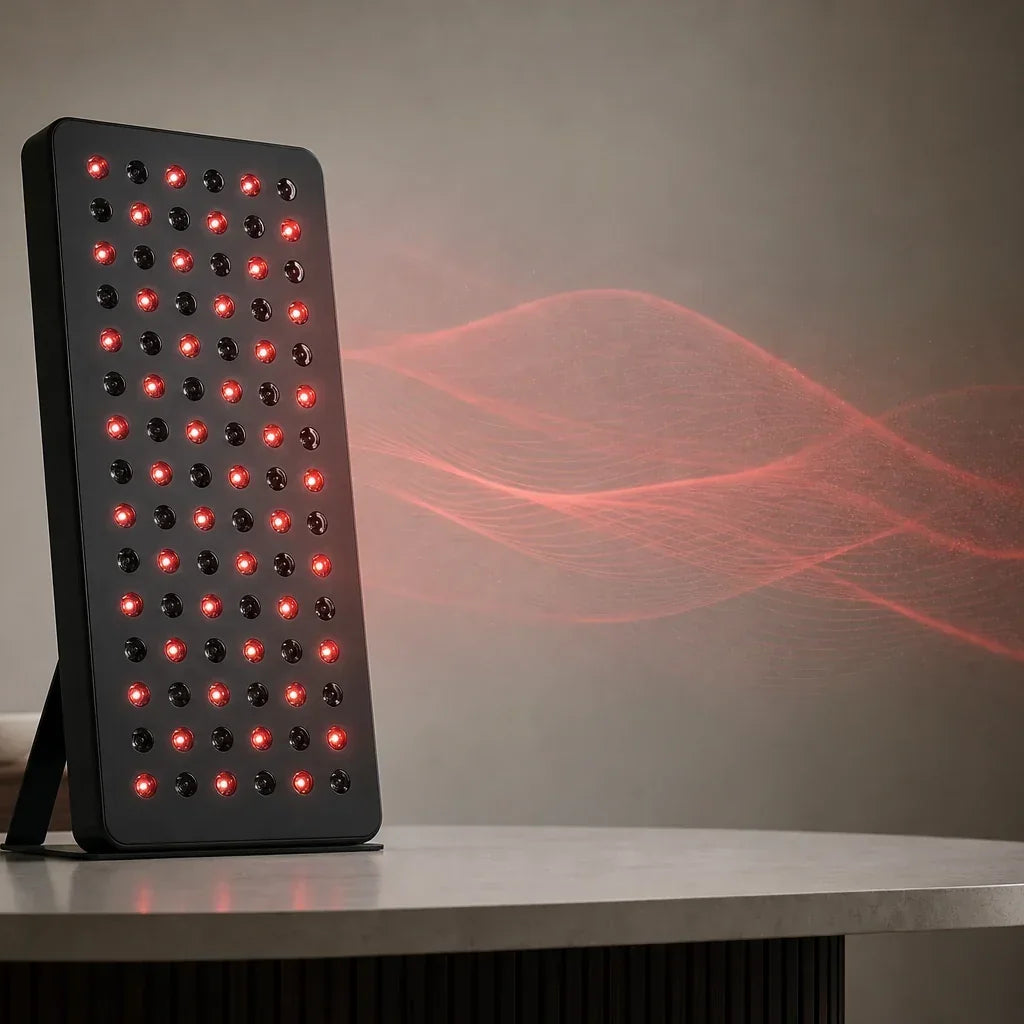
Some 850 nm LEDs produce a faint red dot. That visible glow may come from the lower-wavelength edge of the LED's emission band rather than from the main 850 nm output itself.
This creates two common misunderstandings:
- A shopper assumes a faint LED must have low output.
- A shopper assumes a bright visible-red LED must have high near-infrared output.
Neither conclusion is reliable.
Visible red LEDs can look dramatically brighter because the eye detects their wavelengths. Near-infrared LEDs can deliver substantial optical output without producing comparable visible brightness.
My practical rule: never compare the 850 nm performance of two panels by looking at them. Compare their documented measurements at the same distance and under similar test conditions.
Why can I sometimes see a red glow?
The presence of a faint glow does not turn 850 nm into visible red light. LEDs emit across a band rather than at one perfectly isolated wavelength, and the eye may detect a small portion near the edge of its sensitivity.
The amount of visible glow can also vary with:
- the individual LED package;
- the optical lens or cover;
- the viewing angle;
- ambient room lighting;
- the distance from the panel; and
- differences in individual visual sensitivity.
The glow should therefore be treated as a visual side effect, not as an output meter.
850 nm vs. 630 nm and 660 nm Red Light
850 nm is often discussed alongside 630 nm and 660 nm because these wavelengths commonly appear in the same device. They are not interchangeable, however.
| Property | 630 or 660 nm | 850 nm |
|---|---|---|
| Spectrum | Visible red | Near-infrared |
| Can you see it? | Yes | Main output is not normally visible |
| Appearance during use | Produces the bright red appearance associated with a panel | May look dark or show only a faint glow |
| Interaction with tissue | Absorption and scattering follow visible-red optical properties | Absorption and scattering differ from shorter visible wavelengths |
| Can brightness show output? | Still not accurately | No |
| Common device setup | May be used alone or paired with NIR | Frequently paired with visible red |
Is 850 nm stronger than 660 nm?
No. The wavelength number does not describe strength.
A device can have:
- high 660 nm output and low 850 nm output;
- low 660 nm output and high 850 nm output;
- roughly balanced output between the two; or
- a large number of one LED type but a smaller number of the other.
To understand the balance, you need more than the number of LEDs. You need the measured optical output of each channel or mode.
This is especially important when a panel has separate controls for red and NIR. The combined irradiance may be substantially different from the red-only or NIR-only reading.
Why are 660 nm and 850 nm commonly paired?
The pairing allows a panel to cover two neighboring but distinct wavelength regions. It is also practical from a product-design standpoint because both wavelength types are widely available in LED form and can be arranged in the same panel.
However, the familiar pairing should not be mistaken for a universal formula. Two panels labeled “660 nm + 850 nm” can still differ in:
- the ratio of red to NIR LEDs;
- the optical output of each diode;
- LED spacing;
- beam angle;
- lens design;
- coverage uniformity;
- heat management;
- flicker or pulsing options; and
- recommended use distance.
The wavelength combination tells you what colors are present. It does not tell you how well the complete device is designed.
850 nm vs. 830 nm: Is One Better?
Shoppers often compare 830 nm with 850 nm as though one must be the superior near-infrared wavelength. In reality, the difference is more nuanced.
Both sit within the near-infrared region, and both appear in light-device research and product specifications. The 20 nm difference may affect optical interaction to some degree, but it should not be considered separately from the device that delivers it.
A well-documented 830 nm device is not automatically weaker than an 850 nm device. A well-documented 850 nm panel is not automatically better because its wavelength number is higher.
When comparing them, I would prioritize:
- model-specific output data;
- measurement distance;
- coverage and uniformity;
- session instructions;
- how the wavelength is combined with visible red;
- comfort and heat management; and
- the clarity of the manufacturer's documentation.
The 20 nm difference becomes meaningful only within a complete optical system. On a product page, it is usually less important than the information manufacturers often leave out.
Does a higher wavelength number mean deeper reach?
No. Wavelength behavior does not increase in a simple straight line where every higher number automatically travels farther.
Absorption by water, blood, melanin, and other tissue components changes across the spectrum. Scattering also changes with wavelength. As a result, optical behavior depends on the entire region rather than on the idea that “higher is always deeper.”
This is why 940 nm, 980 nm, or 1,064 nm should not automatically be described as better than 850 nm based only on the larger number.
What Does “Deeper Penetration” Really Mean?
Near-infrared is often described as reaching deeper than visible red light. That can be a useful general explanation, but it is frequently presented with more certainty than the science supports.
Light entering the body may be:
- reflected at the surface;
- scattered in different directions;
- absorbed by skin pigments, blood, water, or other components; or
- transmitted farther into the tissue.
The balance changes with wavelength, but it also changes with the body area and the person.
Why there is no universal 850 nm penetration depth
A fixed statement such as “850 nm penetrates exactly two inches” is not a reliable way to describe every device or every use situation.
Actual optical distribution can be influenced by:
- skin thickness;
- skin pigmentation;
- blood content;
- fat and connective tissue;
- the angle of the incoming light;
- the size of the illuminated area;
- distance from the source;
- beam divergence;
- surface reflection; and
- the starting output of the device.
Even when some light travels farther, the amount remaining decreases as it is absorbed and scattered. “Reaches deeper” does not mean that the same surface intensity arrives unchanged at a deeper location.
My editorial view: depth should be described as a wavelength-dependent optical tendency, not as a guaranteed distance or outcome.
Does deeper automatically mean better?
No. A wavelength should match the purpose and design of the device. Greater depth is not automatically useful for every skincare, wellness, or recovery routine.
It is similar to choosing a tool: longer reach is valuable only when the task requires it. A larger number on the box does not prove a better match.
Does 850 nm Produce Heat?
An 850 nm LED panel may feel warm during use, but “near-infrared” and “infrared heat” should not be treated as identical terms.
Warmth may come from several sources:
- optical energy absorbed at the skin;
- heat generated by LEDs and internal electronics;
- warm air leaving the panel;
- the user's distance from the device;
- session duration; and
- room temperature and airflow.
A well-designed LED panel also uses heat sinks, fans, ventilation, or other thermal controls to manage internal temperature.
This is different from choosing a product whose main purpose is to create substantial heat. Infrared saunas, heating lamps, LED panels, and wearable light devices may all involve infrared terminology, but they should not be assumed to provide the same kind of exposure.
Does feeling more warmth mean more 850 nm?
No. A warmer panel is not automatically producing more useful near-infrared output.
Heat can be affected by electrical efficiency, enclosure design, fan speed, room conditions, and distance. It should not be used as a substitute for optical measurement.
A product that feels cooler may have effective thermal management. A product that feels hot may simply be converting more electrical power into unwanted heat.
How Should 850 nm Output Be Measured?
Near-infrared output should be evaluated with calibrated optical equipment that is suitable for the wavelength being measured.
Two measurements are commonly confused:
- Spectral measurement identifies where the output sits across the wavelength range and helps confirm the peak wavelength.
- Radiometric measurement measures optical power or irradiance reaching a defined area.
A spectrometer can show the shape and peak of the spectrum. A calibrated spectroradiometer can provide wavelength-resolved radiometric information. A suitable calibrated optical power meter or irradiance meter may be used for power-related measurements, provided its detector responds correctly around 850 nm.
The word calibrated matters. A meter designed mainly for visible light may respond incorrectly to near-infrared output. Different detectors also have different spectral responses.
What should accompany an irradiance number?
A statement such as “160 mW/cm²” is difficult to evaluate unless the manufacturer also provides the test conditions.
At minimum, look for:
- the measurement distance;
- whether red and NIR were both active;
- where on the illuminated area the reading was taken;
- whether the number is a center reading or an area average;
- the instrument type;
- the detector's suitable wavelength range;
- whether the meter was calibrated; and
- whether the reading represents continuous or pulsed output.
The output at the center of a panel may be higher than the output near the edges. One maximum reading should not automatically be interpreted as the output delivered across the entire coverage area.
Why distance changes the reading
As the user moves away from a panel, light spreads across a larger area. Irradiance generally decreases, although the exact pattern depends on:
- panel size;
- LED spacing;
- beam angle;
- lenses or reflectors;
- overlap between neighboring LEDs; and
- measurement location.
Distance can improve coverage uniformity while reducing irradiance. Standing closer may increase a center reading but create more variation between bright and dim areas.
This is why manufacturers should provide output at realistic use distances rather than only at the surface of the LEDs.
What is radiant exposure?
Radiant exposure describes the optical energy delivered to a unit of surface area over time. It is commonly expressed in joules per square centimeter, or J/cm².
A simplified surface calculation is:
Radiant exposure = irradiance × time
For example:
40 mW/cm² = 0.040 W/cm²
If that output remains stable for 600 seconds:
0.040 W/cm² × 600 seconds = 24 J/cm²
This is a calculated surface exposure. It is not a measurement of how much energy reaches a particular depth, and it is not a universal session recommendation.
The calculation is only as reliable as the irradiance value used. An exaggerated or incomplete irradiance claim produces an equally unreliable exposure estimate.
Can a Smartphone Camera Detect 850 nm?
Some smartphone cameras can display 850 nm emitters as pale white, pink, or purple lights. This happens because camera sensors may detect near-infrared even though the human eye cannot.
However, modern cameras often include infrared-blocking filters. Sensitivity can vary between:
- front and rear cameras;
- different lenses on the same phone;
- phone models;
- photo and video modes;
- exposure settings; and
- automatic image processing.
A phone camera can sometimes answer a limited question:
“Does this emitter appear to be producing some near-infrared light?”
It cannot reliably answer:
- Is the peak exactly 850 nm?
- Is the wavelength within tolerance?
- How many mW/cm² reach the user?
- Is output uniform across the panel?
- Are the LEDs operating at the advertised level?
- Is one panel stronger than another?
My practical take: a phone-camera check is a basic troubleshooting trick, not a performance test.
How to Compare 850 nm Red Light Therapy Devices
Do not begin by comparing marketing benefits. Begin by comparing what the devices actually emit and how the manufacturer expects them to be used.
| Specification | What useful documentation looks like | A weak or incomplete claim |
|---|---|---|
| Peak wavelength | 850 nm with a stated tolerance or spectral report | “Advanced infrared technology” |
| Irradiance | A value reported at a stated distance and operating mode | A large number with no distance |
| Red/NIR balance | Separate or combined output data for each channel | LED count used as a substitute for optical output |
| Coverage | Dimensions or measured illuminated area at the recommended distance | “Full body” with no distance or coverage definition |
| Uniformity | Center and edge readings or a coverage map | One maximum center measurement |
| Session guidance | A clear time, distance, mode, and frequency for the exact model | “Use as needed” or a schedule copied across multiple products |
| Thermal design | Ventilation, fan information, temperature controls, or operating limits | Warmth presented as proof of output quality |
| Eye guidance | Model-specific positioning and protection instructions | “NIR is invisible, so eye precautions are unnecessary” |
| Testing | Model-specific reports with identifiable test conditions | A generic report for a different LED or device |
Does the number of 850 nm LEDs matter?
LED count can help describe a panel layout, but it cannot show total output by itself.
One panel may use many lower-powered diodes. Another may use fewer diodes operating differently. Lens design and spacing can also change how the light overlaps at the recommended distance.
A count such as “150 red LEDs and 150 NIR LEDs” does not tell you:
- the actual optical power of either channel;
- the balance between wavelengths;
- the coverage at normal use distance;
- the uniformity across the body; or
- how much output is lost as heat.
LED count is a construction detail. Measured output is the performance detail.
Should red and NIR be separately controllable?
Separate controls are useful when the user wants to understand or select the device's wavelength modes. They also make specifications easier to verify because each channel can be measured independently.
However, separate control is not automatically necessary for everyone. A simple combined mode may be more convenient when that is how the device is intended to operate.
The important point is transparency. A manufacturer should clearly state:
- whether red and NIR can operate separately;
- whether the timer changes between modes;
- whether combined output is higher than single-channel output; and
- which output measurement belongs to which mode.
Common Mistakes When Buying an 850 nm Device
Mistake 1: Assuming 850 nm is visible red
850 nm belongs to the near-infrared region. The bright red appearance of a combination panel usually comes from its visible-red LEDs.
Mistake 2: Judging NIR power by eye
A dim or dark-looking emitter can still be operating normally. Human vision is not an appropriate meter for 850 nm.
Mistake 3: Believing a higher irradiance number is always better
A large number is not useful without the distance, mode, measurement location, and instrument. Higher output may also require different distance and session guidance.
Mistake 4: Treating 850 nm as a complete product specification
Wavelength alone leaves out output, coverage, uniformity, thermal design, controls, session time, build quality, and instructions.
Mistake 5: Assuming every 850 nm product is equivalent
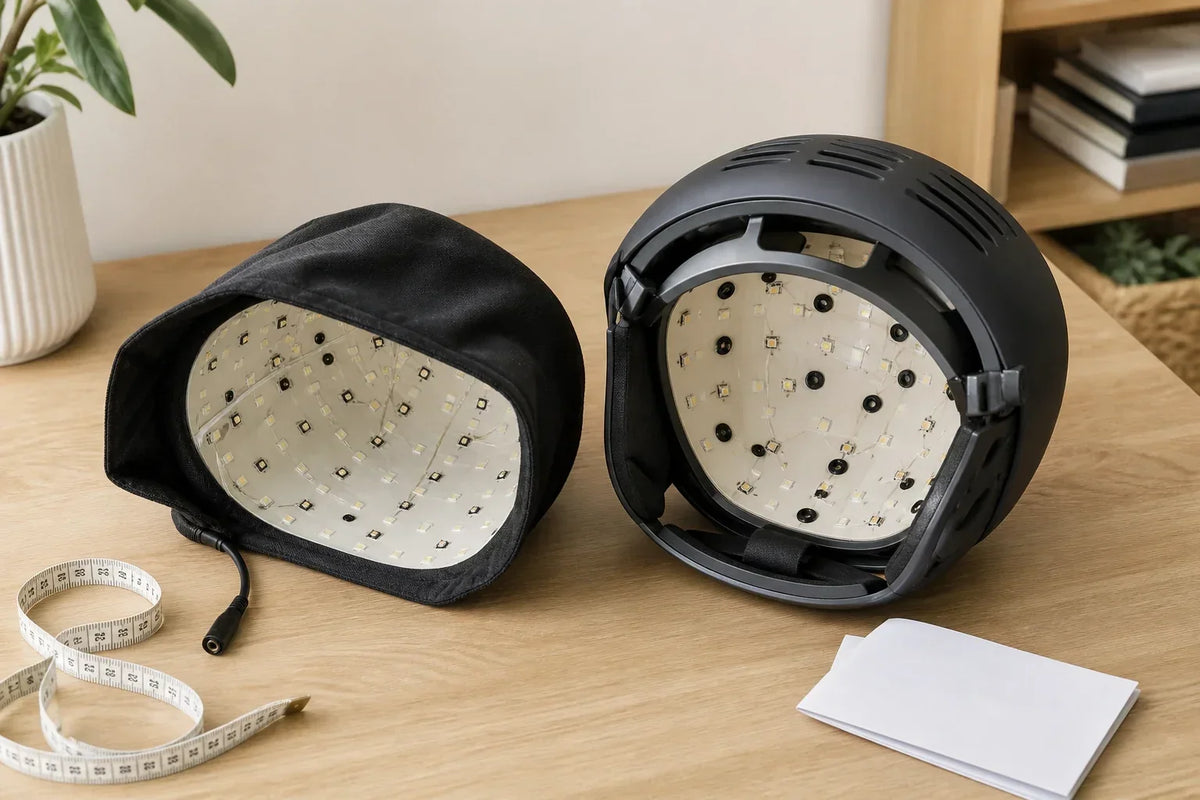
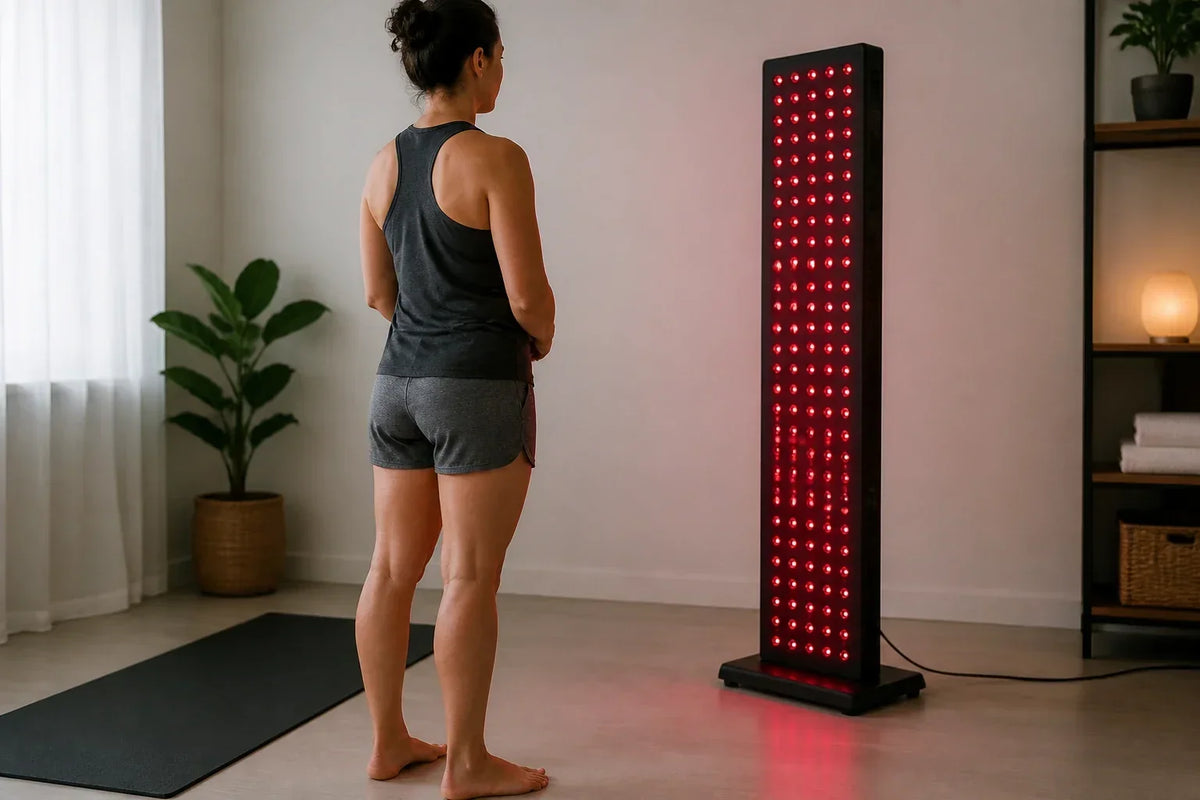
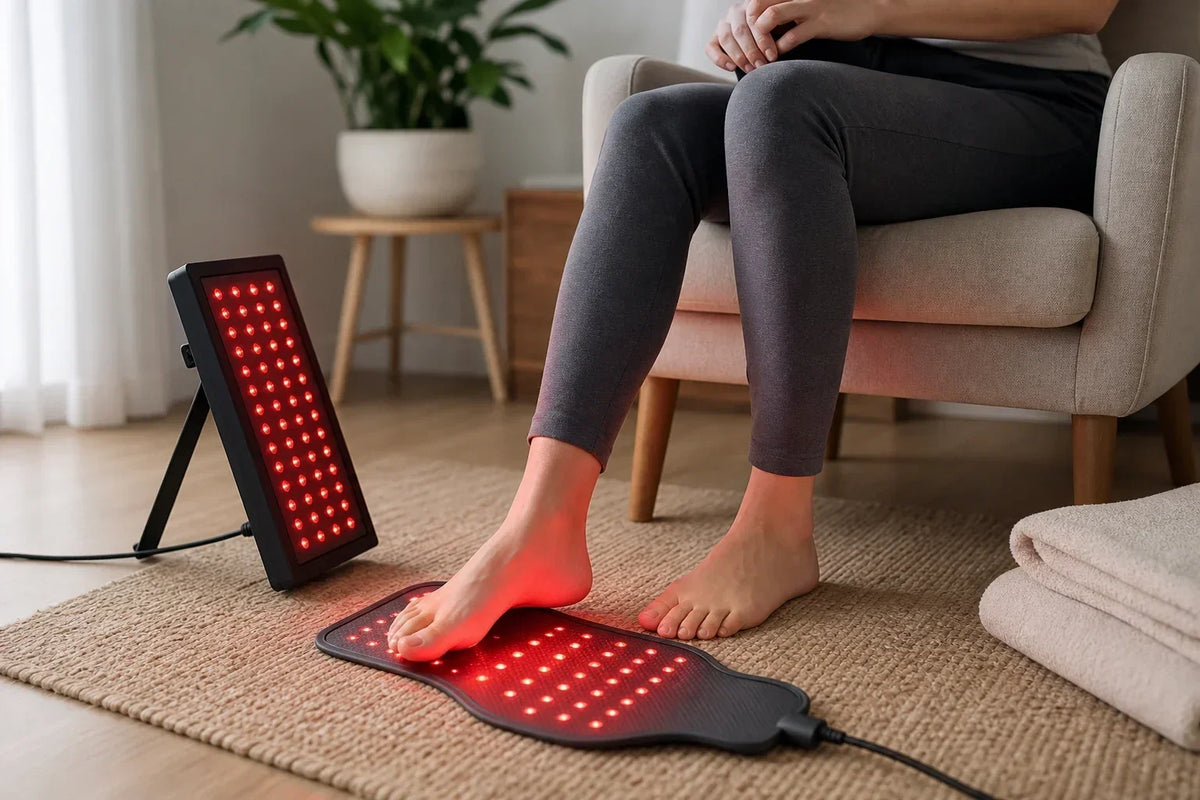
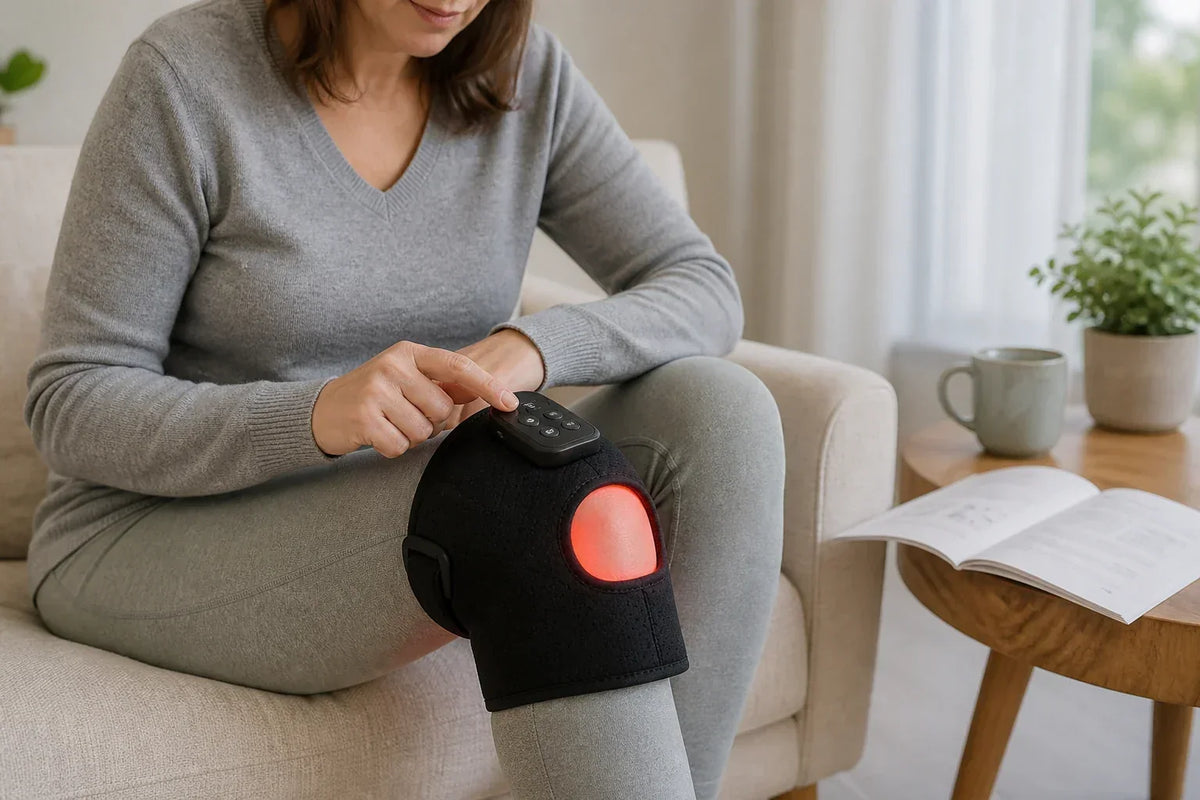
A facial mask, handheld device, flexible wrap, large panel, sauna lamp, and security illuminator can all emit near 850 nm while being designed for completely different uses.
Mistake 6: Copying another device's schedule
Two products can share the same peak wavelength while producing very different irradiance. Session guidance should come from the exact model rather than from the wavelength alone.
Mistake 7: Treating an FDA record as evidence for an unrelated product
Some FDA device summaries list 830 nm or 850 nm as part of a specific combination device. Those documents describe the reviewed model, its output, modes, controls, and intended use.
They do not establish that every unrelated panel using the same wavelength has the same design, documentation, or status.
A wavelength appearing in an FDA record does not make the wavelength itself “FDA-cleared.” The clearance belongs to the exact device covered by the record.
My Practical Take on 850 nm
850 nm is popular for a good reason: it is a practical near-infrared wavelength that can be built into masks, wraps, handheld products, and larger panels. It also pairs naturally with visible red LEDs in a dual-wavelength system.
But its popularity has made it easy for product pages to use “850 nm” as though the number explains everything. It does not.
When I evaluate an 850 nm specification, I care less about whether the number appears prominently in the product title and more about whether the manufacturer answers five basic questions:
- Is the wavelength and tolerance clearly stated?
- Is output measured at a realistic distance?
- Can I tell whether the measurement includes red, NIR, or both?
- Is the coverage reasonably uniform?
- Are the session and eye instructions specific to this model?
A device that answers those questions is easier to compare and easier to use responsibly. A device that relies on phrases such as “deep-penetrating 850 nm power” without measurement details is asking the wavelength to do too much marketing work.
Practical Use and Eye Guidance
Follow the instructions supplied with the exact device. Do not increase session time or move substantially closer simply because the 850 nm LEDs do not look bright.
Invisible light can still reach the eyes. Do not stare directly into the emitters, and follow the manufacturer's guidance regarding:
- protective eyewear;
- eye position;
- minimum distance;
- session duration;
- use around the face; and
- whether visible red and NIR may be operated separately.
Stop using the device if it causes persistent discomfort, excessive heat, lasting redness, visual changes, or another unexpected reaction.
Before use, seek qualified guidance when you have a known light sensitivity, an eye-related concern, or use a product or prescription that may increase sensitivity to light.
Being outside the UV region does not mean that instructions can be ignored. “Non-UV” describes the part of the spectrum; it does not establish an unlimited session time.
Frequently Asked Questions About 850 nm
Is 850 nm red or infrared?
850 nm is near-infrared. It is often included under the broader consumer category of red light therapy, but it is not visible red light.
Can humans see 850 nm light?
The main 850 nm output is outside normal human vision. Some LEDs may show a faint red glow because their emission band includes a small amount of shorter-wavelength output.
Why do 850 nm bulbs look dimmer than 660 nm bulbs?
Human eyes can see 660 nm much more easily. The apparent difference in brightness does not reliably show the difference in optical output.
Is 850 nm better than 660 nm?
They belong to different wavelength regions and are often used together. Neither is universally better. The more useful choice depends on the design and intended use of the complete device.
Is 850 nm better than 830 nm?
Not automatically. Both are near-infrared wavelengths. The complete output, coverage, instructions, and device documentation are generally more important than the 20 nm difference alone.
Does 850 nm go deeper than red light?
Near-infrared may be less attenuated than shorter visible wavelengths under some optical conditions. However, there is no single penetration depth that applies to every person, body area, device, or session.
Does 850 nm feel hot?
It may feel warm, especially with a high-output panel or close use distance. Warmth can also come from the LEDs, electronics, enclosure, and surrounding air rather than from wavelength alone.
Can I test 850 nm with my phone?
A phone camera may show that an infrared emitter is active, but it cannot confirm the exact wavelength, output, or coverage uniformity.
Can a lux meter measure 850 nm?
A standard lux meter is designed around visible-light sensitivity and is generally not the correct tool for evaluating near-infrared irradiance. Use calibrated radiometric equipment suitable for the relevant wavelength.
What does 850 nm ± 10 nm mean?
It means the LED's peak wavelength is expected to fall within a tolerance around 850 nm, rather than every diode emitting at one exact wavelength.
Does more wattage mean more 850 nm output?
Not necessarily. Electrical wattage includes power used by LEDs, fans, controllers, and losses as heat. Optical output should be reported separately.
Can I calculate exposure from irradiance?
A basic surface exposure can be estimated by multiplying irradiance in W/cm² by session time in seconds. The calculation does not determine how much light reaches a deeper location or provide a universal recommended amount.
Should I use 850 nm by itself or with red light?
Use the modes according to the instructions for the exact device. Some products allow separate control, while others are designed around a combined visible-red and NIR routine.
Is 850 nm ultraviolet?
No. Near-infrared and ultraviolet sit on opposite sides of the visible spectrum. They should not be treated as the same type of light.
Is every 850 nm panel the same?
No. Products can differ significantly in optical output, LED quality, wavelength tolerance, beam angle, uniformity, use distance, coverage, heat management, controls, and documentation.
The Bottom Line
850 nanometers is a near-infrared wavelength commonly found in red light therapy devices. It is mostly invisible, is frequently paired with 630 nm or 660 nm visible red light, and cannot be evaluated by visual brightness.
Its presence tells you which part of the spectrum a device emits. It does not tell you how strong the device is, how evenly it covers an area, how long it should be used, or whether it is a good match for a particular routine.
When comparing 850 nm devices, look beyond the wavelength label. Check the peak tolerance, irradiance at a stated distance, red-to-NIR balance, coverage uniformity, session instructions, thermal design, eye guidance, and model-specific testing.
The best-documented product is not necessarily the one with the largest output number. It is the one that makes its specifications understandable, comparable, and relevant to normal use.
For a broader explanation of near-infrared terminology, read What Does NIR Stand For? You can also explore dual-wavelength red and near-infrared panels.
This article is provided for general educational purposes. Follow the instructions for the exact device and seek qualified guidance when personal circumstances make light exposure uncertain.
Sources and Further Reading
- PubMed: Overview of red and near-infrared photobiomodulation
- Review of wavelength, irradiance, exposure time, and other light parameters
- NIST: Spectral measurement and LED measurement considerations
- NIST: Spectral irradiance calibration procedures and measurement uncertainty
- FDA 510(k) summary listing an 850 nm near-infrared LED system
- FDA 510(k) summary listing 630 nm red and 830 nm near-infrared output
Continue reading