Red light therapy encyclopedia
Red Light Therapy for Feet: Pain Claims, Devices and Ankle Safety
Compare red light therapy foot and ankle devices by goal, clinical evidence, coverage, contact safety, fit, cleaning, and the conditions that need qualified assessment first.
A red light therapy foot device is best evaluated by the problem it claims to address, not by whether it looks like a boot, slipper, wrap, or panel. Clinical photobiomodulation studies have examined specific conditions such as plantar fasciitis, ankle sprain, and diabetic peripheral neuropathy, but those results do not establish that an unverified home device improves every kind of foot pain, circulation, numbness, or healing. The safest buying path starts with the use case, exact specifications, fit, skin and sensation status, and model-specific instructions.
Commercial disclosure: Yamuri sells red and near-infrared light devices. This guide uses model-neutral comparison criteria and does not assume a Yamuri product is suitable for every use discussed.
Quick Q&A: What Most People Want to Know First
| Question | Short answer | My practical note |
|---|---|---|
| Can red light treat any foot pain? | No. | Foot pain has many causes, and condition-specific evidence matters. |
| Is a boot better than a panel? | Not universally. | A boot may improve placement; a panel may simplify cleaning and reduce contact. |
| Does near-infrared penetrate deeper? | Optical behavior differs by wavelength, but depth does not prove a useful outcome. | Look for the complete protocol. |
| Can I use it on a wound? | Not unless the exact device and qualified care plan support that use. | Do not shine a consumer device on an undiagnosed or infected wound. |
| Is warmth evidence of an effective dose? | No. | Heat and PBM are different effects. |
| What is the first safety check? | Skin integrity and sensation. | A person who cannot feel heat or irritation may not notice harm promptly. |

Why One Foot Article Cannot Promise One Outcome
Current search results mix plantar fasciitis, neuropathy, ankle recovery, circulation, arthritis, wounds, and general soreness. Those are not interchangeable. A device page may cite a study on a clinician-operated laser for plantar fasciitis, then market a flexible LED slipper for neuropathy and recovery. Matching a red or near-infrared wavelength does not bridge the gap.
Before comparing products, write the goal in one sentence. If that sentence contains a diagnosis, persistent numbness, a wound, suspected infection, or a recent injury, the next step may be evaluation rather than shopping.
What the Evidence Says by Condition
| Topic | Current evidence signal | Consumer-device boundary |
|---|---|---|
| Plantar fasciitis | A 2023 review of 19 randomized trials reported short-term pain improvement for selected PBM protocols, with uncertainty for disability outcomes. | Clinical devices and exercise programs may differ from a home boot. |
| Ankle sprain | A 2024 review found a pain signal but no significant effect on edema or function, with substantial heterogeneity. | It does not justify delaying injury assessment or rehabilitation. |
| Diabetic peripheral neuropathy | Systematic reviews examine pain, nerve conduction, and plantar pressure, but protocols and certainty vary. | Impaired sensation increases home-use safety concerns. |
| Diabetic foot ulcer | Research exists in supervised wound-care contexts. | It is not permission to self-treat an ulcer with a retail light. |
| General recovery | Broad PBM evidence may suggest plausibility for selected outcomes. | "Recovery" without an endpoint, device, and protocol is not a testable claim. |
Compare the Device Formats
| Format | Potential advantage | What to verify | Friction or risk |
|---|---|---|---|
| Slipper or boot | Repeatable enclosure and hands-free use | Emitter coverage, sizing, heat, cleaning, and pressure points | Moisture, hygiene, fit, and trapped heat |
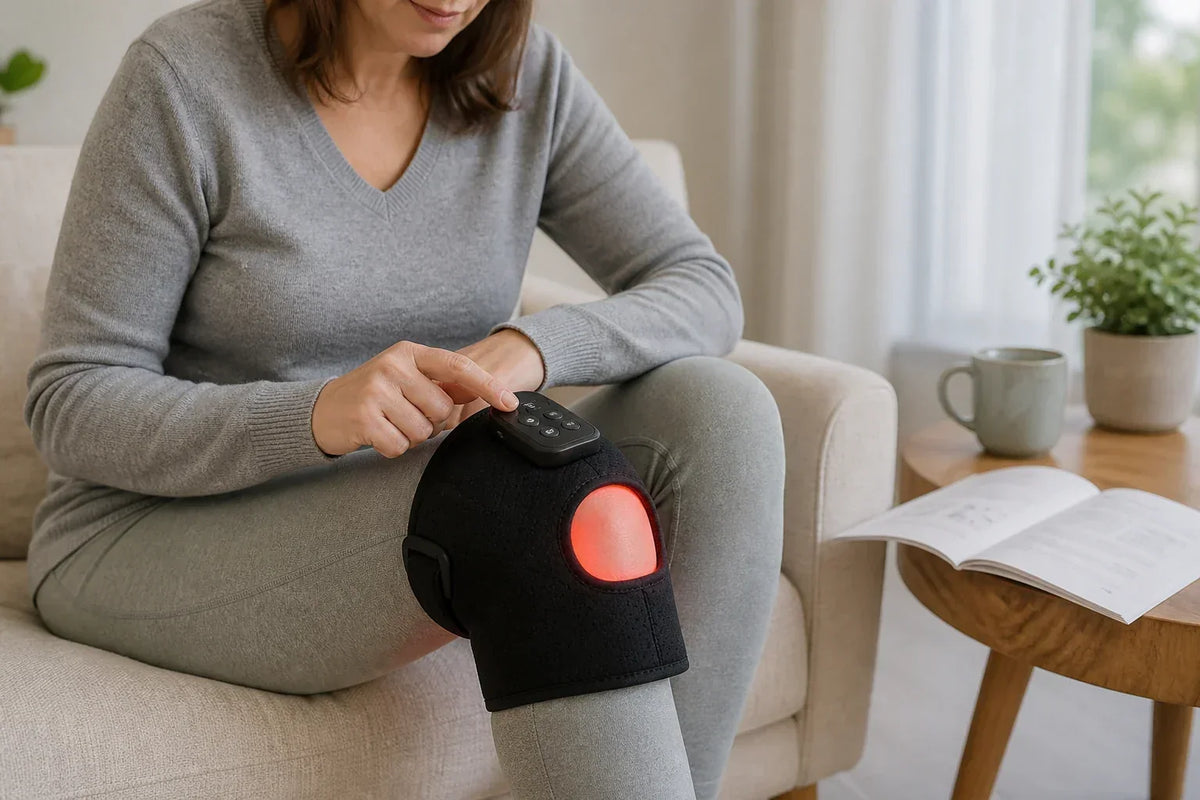
| Flexible pad or wrap | Can cover ankle contours | Output under contact, fastening, cable strain, cleaning | Folds and gaps can change exposure. |
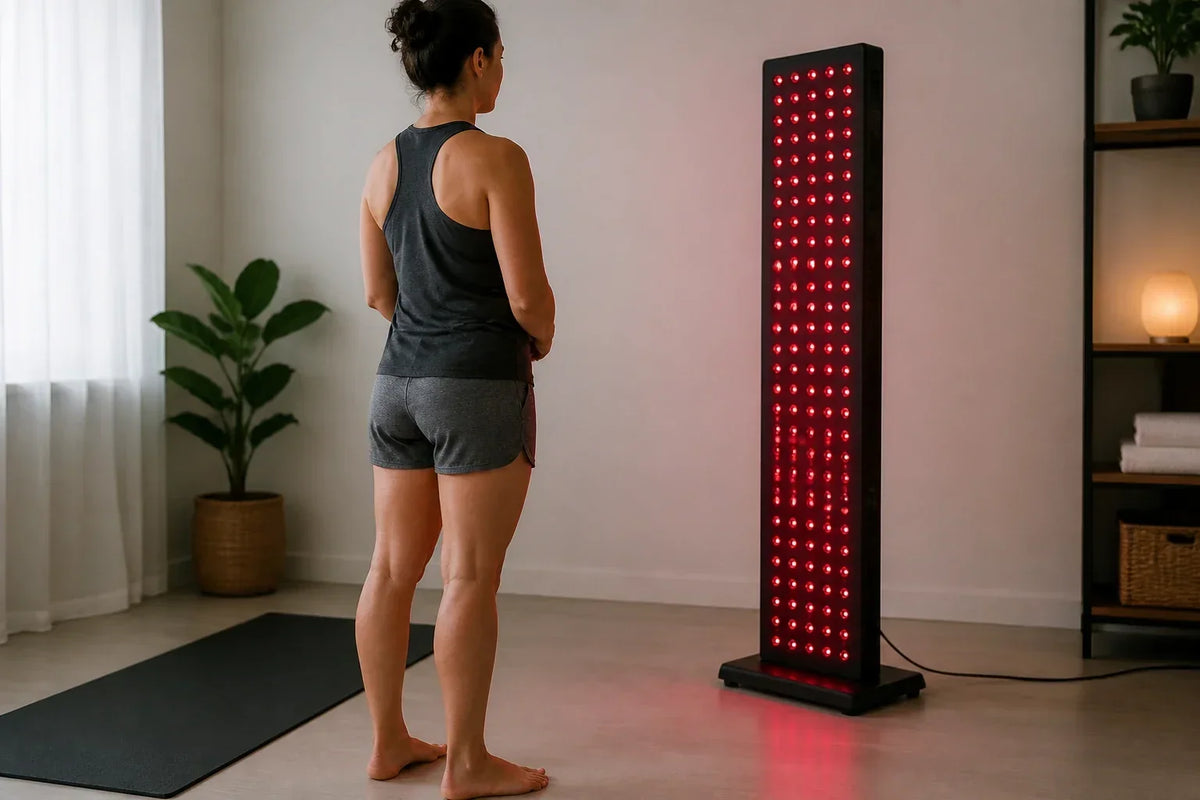
| Small panel | Noncontact and easy to share | Distance, angle, timer, stable stand, beam area | The sole and sides may require repositioning. |
| Handheld probe | Targets a small region | Movement method and treated area | Technique-dependent and time-consuming. |
| Clinic laser | Condition-specific supervision and controlled application | Diagnosis, protocol, operator training, expected endpoint | Not equivalent to a retail LED device. |
Evaluation Method: What to Request Before Buying
| Decision area | Strong documentation | Weak substitute |
|---|---|---|
| Intended use | Exact claim and target user in the manual | "For all foot problems" |
| Optical output | Wavelength and irradiance or energy with test conditions | LED count, electrical watts, or red brightness |
| Coverage | Emitter map for sole, heel, toes, and ankle | One center-point measurement |
| Contact safety | Temperature limits, skin checks, pressure guidance | "Gentle warmth means it is working" |
| Usability | Fit range, independent timer, accessible controls, cleaning | Lifestyle photos only |
| Support | Manual, warranty, charger, return policy, adverse-event contact | Marketplace stars alone |
For contact devices, ask whether output was measured flat or while curved around a foot. For panels, ask at what distance the published value was measured. Do not calculate a dose from a marketing number unless the units, distance, active mode, and measurement method are clear.
Safety: Feet Deserve More Caution Than a Product Photo Suggests
Inspect the skin before and after use. Do not use a consumer device over an open wound, infection, unexplained redness, significant swelling, recent surgical site, or an area with impaired sensation unless the exact care plan and qualified professional support it. Diabetes, peripheral neuropathy, vascular disease, photosensitivity, relevant medicines, and limited mobility can change both risk and the ability to detect a problem.
| Signal | Why it matters | Safer next step |
|---|---|---|
| New wound or skin breakdown | Infection and healing risks require proper care | Protect the area and obtain appropriate assessment. |
| Sudden swelling, warmth, or color change | May not be ordinary soreness | Do not compress or heat it without guidance. |
| Numbness or reduced temperature sensation | Heat or irritation may go unnoticed | Ask whether home light or heat is appropriate. |
| Inability to bear weight after injury | Can indicate a significant injury | Use an appropriate injury-assessment pathway. |
| Persistent or progressive pain | Needs a cause-specific plan | Do not keep extending sessions to chase relief. |
My Practical Take
I would choose the format that makes safe positioning and skin inspection easiest. A closed boot is convenient only if it fits, can be cleaned, and does not hide heat or pressure. A small panel may be less elegant but easier to inspect and use without contact.
I would also reject any product that markets circulation, neuropathy, wound healing, and sports recovery with one undifferentiated evidence paragraph. Convenience and evidence are different questions.
Frequently Asked Questions
What is the best red light therapy for feet?
There is no universal best format. Choose by the specific goal, documentation, coverage, fit, skin and sensation status, and whether the intended use matches the model.
Can I place a red-light panel under my feet?
Only if the device is designed and stabilized for that orientation. Avoid standing on, covering, or placing weight on a panel unless the manual explicitly permits it.
Can red light help plantar fasciitis?
Systematic-review evidence suggests selected PBM protocols may reduce short-term pain, but this does not validate every home device or replace exercise and condition-specific care.
Can I use a red-light boot for neuropathy?
Do not self-select based on a marketing claim. Neuropathy can reduce protective sensation and may require clinician-guided device and skin-safety decisions.
Should the foot device feel warm?
Some products add heat, while PBM itself need not create strong warmth. Follow the manual and stop for excessive heat, pain, or persistent redness.
How do I expose the sole and ankle evenly?
Use only the positions and distances in the manual. Repositioning rules depend on the beam area and device design; improvising changes exposure.
Can red light speed healing after ankle surgery?
Do not use it over a surgical site without the treating team's approval and exact device information. Postoperative care is procedure-specific.
Can I use it every day?
Frequency is model-specific. More frequent use is not automatically better and should not be invented from another device's study.
Related Yamuri guide: For broader setup and safety context, see how to approach red light therapy at home.
Sources and Further Reading
- Systematic review and meta-analysis of photobiomodulation for plantar fasciitis
- Systematic review and meta-analysis of photobiomodulation for ankle sprain
- Systematic review of photobiomodulation for diabetic peripheral neuropathy outcomes
- FDA questions and safety considerations for home-use devices
Editorial Standards and General Information
This article separates general wavelength education from condition- and device-specific evidence. Regulatory records and trials apply only to the models, protocols, and intended uses named in those sources; they are not automatically applied to Yamuri or another device. This guide supports consumer education and specification literacy, not diagnosis, wound care, or personalized treatment. Follow the exact manual and seek qualified guidance for diabetes, neuropathy, circulation problems, wounds, infection, new injury, recent surgery, persistent symptoms, photosensitivity, or medicine-related concerns.
Continue reading