Red light therapy encyclopedia
Does Red Light Therapy Help Cellulite? What Studies Actually Show
Red light may affect selected cellulite-related outcomes in specific protocols, but evidence is limited and does not support permanent-removal or weight-loss claims for ordinary home devices.
Does red light therapy help cellulite? Possibly a little for appearance in some protocols, but the evidence is limited and does not support calling ordinary red light a cure for cellulite or a weight-loss treatment. Studies involve different technologies - including 532 nm green low-level laser, 650 nm LED protocols, massage, vacuum, or other body-contouring methods - and measure different outcomes. Results from one clinic device cannot automatically be transferred to a home panel, wrap, or blanket.
Commercial disclosure: Yamuri sells red and near-infrared light devices. This guide uses model-neutral comparison criteria and does not assume a Yamuri product is suitable for every use discussed.
Quick Q&A: What Most People Want to Know First
| Question | Short answer | My practical note |
|---|---|---|
| Can red light remove cellulite? | No reliable evidence shows that a typical home red-light device permanently removes cellulite. | Treat disappearance claims as marketing. |
| Can appearance change temporarily? | Some device-specific studies report changes, but protocols and outcomes vary. | Ask what was measured and for how long. |
| Is cellulite the same as body fat? | No. | Cellulite appearance involves skin, connective structures, and underlying fat distribution. |
| Do before-and-after photos prove efficacy? | No. | Lighting, pose, hydration, distance, and image selection can change visibility. |
| Is 650 nm proven for cellulite appearance? | One recent trial studied other cellulite-related outcomes; that is not universal proof of visible reduction. | Match the endpoint to the claim. |
| Should I buy by irradiance alone? | No. | Coverage, protocol, heat, intended use, and evidence all matter. |

Why the Search Results Are Easy to Misread
Current results mix product roundups, red-light education, spa procedures, and broad body-contouring claims. The phrase "red light" may refer to visible red LEDs, near-infrared LEDs, green low-level laser systems, or multi-technology platforms. When a page cites a positive trial without naming the wavelength and co-interventions, it can make unlike products appear interchangeable.
The core information gap is not whether any light-based procedure has ever changed a cellulite score. It is whether the exact device, dose, comparison, and follow-up support the promise being made to the shopper.
What Cellulite Is - and What It Is Not
Cellulite is the dimpled appearance that can occur when underlying fat and connective structures interact with the skin surface. It is common and is not the same as obesity. A smoother photograph does not establish fat loss, improved health, or a permanent structural change.
The FDA groups some procedures intended only to improve cellulite appearance with non-invasive body contouring. Its consumer guidance emphasizes that body-contouring results may be temporary, that the procedures do not treat obesity, and that each technology has its own risks and limitations.
Evidence Versus Marketing
| Evidence | What was studied | Boundary |
|---|---|---|
| 2013 randomized trial | A specific 532 nm green low-level laser for thigh and buttock cellulite appearance | Green laser results do not validate a red/NIR panel. |
| 2024 randomized trial | A 650 nm LED protocol and outcomes including skin temperature and hyperalgesia | Those endpoints are not the same as durable visual cellulite reduction. |
| Combination-device studies | Light plus vacuum, massage, or other energy | The contribution of light alone may be unclear. |
| FDA body-contouring record | Named device, indication, and submitted evidence | It does not clear every light device for cellulite. |
| Seller before-and-after gallery | Selected photographs | Cannot control lighting, pose, co-interventions, or typical response. |
This is a classic extrapolation problem. General photobiomodulation research may support biological plausibility for selected skin outcomes, while the exact cellulite claim remains unsettled. Plausibility is not the same as a demonstrated consumer result.
How to Judge a Device or Clinic Claim
| Question to ask | Useful answer | Red flag |
|---|---|---|
| What is the exact technology? | Wavelength, emitter type, model, and active modes | "Medical-grade red light" without numbers |
| What outcome was measured? | Named cellulite scale, blinded rating, circumference, or patient-reported endpoint | "Detox" or "melts fat" |
| Was another treatment used? | Clear disclosure of massage, vacuum, exercise, or diet | Attributing a combination result to light alone |
| How long did the effect last? | Follow-up interval and maintenance plan | Only immediate post-session photos |
| Is the model traceable? | Manual and regulatory record for the exact device | A badge that links to a different model |
Device Formats and Their Real Tradeoffs
| Format | Possible usability advantage | Evidence question | Practical limitation |
|---|---|---|---|
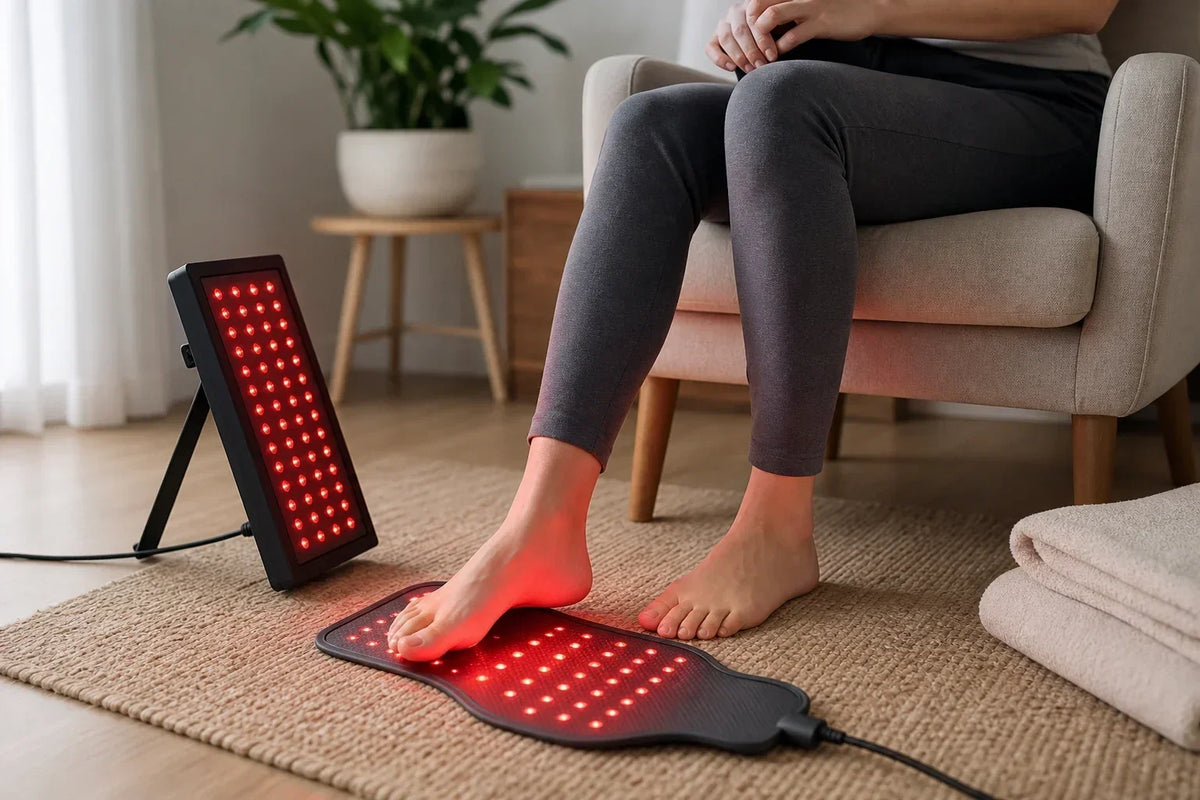
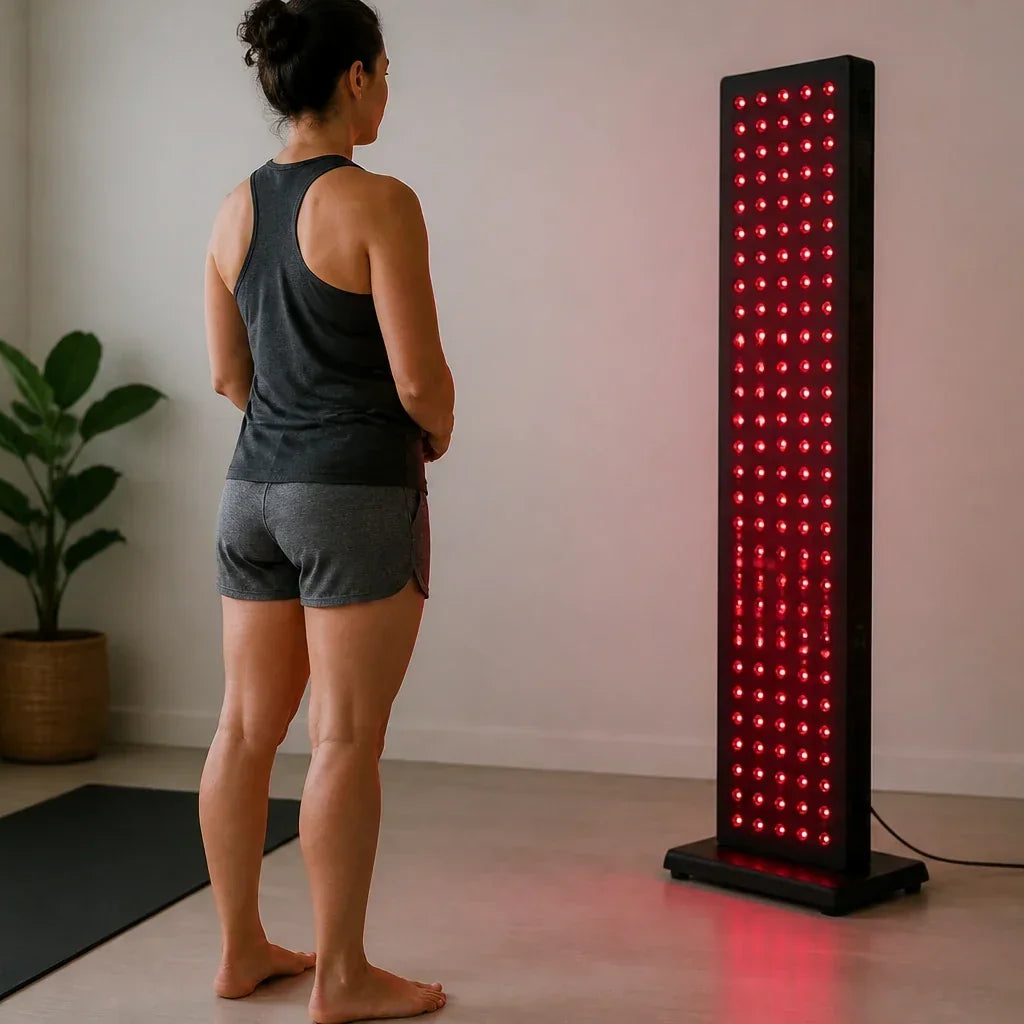
| Large panel | Broad, noncontact coverage | Does any cellulite study use comparable geometry and output? | Distance and angle change exposure. |
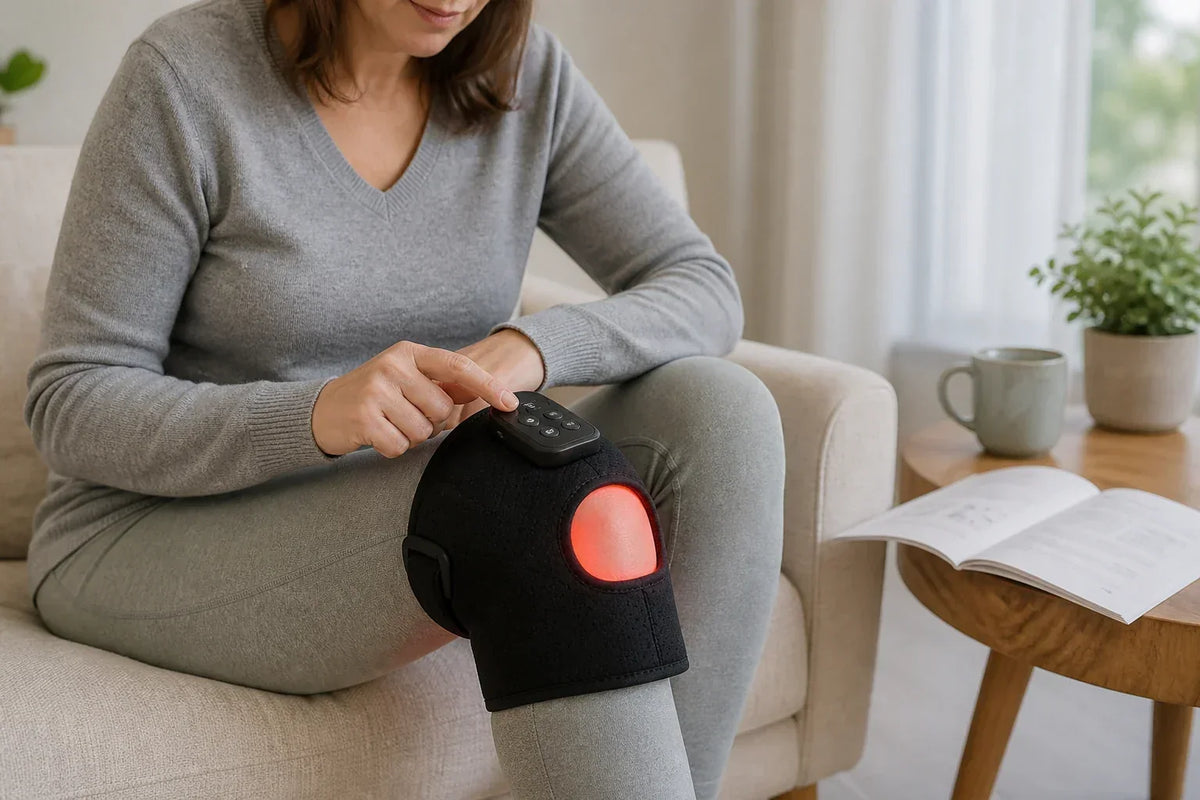
| Flexible wrap or blanket | Close contact and repeatable placement | How were output and heat measured under contact? | Cleaning, fit, and heat can affect use. |
| Handheld device | Targets a small area | Is movement speed defined? | Uneven coverage is easy. |
| Clinic combination platform | Supervised, multi-technology procedure | Which component produced the outcome? | Cost and results cannot be mapped to a home device. |
Do not compare electrical watts, LED count, or peak irradiance as if they predicted cellulite outcomes. Wavelength does not equal intensity; intensity does not equal total exposure; and total exposure does not prove a cosmetic result.
Before-and-After Photos Need a Protocol
If you decide to monitor appearance, standardize the process: same room, camera, distance, lens, time of day, posture, muscle tension, clothing, and lighting direction. Avoid taking dozens of images and selecting only the most favorable pair. A blinded rating scale in a trial is more informative than a seller's gallery, but even a statistically significant score may represent a modest or temporary change.
Safety and Alternatives
Follow the exact device instructions and do not apply a consumer light device over irritated, infected, injured, or recently treated skin unless qualified guidance says it is appropriate. Photosensitivity, relevant medicines, impaired sensation, pregnancy, and a history of unusual reactions can change the risk discussion. Heat-producing or multi-technology body-contouring systems have different risks from low-level light and should not be treated as the same category.
Cellulite does not require treatment. If appearance is the goal, compare the likely magnitude, duration, cost, downtime, and risk of any option. The American Academy of Dermatology notes that cellulite procedures differ substantially and that many approaches offer limited or temporary improvement.
My Practical Take
I would not buy a red-light device solely for cellulite unless the seller names the exact endpoint and evidence for that model or a genuinely comparable protocol. A panel may still be useful for another documented purpose, but a secondary hope should not be priced as a guaranteed benefit.
I would also treat a natural, standardized photograph showing a small change as more credible than dramatic side-by-side images under different lighting. The decision should survive ordinary daylight, not only a marketing studio.
Frequently Asked Questions
Does red light therapy break down fat cells?
Some low-level light body-contouring studies examine fat-layer or circumference outcomes, but those results are device- and protocol-specific. They do not show that every red-light panel causes meaningful fat loss.
Is green low-level laser the same as red light therapy?
No. A 532 nm green laser and a red or near-infrared LED device use different wavelengths and may have different designs, doses, and indications.
How many sessions are needed?
There is no evidence-based universal schedule for generic home red-light devices and cellulite. Follow only the exact model instructions; do not copy a clinic or study protocol onto another product.
Can red light permanently remove cellulite?
Current evidence does not justify a permanent-removal promise for ordinary home red-light devices. Even FDA consumer guidance for body contouring warns that desired effects may be temporary.
Why does cellulite look different from day to day?
Lighting direction, posture, muscle tension, hydration, camera settings, and normal tissue variation can change visibility. That makes uncontrolled photos a weak outcome measure.
Can red light replace exercise or weight management?
No. Non-invasive body contouring is not a treatment for obesity and does not provide the health benefits of weight loss. Cellulite can also remain at many body sizes.
Is a red-light blanket better than a panel for cellulite?
Neither is proven universally better. A blanket changes contact, heat, and cleaning; a panel changes distance and angle. Compare exact documentation rather than form alone.
When should I ask a dermatologist or qualified clinician?
Seek guidance for a new or painful skin change, swelling, a suspected condition other than cellulite, photosensitivity, relevant medicines, pregnancy, impaired sensation, or plans for a clinic procedure.
Related Yamuri guide: For wavelength and device basics, see 650 nm red light therapy: uses, evidence, and device basics.
Sources and Further Reading
- FDA overview of non-invasive body-contouring technologies, risks, and limitations
- Randomized trial of a 532 nm low-level laser for cellulite appearance
- Randomized trial of 650 nm LED photobiomodulation and cellulite-related outcomes
- American Academy of Dermatology review of cellulite procedures
Editorial Standards and General Information
This article separates general wavelength education from exact-product evidence. Regulatory records apply only to the models and intended uses named in those records. Evidence for a third-party body-contouring or light device is not automatically applied to Yamuri or another model. This material supports consumer education and specification literacy, not personalized medical advice. Follow the exact instructions and seek qualified guidance when skin changes, medicines, photosensitivity, pregnancy, or other individual circumstances affect the decision.
Continue reading