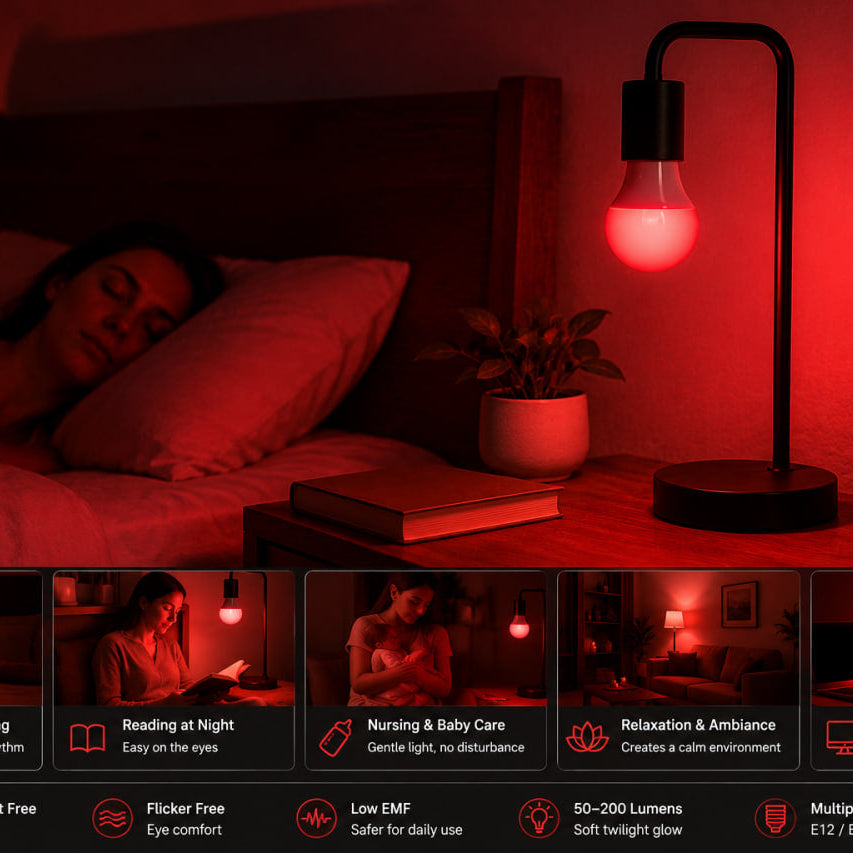
A twilight red light bulb is a specialty low-brightness red LED bulb built to eliminate blue and green light wavelengths, deliver flicker-free illumination, and produce low EMF output. Unlike standard colored red bulbs or high-power therapy lights, this bulb is engineered for gentle ambient home use, primarily nighttime bedroom lighting, relaxed indoor environments, and casual daily light wellness routines. It is one of the most popular home lighting choices for users seeking soft, non-disruptive evening lighting without harsh spectral interference.

Quick Q&A: What Most People Want to Know First
|
Question
|
Short Answer
|
My Practical Note
|
|---|---|---|
|
What is a twilight red light bulb used for?
|
It provides blue-light-free soft red lighting for bedrooms, night routines, and relaxed home ambiance.
|
I recommend it for evening use only; its low brightness is not suited for task lighting like reading or working.
|
|
Is a twilight red bulb different from regular red LED bulbs?
|
Yes, it removes blue and green wavelengths and features low EMF and zero flicker.
|
Standard red bulbs often retain residual blue light that can disrupt evening relaxation.
|
|
What base sizes do twilight red bulbs come in?
|
Most common options are E12, E14, and E26 bases for US standard fixtures.
|
Always check your lamp socket size before purchasing to avoid compatibility issues.
|
|
Are twilight red light bulbs safe for overnight use?
|
They carry low EMF output and no harsh wavelengths, making them suitable for overnight ambient lighting.
|
No home lighting device is entirely risk-free, but this bulb meets standard residential safety guidelines.
|
|
Can you use a twilight red bulb for red light therapy?
|
It supports casual light wellness ambiance but does not match dedicated therapy device power levels.
|
Do not replace professional red light therapy tools with basic twilight bulbs for structured routines.
|
|
Do twilight red bulbs work with dimmer switches?
|
Many models support adjustable brightness, but compatibility varies by brand.
|
Verify dimmable specs upfront, as non-dimmable bulbs may flicker with dimmer hardware.
|
Core Features of a True Twilight Red Light Bulb
Many generic red bulbs market themselves as “twilight” variants, but genuine twilight red light bulbs have specific defining features that set them apart. These technical details determine usability, comfort, and long-term home safety.
First, authentic twilight red bulbs deliver 100% blue and green light elimination. Blue and green light spectrums are known to interfere with evening body rhythms, so removing these wavelengths creates a neutral, calm lighting environment ideal for nighttime hours.
Second, premium models use zero-flicker LED technology. Subtle flicker in cheap bulbs can cause unnoticed eye strain during extended evening exposure, even if users cannot visually detect the fluctuation.
Third, quality twilight red light bulbs maintainlow EMF emissions. Standard LED bulbs often produce higher electromagnetic fields during operation, while specialty twilight designs minimize output for safer long-duration indoor use.
Finally, these bulbs feature low lumen output ranging from 50 to 200 lumens. This dim, sunset-style red tone creates a twilight ambiance without overwhelming dark-adapted eyes.
Twilight Red Light Bulb vs Standard Red LED Bulb: Full Comparison
The biggest confusion shoppers face is mixing up twilight red bulbs with basic colored red LED bulbs. The differences are subtle in appearance but significant in performance and home usability.
|
Feature
|
Twilight Red Light Bulb
|
Standard Red LED Bulb
|
User Impact
|
|---|---|---|---|
|
Light Spectrum
|
Zero blue, zero green light; pure red wavelength range
|
Contains residual blue and green light wavelengths
|
Twilight model supports calmer evening environments with less spectral disruption
|
|
Flicker Performance
|
100% flicker-free certified
|
Minor high-frequency flicker common in budget models
|
Longer evening use feels more comfortable with less eye fatigue
|
|
EMF Output
|
Low EMF, optimized for overnight use
|
Standard EMF levels typical of consumer LEDs
|
Lower EMF is preferable for bedrooms and prolonged close-range exposure
|
|
Brightness Range
|
50–200 lumens (soft twilight glow)
|
200–800 lumens (bright decorative lighting)
|
Twilight bulbs avoid harsh brightness for nighttime adaptation
|
|
Primary Use Case
|
Bedroom night lighting, evening relaxation, dark ambiance
|
Room decor, holiday lighting, accent illumination
|
Standard bulbs are too bright for dedicated nighttime routine use
|
|
Dimmable Function
|
Most premium versions support multi-level dimming
|
Many budget models are non-dimmable
|
Adjustable brightness matches personalized evening lighting preferences
|
Best Home Use Scenarios for Twilight Red Light Bulbs
Twilight red light bulbs excel in specific low-light, evening-focused scenarios. They are not universal lighting solutions, and using them in the right spaces maximizes their unique benefits.
|
Scenario
|
How to Use
|
Key Benefit
|
Usage Tip
|
|---|---|---|---|
|
Bedroom Night Lighting
|
Install in bedside lamps for post-sunset use
|
Eliminates blue light disruption for calm evening environments
|
Turn on 30–60 minutes before bedtime to transition from bright daytime lighting
|
|
Nighttime Care Routines
|
Use for late-night nursing, hydration, or quick room checks
|
Provides visibility without jarring bright light exposure
|
Avoid switching on overhead white lights once twilight lighting is active
|
|
Relaxation & Wind-Down Time
|
Use during meditation, gentle stretching, or quiet reading
|
Soft red spectrum creates a low-stimulation indoor atmosphere
|
Pair with minimal screen time for optimal evening routine results
|
|
Low-Light Home Ambiance
|
Use in living rooms or offices after dark
|
Creates warm twilight-style ambiance without harsh glare
|
Use as secondary lighting; do not rely on it for primary room illumination
|
Twilight Red Light Bulb Buying Checklist: Key Specs to Verify
Many retailers label generic red bulbs as “twilight” to boost sales. Use this checklist to filter genuine, high-quality options and avoid misleading products.
|
Buying Criteria
|
Ideal Specification
|
Red Flag to Avoid
|
|---|---|---|
|
Spectrum Certification
|
Explicitly listed blue-light-free and green-light-free design
|
Vague “soft red light” claims with no spectral filtering details
|
|
Flicker Rating
|
Zero flicker certification for residential indoor use
|
No flicker testing data or user reports of subtle flickering
|
|
EMF Level
|
Low EMF output optimized for close-range bedroom use
|
No EMF information listed or standard generic LED EMF ratings
|
|
Base Compatibility
|
E12 or E26 base for standard US lamp fixtures
|
Foreign base sizes with no adapter included for US sockets
|
|
Brightness Control
|
Multi-level dimmable or fixed low lumen output (50–200lm)
|
Overly bright bulbs above 300 lumens labeled as twilight bulbs
|
|
Safety Certifications
|
UL, CE, or FCC electrical safety compliance
|
Uncertified no-brand bulbs with no safety testing documentation
|
Home Safety Guidelines for Twilight Red Light Bulbs
While twilight red light bulbs are designed for gentle home use, proper safety practices prevent unnecessary eye strain or electrical issues. All guidelines align with standard residential lighting safety standards from leading health and electrical authorities.
First, avoid direct prolonged eye staring at the bulb light source. Even low-intensity red light can cause mild visual fatigue with extended direct exposure, per eye safety research from ophthalmology experts.
Second, always place bulbs in stable, compatible lamp fixtures. Loose socket connections can cause overheating or intermittent power fluctuation during long overnight use.
Third, discontinue use if the bulb produces unusual heat, buzzing sounds, or visible flickering. These signs indicate faulty internal wiring or incompatible dimmer hardware.
Fourth, keep the bulb clear of fabric, bedding, or flammable materials. Like all LED lighting devices, residual heat buildup creates minor fire risks with blocked ventilation.
For users with light sensitivity conditions, consulting a healthcare provider before regular nightly use is recommended as a precautionary step.
Safety guidance referenced from American Academy of Ophthalmology and FDA home electrical device standards.
Common Mistakes With Twilight Red Light Bulbs
Most user frustration with twilight red bulbs comes from simple setup or expectation errors. These common mistakes are easy to avoid with basic awareness.
|
Common Mistake
|
Result
|
Simple Fix
|
|---|---|---|
|
Using twilight bulbs for daytime task lighting
|
Dim output creates eye strain and insufficient visibility
|
Reserve twilight bulbs exclusively for evening and nighttime use
|
|
Pairing non-dimmable bulbs with dimmer switches
|
Persistent flickering and shortened bulb lifespan
|
Match bulb dimmable specs with your lighting hardware
|
|
Expecting therapy-grade light benefits
|
Unrealistic expectations and user disappointment
|
Understand these are ambiance bulbs, not therapeutic devices
|
|
Buying uncertified generic “twilight” bulbs
|
Hidden blue light and flicker negate core product benefits
|
Only purchase bulbs with verified spectral and safety certifications
|
|
Placing bulbs too close to bedding or fabrics
|
Heat buildup and potential safety hazards
|
Maintain open ventilation around all active lighting fixtures
|
My Practical View
From an editor’s perspective reviewing dozens of home ambient lighting products, twilight red light bulbs fill a very specific niche that no other standard bulb can replicate.
My personal take is simple: these bulbs are not for brightness, decor, or advanced light wellness routines. Their true value lies in creating a clean, low-stimulation evening environment that supports natural home wind-down routines.
This is where many home users get confused. Shoppers often assume all red bulbs perform the same, but the blue and green light filtration is the game-changing feature that separates true twilight models from cheap alternatives.
If I were helping a friend set up a nighttime bedroom lighting routine, I would start with a low-lumen E12 twilight bulb for bedside lamps. It offers the perfect balance of subtle visibility and calm ambiance without overstimulating the eyes.
I would not overthink wattage differences between reputable brands. The part I would pay attention to is verified blue-light-free labeling—this single feature defines the entire purpose of a twilight red light bulb.
One underdiscussed detail is EMF output. Many evening lighting setups involve close-range bulb exposure for hours overnight, so low EMF design is a practical safety feature worth prioritizing over minor price differences.
References
Frequently Asked Questions (FAQ)
Does a twilight red light bulb block blue light completely?
Genuine twilight red light bulbs eliminate 100% of blue and green visible light wavelengths, only emitting pure red spectrum light. This design removes the primary spectral elements that disrupt evening relaxation routines.
Can I use a twilight red bulb every night while sleeping?
Yes, these low-intensity, low-EMF bulbs are designed for overnight ambient bedroom use. Their dim output and filtered spectrum create minimal visual disruption for resting environments.
What socket size is best for US homes for twilight red bulbs?
E12 candelabra bases work for most US bedside lamps, while E26 standard bases fit typical table lamps and overhead fixtures. Always confirm your fixture’s socket size before purchasing.
Are twilight red light bulbs suitable for kids’ bedrooms?
The filtered, low-flicker, low-brightness design is gentle for children’s evening environments. As a precaution, avoid extremely close prolonged eye exposure during active use.
How long do twilight red light bulbs last?
Quality LED twilight bulbs offer a standard LED lifespan of 25,000+ hours, translating to multiple years of nightly use with consistent performance and no rapid brightness degradation.
Can twilight red bulbs replace dedicated red light therapy devices?
No. Twilight bulbs are ambient lighting tools with low irradiance output. They cannot replicate the targeted wavelength density and power of professional red light therapy equipment for structured wellness routines.