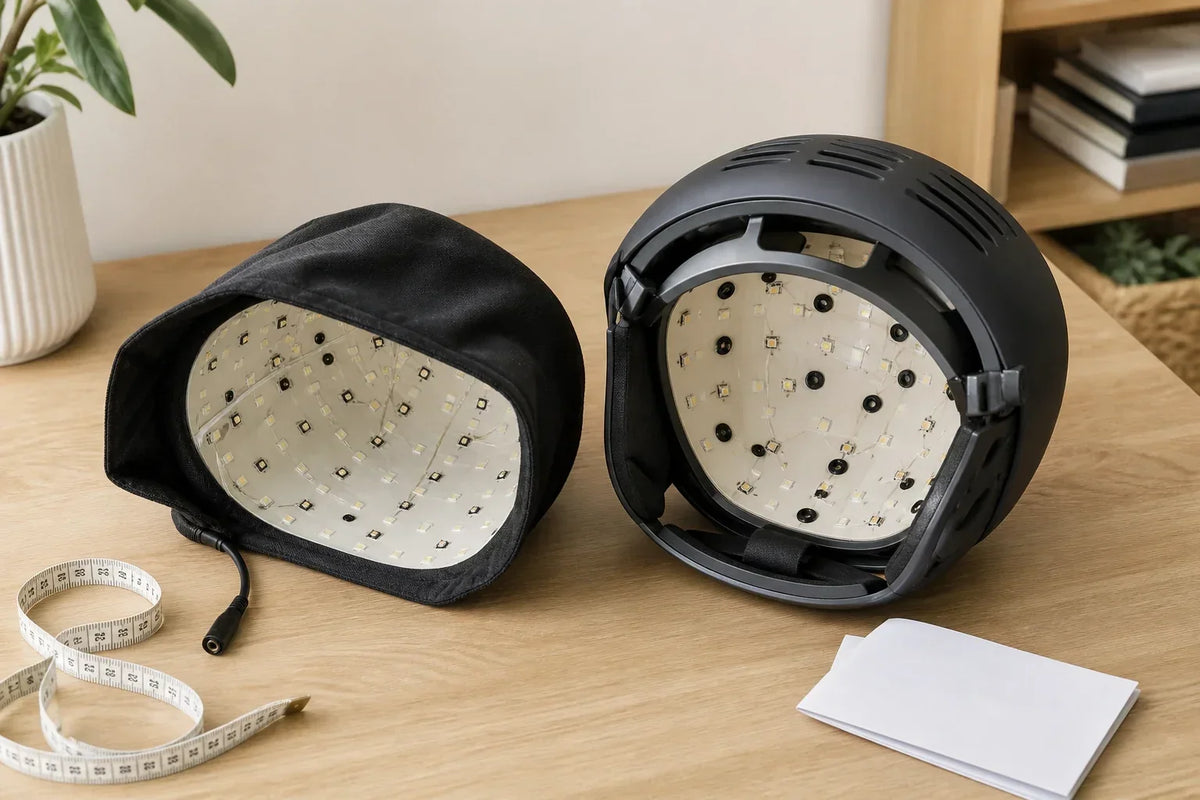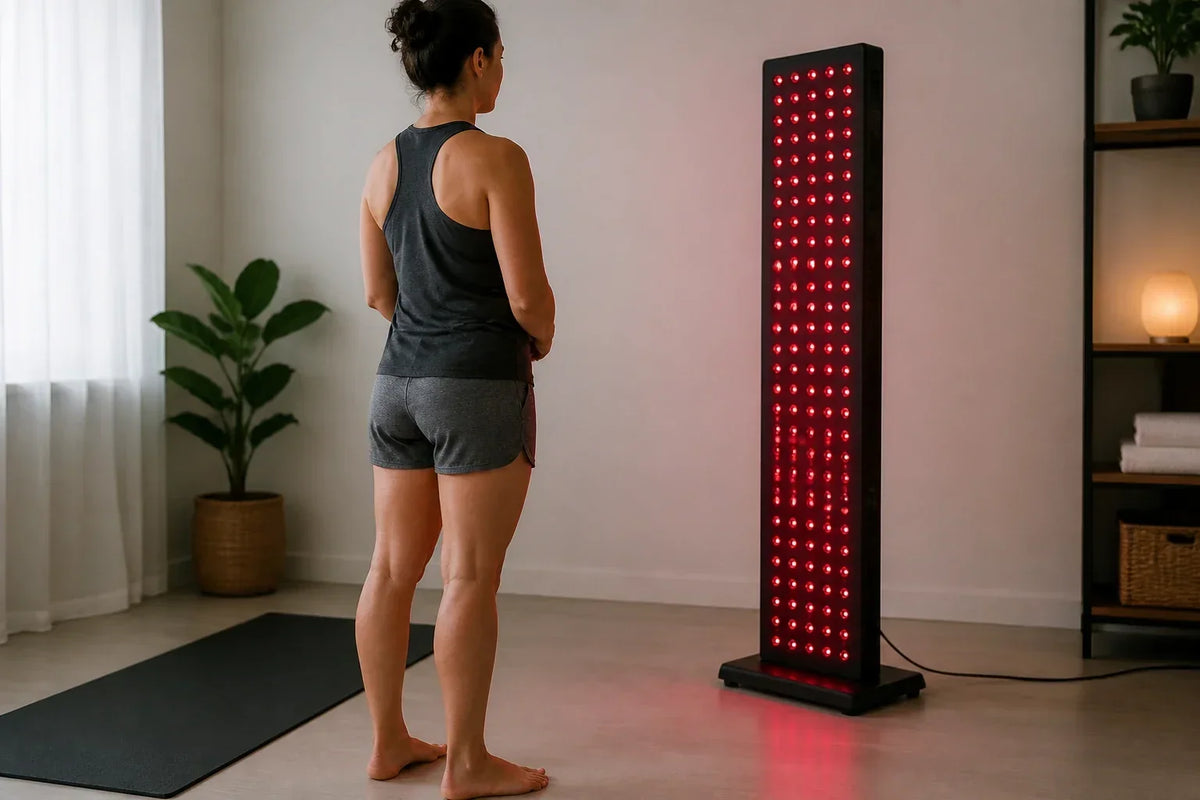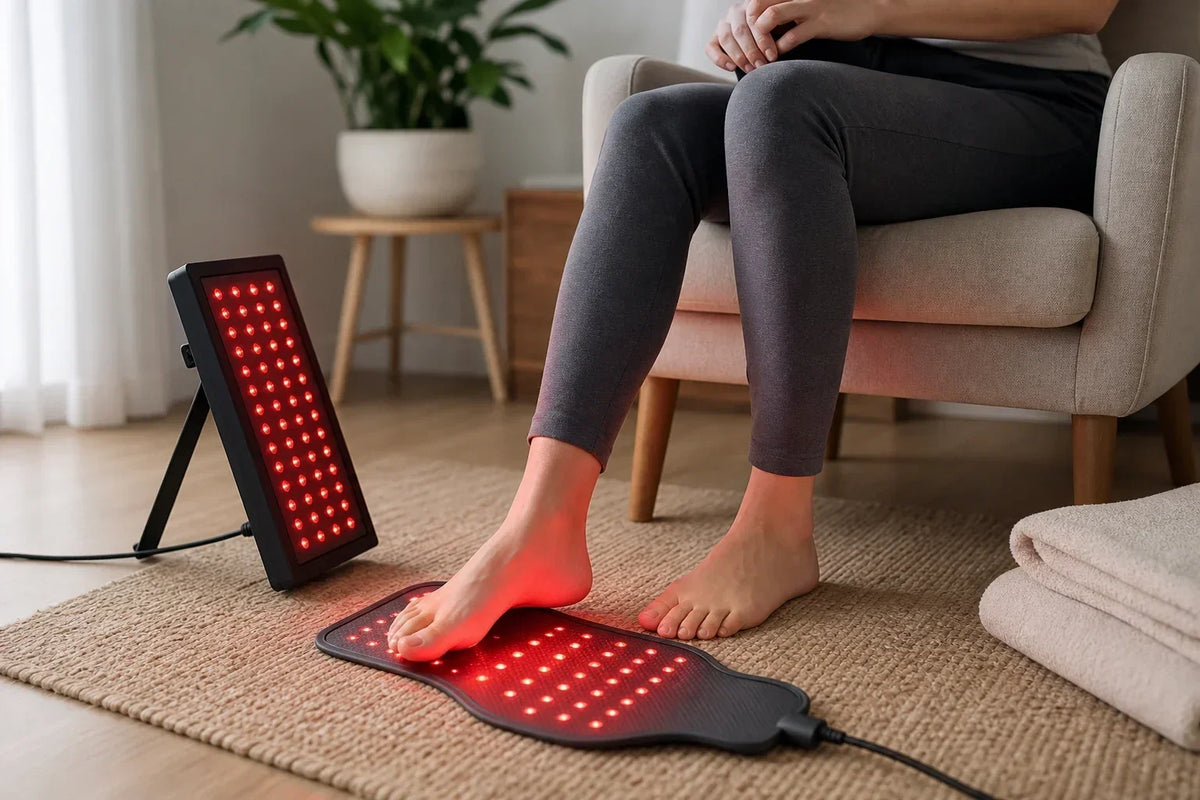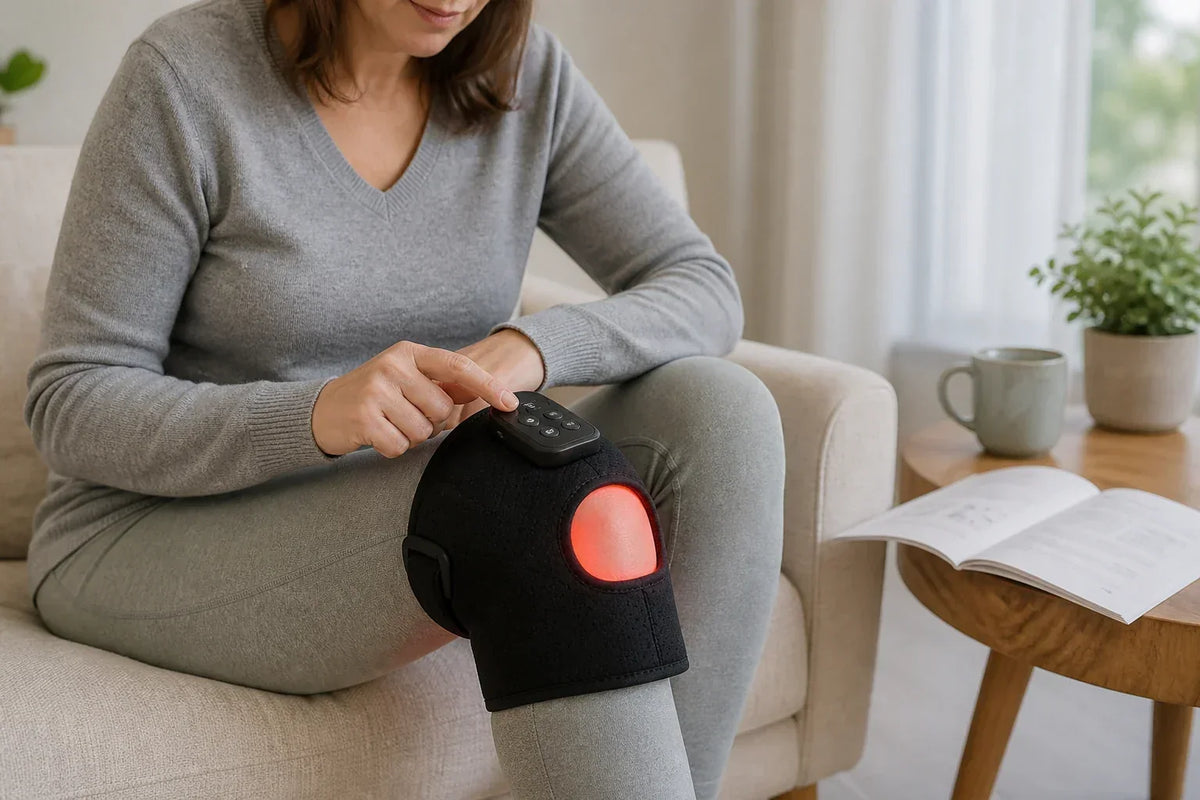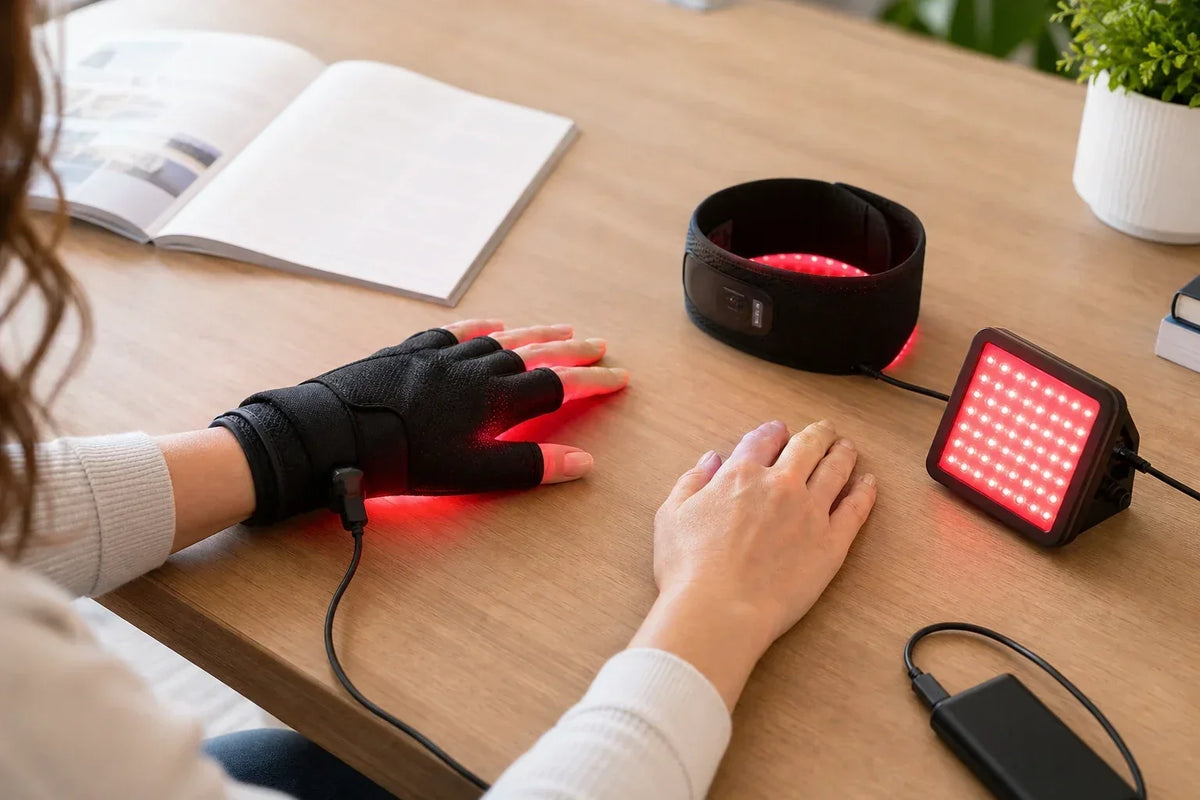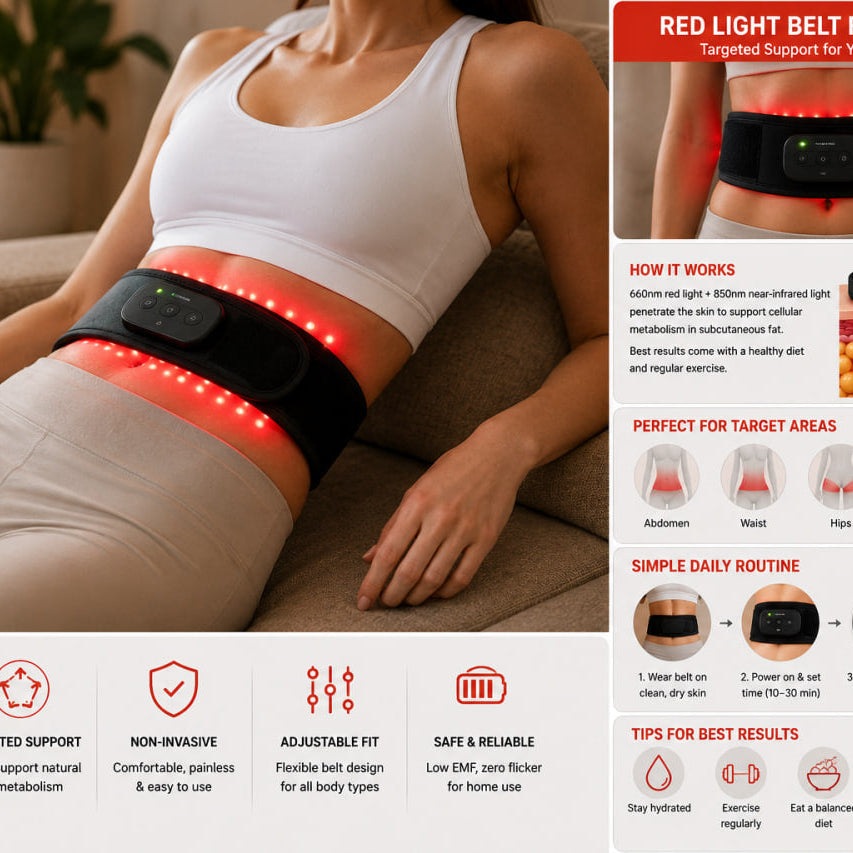
A red light belt for fat loss is a wearable photobiomodulation device designed for at-home body contouring support. It uses dual 660nm red and 850nm near-infrared wavelengths to penetrate subcutaneous tissue and support healthy cellular metabolism in common problem areas like the abdomen, waist, hips, and thighs. Importantly, this wearable tool works best as a complementary addition to consistent diet and movement habits, rather than a standalone body composition solution. No wearable light device can deliver drastic body changes without foundational lifestyle consistency.

Quick Q&A: What Most People Want to Know First
|
Question
|
Short Answer
|
My Practical Note
|
|---|---|---|
|
Do red light belts help with fat loss?
|
They support gentle body contouring and subcutaneous fat metabolism when paired with daily healthy habits.
|
I would set realistic expectations; results are gradual and rely on consistent long-term use.
|
|
How long should each red light belt session last?
|
Standard home sessions range from 10 to 30 minutes per targeted area.
|
Avoid exceeding 30 minutes per zone to prevent unnecessary skin overexposure.
|
|
How often can you use a red light fat loss belt?
|
Most home users follow 3 to 5 sessions per week for steady contouring support.
|
I recommend resting 1 day between heavy sessions to let tissue recover naturally.
|
|
Are red light fat loss belts safe for daily home use?
|
FDA-registered low-intensity red light belts carry minimal risk for typical adult use.
|
No device is zero-risk; always follow manufacturer timing and distance guidelines strictly.
|
|
What’s the difference between red light belts and lipo belts?
|
Red light belts use phototherapy, while traditional lipo belts rely on compression and heat stimulation.
|
Red light models offer deeper tissue penetration for consistent daily wearable routines.
|
|
Can you target belly fat with a red light belt?
|
Yes, the flexible wrap design fits abdominal areas for targeted contouring support.
|
Spot support works best alongside full-body movement and balanced hydration.
|
How Red Light Belts for Fat Loss Work
Red light contouring belts operate on photobiomodulation, a non-invasive light energy process that supports natural cellular function in human tissue. Low-wavelength red and near-infrared light penetrates the outer skin layer to reach subcutaneous fat tissue, encouraging normal metabolic activity within fat cells.
This process supports the body’s natural breakdown and removal of excess cellular lipids over time. It does not create rapid or drastic body changes, nor does it replace calorie balance and physical activity for overall body composition management.
Genuine fat loss-focused red light belts combine two key wavelengths for balanced performance. Visible 660nm red light supports surface skin health and tissue tone, while 850nm near-infrared light delivers deeper penetration for underlying soft tissue support.
From an editor’s point of view, the biggest differentiator between cheap generic belts and premium models is consistent wavelength output. Many budget devices use inconsistent light diodes that reduce routine effectiveness over time.
Red Light Belt Types for Contouring & Fat Support: Full Comparison
Not all red light wearable belts are built for body contouring and fat metabolism support. Many generic belts prioritize muscle recovery only, with weaker specs for body shaping goals. Use this table to identify the right type for fat loss-focused routines.
|
Belt Type
|
Key Wavelengths
|
Primary Use Case
|
Best For
|
Limitation
|
|---|---|---|---|---|
|
Fat Loss Focused Red Light Belt
|
660nm + 850nm dual wavelength
|
Body contouring, subcutaneous fat support, waist/hip toning
|
Users building consistent long-term shaping routines
|
Requires lifestyle pairing for noticeable results
|
|
Muscle Recovery Red Light Belt
|
Predominantly 850nm infrared
|
Post-workout muscle soothing, tension relief
|
Fitness users focused on recovery only
|
Minimal targeted contouring benefits
|
|
Vibration + Red Light Combo Belt
|
Basic red light + mechanical vibration
|
Temporary surface stimulation, massage
|
Users wanting massage + light therapy combo
|
Vibration does not enhance fat metabolism support
|
|
Single-Wavelength Red Belt
|
Only 660nm visible red light
|
Skin tone improvement, surface relaxation
|
Basic skincare and ambient wellness use
|
Lacks deep penetration for subcutaneous tissue support
|
Recommended Session Duration & Weekly Frequency Chart
Consistent, properly timed sessions create the most reliable results for red light belt contouring routines. Overusing the device does not speed up progress and may cause unnecessary skin irritation. This schedule aligns with standard home-use phototherapy guidelines for adult users.
|
User Level
|
Per Session Time
|
Weekly Frequency
|
Target Areas
|
Routine Tip
|
|---|---|---|---|---|
|
Beginner (0–4 weeks)
|
10–15 minutes
|
3x weekly
|
Abdomen, waist
|
Start short to build skin tolerance and avoid sensitivity
|
|
Intermediate (4–12 weeks)
|
15–20 minutes
|
4–5x weekly
|
Waist, hips, thighs
|
Rotate areas to avoid over-treating single zones daily
|
|
Advanced (12+ weeks)
|
20–30 minutes
|
4–5x weekly
|
Full core, lower body
|
Add light movement post-session to boost circulation
|
Step-by-Step Home Routine for Red Light Belt Fat Loss Support
Following a structured routine maximizes the benefits of your red light belt. This simple home workflow is optimized for body contouring and requires no professional supervision.
First, clean and dry your target skin area thoroughly. Lotion, oil, or sweat can block light penetration and reduce routine effectiveness.
Second, fasten the flexible red light belt snugly over your target zone (abdomen, waist, or hips). Ensure full skin contact without tight constriction that limits blood flow.
Third, power on the device and set your timed session based on your user level. Avoid extending sessions beyond recommended limits.
Fourth, remain stationary or perform light movement like walking during the session. Intense exercise during treatment offers no additional benefits.
Finally, hydrate well after each session and maintain consistent daily movement and balanced nutrition to support natural body contouring progress.
Red Light Belt Buying Checklist for Fat Loss Goals
Most generic red light belts are marketed for general wellness but lack the specs needed for contouring and fat metabolism support. Use this checklist to filter high-quality, goal-aligned devices.
|
Buying Criteria
|
Ideal Spec for Fat Loss Support
|
Red Flag to Avoid
|
|---|---|---|
|
Wavelength Pairing
|
660nm red + 850nm near-infrared dual output
|
Single wavelength only or unmarked random diodes
|
|
Diode Quality & Density
|
High-density LED layout for even full-area coverage
|
Sparse diodes with uneven light distribution and dark spots
|
|
Timer Function
|
Adjustable 10–30 minute auto-shutoff timer
|
No timer, requiring manual power off (high overuse risk)
|
|
Safety Certification
|
FDA-registered, FCC, CE compliant for home use
|
Uncertified no-brand devices with no safety testing data
|
|
Build Flexibility
|
Stretchy, adjustable fit for core and lower body zones
|
Rigid design that cannot contour to waist/hip curves
|
|
EMF & Flicker Rating
|
Low EMF, zero-flicker certified for long wear
|
High flicker and unlisted EMF levels for close body contact
|
Common Red Light Belt Mistakes That Limit Results
Most users fail to see consistent contouring progress due to simple, avoidable routine errors—not device ineffectiveness. These mistakes are the most prevalent among home users.
|
Common Mistake
|
Negative Impact
|
Simple Fix
|
|---|---|---|
|
Expecting standalone fat loss results
|
No meaningful contouring progress despite daily use
|
Pair belt sessions with consistent movement and balanced eating habits
|
|
Using skincare products before sessions
|
Light penetration is blocked, reducing routine efficiency
|
Always treat on clean, completely dry bare skin
|
|
Over-treating areas to speed up results
|
Mild skin sensitivity and no accelerated progress
|
Stick to recommended timing and frequency guidelines
|
|
Choosing single-wavelength budget belts
|
Lacks deep tissue support for subcutaneous contouring
|
Invest in verified dual 660/850nm wavelength models
|
|
Inconsistent sporadic use
|
No cumulative benefits from photobiomodulation
|
Follow a fixed weekly schedule for 8–12 week minimum cycles
|
Home Use Safety Guidelines & Precautions
Red light therapy belts are widely considered low-risk for adult home use, but basic safety practices prevent discomfort and unnecessary exposure issues. All guidance aligns with public health and dermatology best practices for at-home light devices.
Avoid direct prolonged eye exposure to active LED diodes. While red and infrared wavelengths are low-intensity, sustained close contact can cause mild eye fatigue.
Discontinue use if you experience persistent redness, itching, or skin sensitivity. Every skin type reacts differently to repeated light exposure.
Pregnant users, individuals with photosensitive skin conditions, or those taking light-sensitive medications should consult a healthcare provider before regular use.
Do not use the device on broken, irritated, or recently sunburned skin to avoid additional tissue stress. Per dermatology guidance, overexceeding recommended session durations may lead to mild skin irritation, so consistent adherence to timed routines is critical for safe long-term use.
Safety guidelines referenced from official public health and dermatology industry standards for at-home red light therapy devices, including FDA device safety regulations, American Academy of Dermatology (AAD) safety guidance, and peer-reviewed photobiomodulation research.
My Practical Buying & Routine View
My personal take is simple: red light belts for fat loss are excellent supportive tools, but they are not shortcuts for body composition management. This is where many home users get confused and end up disappointed with their results.
The pattern I notice in user routines is that consistent, moderate sessions over 8–12 weeks deliver far better subtle contouring results than occasional long sessions. Most ranking articles fail to emphasize this cumulative long-term requirement.
If I were helping a friend select a belt, I would prioritize dual 660/850nm wavelengths and certified safety specs over low price. Budget single-wavelength belts only deliver surface-level benefits and waste long-term routine effort.
I would not overthink advanced features like vibration or pulse modes. The part I would pay attention to is consistent diode density and auto-timer functionality—these two features define routine safety and effectiveness more than any luxury add-on.
In my view, the best approach is treating the belt as a daily wellness complement, not a standalone solution. Paired with basic hydration, walking, and balanced meals, it supports gradual, sustainable body contouring improvements over time.
References
Frequently Asked Questions (FAQ)
How long does it take to see contouring results from a red light fat loss belt?
Most consistent users notice subtle improvements in skin tone and soft tissue contouring after 4–6 weeks of regular use. More noticeable changes typically appear after 8–12 weeks of paired healthy lifestyle habits.
Can I use a red light belt every day for fat loss support?
Daily use is possible for most adults, but spacing sessions 4–5 times weekly with rest days reduces skin exposure risk and supports better tissue recovery long-term.
What body areas work best with a red light contouring belt?
The flexible wrap design works exceptionally well for the abdomen, waist, love handles, hips, and upper thighs. It is not designed for narrow or highly curved areas like the face or arms.
Do red light belts cause skin side effects?
When used within recommended timing limits, side effects are rare. Overexposure may cause mild temporary redness or sensitivity, which resolves with reduced session frequency.
Is a red light belt better than a traditional sauna belt for contouring?
Red light belts offer consistent deep tissue phototherapy support, while sauna belts only deliver surface heat stimulation. Red light models provide more reliable long-term contouring benefits for most home users.
Do I need to diet and exercise while using a red light fat loss belt?
Yes, the belt is a complementary supportive tool. Consistent movement and balanced nutrition are required to create sustainable body composition and contouring improvements.