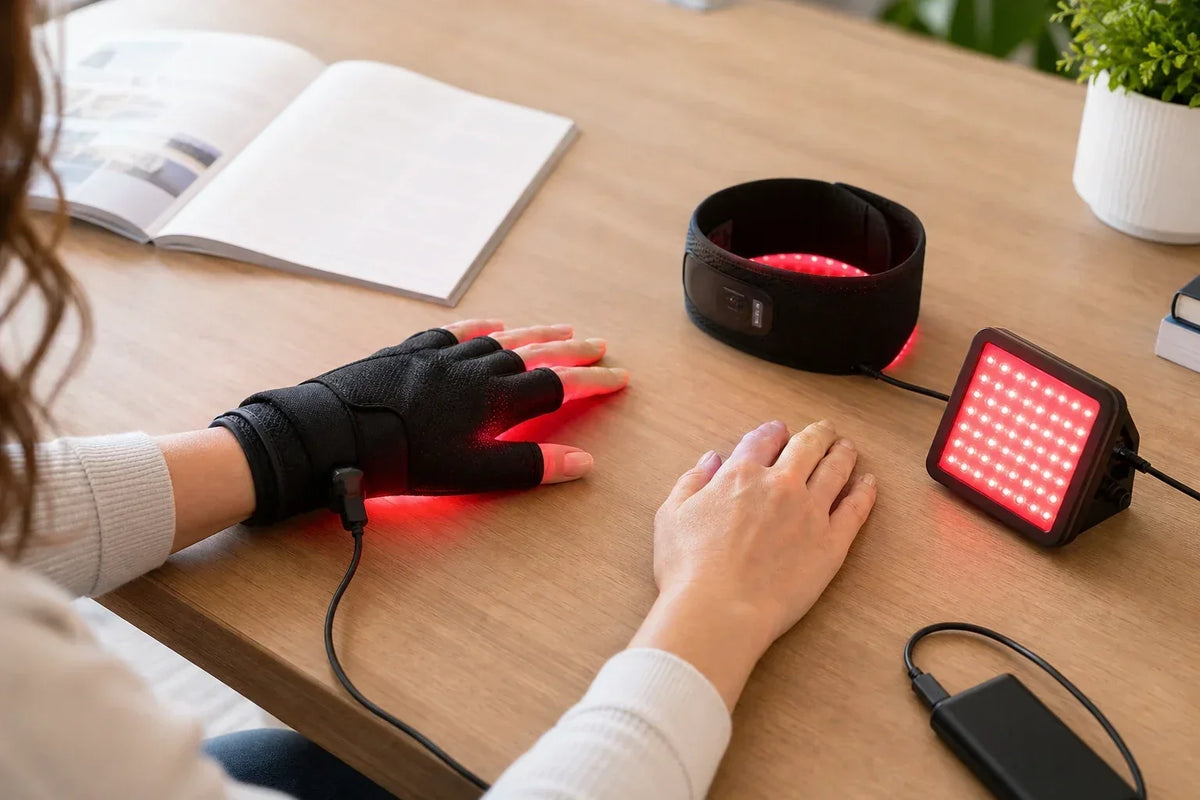
Red light therapy hyperpigmentation guide: learn what it may do for dark spots, melasma, acne marks, SPF, timeline, and safety limits.
Editorial Review: This article was created with reference to public dermatology and photobiomodulation resources, including the American Academy of Dermatology, Cleveland Clinic, PubMed/NIH, FDA general wellness guidance, and FTC health product compliance guidance. It is written for consumer education and skincare routine planning, not medical advice.
If you searched red light therapy hyperpigmentation, the honest answer is this: red light therapy may support a more even-looking complexion and may help the appearance of some dark spots over time, but it should not be treated as a guaranteed dark spot remover. Hyperpigmentation can come from acne marks, sun exposure, melasma, irritation, hormones, and skin tone differences, so the right routine depends on what kind of pigmentation you are dealing with.

My personal take is simple: red light can be a helpful supporting step, but sunscreen is still the foundation. If someone uses red light three times a week but skips SPF every morning, the dark spot routine is already working against itself.
The practical question is not only “Does red light help hyperpigmentation?” It is “What kind of dark spots do I have, is my skin heat-sensitive, am I using sunscreen correctly, and what can a home LED device realistically do?”
Quick Q&A: What Most People Want to Know First
| Question | Short Answer | My Practical Note |
|---|---|---|
| Can red light therapy help hyperpigmentation? | It may support a more even-looking skin appearance and may help some dark spots look lighter over time. | I would not use it as the only step. SPF and a stable routine matter more than people think. |
| Can red light make hyperpigmentation worse? | For some people, especially those prone to melasma or heat-triggered pigmentation, caution makes sense. | If your pigmentation worsens with heat or sunlight, I would ask a dermatologist before using LED masks or strong panels on the face. |
| Is red light good for dark spots? | It may help the appearance of dark spots in some routines, but results are usually gradual and subtle. | Think in months, not days. |
| Does red light help melasma? | Photobiomodulation has been studied for melasma, but the evidence is still developing. | Melasma is stubborn. I would not freestyle with heat or light if melasma is your main concern. |
| Red light or blue light for hyperpigmentation? | Red light is usually the more relevant choice for skin appearance and tone support. Blue light may be less ideal for pigmentation-prone skin. | If dark spots are your priority, I would not chase every LED color. |
| Do I still need sunscreen? | Yes. Daily broad-spectrum SPF is essential when working on dark spots. | This is the boring step that often decides the result. |
What Hyperpigmentation Means in Real Skin
Hyperpigmentation means areas of skin look darker than the surrounding skin. In everyday skincare language, people call these dark spots, brown spots, acne marks, sun spots, melasma, or uneven tone.
The American Academy of Dermatology explains that dark spots and patches can return even after they improve, and dermatologists often recommend sunscreen, hats, and sun avoidance during peak hours. You can review its dark spot guidance here: American Academy of Dermatology dark spot guidance.
This matters because red light therapy hyperpigmentation content often jumps straight to devices. I would start with the type of pigmentation first.
| Type of Hyperpigmentation | What It Looks Like | What Often Triggers It | Where Red Light May Fit |
|---|---|---|---|
| Post-acne marks | Flat brown, red, purple, or gray marks after breakouts | Acne, picking, irritation, sun exposure | May support overall tone and skin appearance over time. |
| Sun spots | Small brown spots on sun-exposed areas | Years of UV exposure | May be supportive, but sun protection is non-negotiable. |
| Melasma | Patchy brown or gray-brown areas, often on the face | Sunlight, hormones, heat, pregnancy, certain medications | Use caution; dermatologist guidance is smarter. |
| Post-irritation darkening | Darker areas after skin irritation | Harsh products, over-exfoliation, friction | Calm the skin barrier first before adding devices. |
| Uneven tone | General patchiness rather than one clear spot | Sun exposure, inflammation, aging, product irritation | Red light may be one support step in a longer routine. |
Does Red Light Therapy Help Dark Spots?
Red light therapy may help some people with the look of dark spots, but the language needs to stay realistic. It is not an eraser. It is not a substitute for sunscreen. It is not the same as a dermatologist procedure.
The American Academy of Dermatology notes that in one study of facial LED red-light sessions, more than 90% of participants noticed some improvement, including softer skin, smoother skin, less redness, and lightening of dark spots. You can review the AAD red light overview here: American Academy of Dermatology red light therapy overview.
Cleveland Clinic also describes red LED light therapy as a skincare approach that may help stimulate collagen production, while blue LED light is usually discussed more for acne-prone skin. You can review its LED light therapy overview here: Cleveland Clinic LED light therapy overview.
Here’s the practical way I’d look at it: red light may be worth considering if your goal is gradual improvement in skin appearance, but it should sit inside a routine built around daily SPF and low-irritation skincare.
Can Red Light Make Hyperpigmentation Worse?
This is the question many articles avoid, but it matters. Some people are pigmentation-prone. Some people have melasma. Some people notice dark spots worsen with heat, sunlight, aggressive skincare, or device overuse.
Red light itself is not the same as UV tanning, but certain devices can create warmth. Some LED masks and panels also combine red, blue, and near-infrared light. If your pigmentation is heat-sensitive, more device time is not automatically better.
My view is direct: if you have melasma, darker skin tones that mark easily, or spots that flare with heat, do not treat LED devices like harmless toys. Start conservatively, avoid heat buildup, and get professional guidance if the pigmentation is stubborn or spreading.
| Situation | Risk Level | What I Would Do |
|---|---|---|
| Flat post-acne marks with calm skin | Lower concern | Use a gentle routine, red light as directed, and daily SPF. |
| Melasma-prone skin | Higher concern | Ask a dermatologist before using heat-producing LED devices often. |
| Skin darkens after irritation | Medium to high concern | Repair the barrier first; avoid stacking too many actives. |
| Using blue light frequently | Needs caution | Be careful if pigmentation is your main concern. |
| Skipping sunscreen | High concern | Fix sunscreen habits before judging red light results. |
Red Light Therapy and Melasma
Melasma is one of the trickiest forms of hyperpigmentation because it is often influenced by sunlight, visible light, hormones, heat, and individual skin tendency. It can also return even after it improves.
A PubMed review on photobiomodulation for melasma describes PBM as a promising non-invasive approach, but also states that robust and well-designed clinical trials are needed to determine optimal light parameters and evaluate effects more thoroughly. You can review the PubMed abstract here: PubMed review on photobiomodulation for melasma.
A pilot study also explored pulsed photobiomodulation for dermal melasma. You can review the full paper here: NIH/PMC pilot study on photobiomodulation and melasma.
That sounds interesting, but I would not translate it into “any red light mask helps melasma.” Study settings, device type, dose, wavelength, pulse pattern, heat, and skin type all matter.
Why Sunscreen Matters More Than People Want to Hear
If hyperpigmentation is your main concern, sunscreen is not optional. Red light therapy cannot outwork daily unprotected sun exposure.
A review on sunscreen in melasma and post-inflammatory hyperpigmentation states that sunscreen with UV and visible light protection is an important supporting part of preventing hyperpigmentation from worsening and improving appearance. You can review the paper here: NIH/PMC review on sunscreen and hyperpigmentation.
The AAD also notes that tinted sunscreen can help protect against visible light, which can worsen dark spots. You can review its sunscreen guidance here: American Academy of Dermatology sunscreen guidance.
| Routine Step | Why It Matters for Hyperpigmentation | My Practical Note |
|---|---|---|
| Daily broad-spectrum SPF | Helps reduce UV-driven darkening | This is the first step, not the final bonus step. |
| Tinted sunscreen | May add visible light protection for dark spots | Especially worth considering for melasma-prone skin. |
| Wide-brimmed hat | Reduces direct sun exposure | Useful when spots are on cheeks, forehead, and upper lip. |
| Consistent red light use | May support skin appearance over time | Only helpful if the routine is calm and repeatable. |
| Avoiding over-exfoliation | Helps reduce irritation-driven darkening | Too many actives can make the routine backfire. |
Red Light vs Blue Light for Hyperpigmentation
If dark spots are your priority, red light is usually the more relevant LED conversation than blue light. Blue light is often discussed for acne-prone skin, but pigmentation-prone users should be more careful with LED color choices and heat buildup.
A review on visible light and melanocyte biology notes that different visible light wavelengths can interact with pigmentation biology in different ways. You can review the paper here: NIH/PMC review on visible light and melanocyte biology.
I would not overthink this part as a beginner. If your goal is dark spots, do not buy a multi-color device just because it looks more advanced. Understand what each mode is for.
| Light Type | Common Skincare Discussion | Hyperpigmentation Takeaway |
|---|---|---|
| Red light | Skin appearance, redness look, collagen-related support, tone support | Most relevant LED option for a gentle tone-focused routine. |
| Near-infrared | Often paired with red light in panels and masks | Check heat and device instructions, especially on the face. |
| Blue light | Often discussed for active acne routines | Use caution if pigmentation is your main issue. |
| UV light | Sunlight and tanning exposure | Not the same as red light therapy and not helpful for dark spots. |
How to Use Red Light in a Hyperpigmentation Routine
If I were building a routine for hyperpigmentation, I would keep it boring and consistent. Cleanse, red light as directed, moisturize, and protect the skin every morning. That is not exciting, but it is easier to track.
The biggest mistake is stacking too many “brightening” steps at once. Vitamin C, retinoids, acids, exfoliating masks, red light, peels, and new serums all added in one week can irritate the skin. For some people, irritation means more dark marks.
| Step | What to Do | What I Would Avoid |
|---|---|---|
| Cleanse | Use a gentle cleanser and dry the skin | Scrubbing dark spots aggressively |
| Red light session | Follow device time, distance, and eye guidance | Increasing session time to chase faster fading |
| Moisturize | Support the skin barrier after the session | Skipping moisturizer if skin feels dry or tight |
| Morning SPF | Use broad-spectrum SPF; consider tinted SPF for dark spots | Using red light at night but skipping sunscreen next day |
| Track progress | Take monthly photos in the same lighting | Checking spots daily under different bathroom lights |
How Long Does Red Light Take for Hyperpigmentation?
Hyperpigmentation is slow. Even strong skincare routines need time, and melasma can take months of steady management. I would not judge a red light routine after one week.
AAD’s melasma guidance says results can take time, often months, and sun protection is a key part of the plan. You can review the AAD melasma guidance here: American Academy of Dermatology melasma guidance.
For a home red light device, I would think in 8 to 12 weeks before judging skin tone changes, and longer for stubborn pigmentation. If spots are growing, changing shape, bleeding, or looking unusual, do not treat them as normal dark spots. Get them checked.
| Timeframe | What to Watch | My Practical View |
|---|---|---|
| Week 1–2 | Comfort, warmth, dryness, irritation | Do not expect visible fading yet. |
| Week 3–6 | Overall skin comfort and tone consistency | Small changes may be easier to see in photos. |
| Week 8–12 | Dark spot appearance and uneven tone | This is a better checkpoint for home routines. |
| 3–6 months | Stubborn melasma or long-standing spots | Consider dermatologist guidance if progress is limited. |
Common Mistakes With Red Light Therapy Hyperpigmentation Routines
The most common mistake is treating red light like the main character while ignoring sunscreen. The second mistake is using the device too long or too close because “more feels better.” The third is adding it to an already irritated routine.
FDA general wellness guidance explains how low-risk wellness devices should stay within appropriate general wellness boundaries. You can review it here: FDA General Wellness Policy for Low Risk Devices.
FTC guidance also says health-related claims should be truthful, not misleading, and supported by reliable evidence. You can review it here: FTC Health Products Compliance Guidance.
| Mistake | Why It Happens | Better Move |
|---|---|---|
| Skipping sunscreen | People focus on devices and serums | Use daily broad-spectrum SPF; consider tinted SPF. |
| Using red light too long | Longer feels more serious | Follow the device manual and avoid heat buildup. |
| Ignoring melasma triggers | Melasma can be misunderstood as simple dark spots | Be careful with heat, sun, and irritating routines. |
| Using every active at once | People want fast fading | Add one change at a time so you know what helps. |
| Choosing blue light for dark spots | Multi-color masks look more advanced | Choose modes based on your real skin goal. |
| Expecting perfect skin | Marketing sets unrealistic expectations | Aim for gradual improvement in appearance. |
My Practical View
My personal take is simple: red light therapy may be a reasonable support step for hyperpigmentation, but only when the routine is calm, sun-protected, and realistic. I would not buy a red light mask expecting it to erase melasma or dark spots by itself.
If this were my routine, I would first identify the type of pigmentation. For post-acne marks, I would focus on calming the skin, preventing new breakouts, using SPF daily, and adding red light carefully. For melasma, I would be more cautious and bring in a dermatologist sooner.
The part I would pay attention to is heat and irritation. Pigmentation-prone skin can be sensitive to both. A gentle 10-minute routine may be smarter than an aggressive 25-minute session with too many skincare actives layered around it.
So, red light therapy hyperpigmentation routines can make sense, but the best result usually comes from the boring combination: consistent SPF, gentle skincare, realistic device use, and patience.
References
- American Academy of Dermatology: Red Light Therapy Safety Overview
- American Academy of Dermatology: How to Fade Dark Spots
- American Academy of Dermatology: Melasma Guidance
- American Academy of Dermatology: Choosing the Right Sunscreen
- Cleveland Clinic: LED Light Therapy Overview
- PubMed: Photobiomodulation for Melasma Treatment
- NIH/PMC: Dual Effect of Photobiomodulation on Melasma
- NIH/PMC: Sunscreen in Melasma and Post-Inflammatory Hyperpigmentation
- NIH/PMC: Visible Light and Melanocyte Biology
- FDA: General Wellness Policy for Low Risk Devices
- FTC: Health Products Compliance Guidance
FAQ
Can red light therapy help hyperpigmentation?
Red light therapy may help support a more even-looking skin appearance and may help some dark spots look lighter over time, but it should not be used as a guaranteed hyperpigmentation solution.
Can red light make hyperpigmentation worse?
Some pigmentation-prone people, especially those with melasma or heat-sensitive skin, should be cautious. If dark spots worsen with heat or sunlight, ask a dermatologist before using LED devices frequently on the face.
Does red light therapy help melasma?
Photobiomodulation has been studied for melasma, but the evidence is still developing. Melasma is complex and often needs sunscreen, trigger management, and dermatologist-guided care.
Is red light or blue light better for hyperpigmentation?
Red light is usually more relevant for skin tone and skin appearance support. Blue light is more often discussed for active acne routines and may not be the first choice when dark spots are the main concern.
How long does red light take for dark spots?
For home routines, think in weeks to months. An 8 to 12 week checkpoint is more realistic than expecting visible changes after a few sessions.
Do I need sunscreen if I use red light therapy for hyperpigmentation?
Yes. Daily broad-spectrum sunscreen is essential for dark spot routines. Tinted sunscreen may be helpful because visible light can worsen some dark spots.