Protective goggles for red light therapy explained: when to wear them, why sunglasses are not enough, and how to choose eye protection for panels and masks.
Editorial Review: This article was created with reference to public safety and skincare resources, including the American Academy of Dermatology, Harvard Health, Cleveland Clinic, FDA general wellness guidance, and FTC health product compliance guidance. It is written for consumer education and at-home device use, not medical advice.

If you searched protective goggles for red light therapy, the answer is simple: if your device directions recommend goggles, wear them every session. If you are using a bright panel near your face, a device with near-infrared light, or any setup where the light feels intense, protective goggles are the safer choice.
Red light therapy is not the same as UV tanning. That part matters. But “not UV” does not mean “stare into the LEDs.” Red and near-infrared devices can be very bright, and near-infrared light may be less visible to your eyes. My personal take is simple: eye protection is one of the easiest habits to get right, so I would not overcomplicate it.
The better question is not only “Do I need goggles?” It is “What kind of red light device am I using, how close is it to my face, does it include near-infrared, and what does the manual say?”
Quick Q&A: What Most People Want to Know First
| Question | Short Answer | My Practical Note |
|---|---|---|
| Do you need protective goggles for red light therapy? | If the device directions recommend them, yes. For bright panels near the face, goggles are a smart precaution. | I would rather use goggles than guess with eye comfort. |
| Can I just close my eyes during red light therapy? | Closing your eyes may reduce brightness, but it is not the same as proper protective goggles. | For face sessions or strong panels, I would use the provided goggles. |
| Are sunglasses enough? | No, not if the device calls for protective goggles. | The AAD specifically warns not to substitute sunglasses for recommended goggles. |
| Do LED masks need goggles? | Some masks have built-in eye shields, while others recommend separate protection. | Follow the exact device instructions, not advice from another mask. |
| Do goggles block the benefits around the eyes? | They block or reduce light reaching the eyes, but that is the point of eye safety. | I would not sacrifice eye comfort for a tiny extra skincare area. |
| What goggles should I use? | Use goggles recommended by the device maker or goggles rated for the relevant wavelength range. | Check red and near-infrared coverage, fit, and side protection. |
Why Protective Goggles Matter
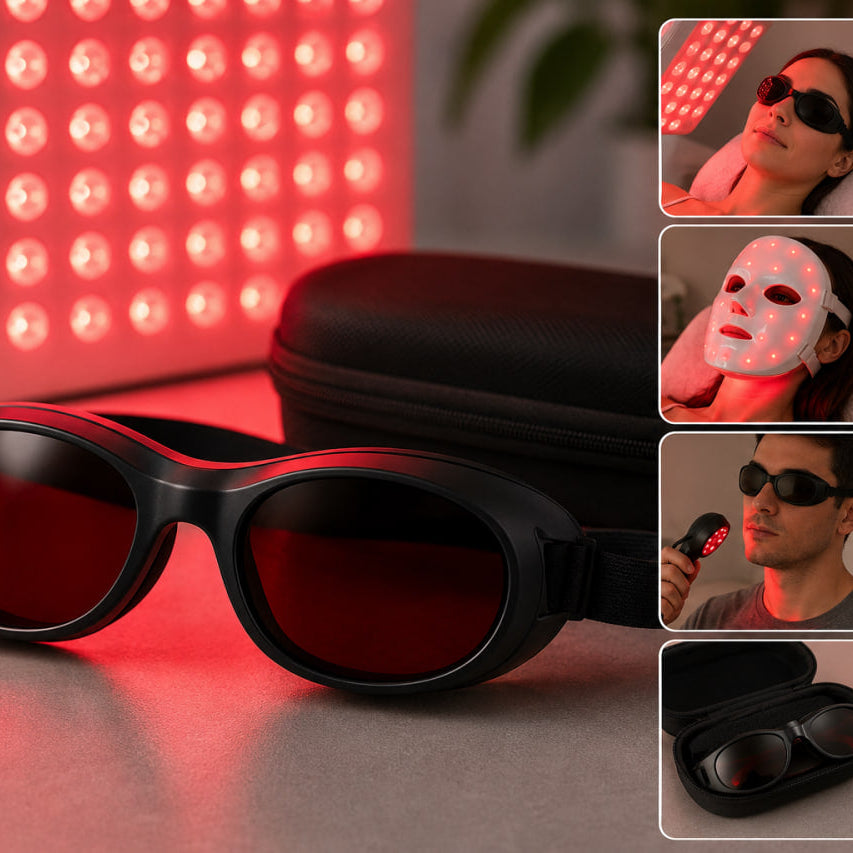
Protective goggles for red light therapy are designed to reduce direct light exposure and make sessions more comfortable. This is especially relevant when you use a strong panel, stand close to the device, or place the device near your face.
The American Academy of Dermatology recommends wearing eye protection if the directions tell you to, using the eye protection that is recommended, and not substituting sunglasses for protective goggles. You can review its guidance here: American Academy of Dermatology red light therapy guide.
Harvard Health gives a similar practical warning: wear eye protection if the device directions recommend it, make sure the light is not going into your eyes, and use shields if they are provided. You can review its article here: Harvard Health red light therapy guidance.
Here’s the practical way I’d look at it: if a device includes goggles in the box, the company probably did not include them for decoration. Use them.
When You Should Wear Goggles
Not every red light setup feels the same. A small facial wand is different from a large full-body panel. A face mask with built-in eye inserts is different from a bright open LED panel placed 12 inches from your face.
The more direct, bright, close, and face-focused the session is, the more I would lean toward goggles.
| Situation | Goggles Recommended? | Why | My Practical Note |
|---|---|---|---|
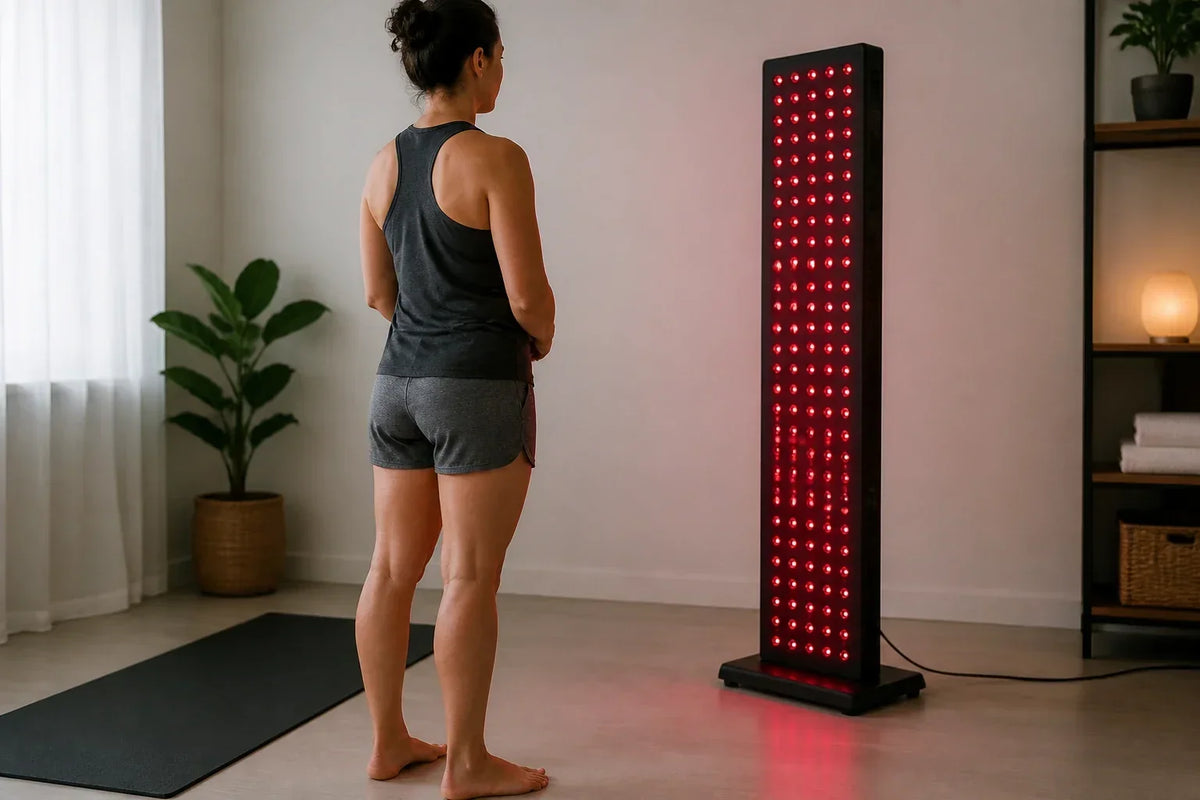
| Bright panel near the face | Yes | Direct light can feel intense and uncomfortable. | Use goggles and avoid staring into the LEDs. |
| Red + near-infrared panel | Usually yes | Near-infrared may be less visible but still part of exposure. | I would not judge safety by brightness alone. |
| LED face mask with built-in shields | Follow the manual | Some masks are designed with eye coverage. | If shields are provided, use them correctly. |
| Body panel aimed away from the face | May still be useful | Reflected or side light can still be bright. | Goggles are simple, so I would keep them nearby. |
| Light-sensitive user | Ask a professional first | Some conditions and medications can increase light sensitivity. | Do not guess if your eyes or skin are unusually reactive. |
Red Light Is Not UV, But Eye Comfort Still Matters
One common misunderstanding is thinking red light therapy is dangerous because it looks intense. Another misunderstanding is thinking it needs no caution because it is not UV. The practical answer sits in the middle.
Cleveland Clinic explains that red light therapy does not use the ultraviolet light associated with the sun or tanning booths, and that it appears safe when used short-term and as directed. You can review its overview here: Cleveland Clinic red light therapy overview.
Cleveland Clinic’s LED light therapy overview also advises users to wear eye protection such as sunglasses or goggles and carefully follow device instructions. You can review it here: Cleveland Clinic LED light therapy overview.
In my view, the safer answer is not fear. It is basic discipline: do not stare into bright LEDs, do not ignore the manual, and do not assume your sunglasses are the same as proper goggles.
What Kind of Protective Goggles Should You Use?
The best protective goggles are the ones recommended by your device manufacturer. That sounds obvious, but many people skip this and grab random sunglasses, tanning goggles, blue-light glasses, or cheap dark lenses.
For red light therapy goggles, you want to check the wavelength range they are designed to reduce or block. Many red light therapy devices use visible red light around 630–660nm and near-infrared light around 810–850nm. A device may use different wavelengths, so match the goggles to the device.
| Goggle Feature | Why It Matters | What to Look For |
|---|---|---|
| Wavelength coverage | Different goggles filter different light ranges. | Coverage that matches your device’s red and near-infrared wavelengths. |
| Fit | Loose goggles allow side light in. | Comfortable fit with minimal gaps. |
| Side protection | Panels can shine from angles. | Wraparound or close-fitting design if using panels. |
| Comfort | Uncomfortable goggles get skipped. | Soft, wearable design for 10–20 minute sessions. |
| Device compatibility | Face masks, beds, and panels may need different protection. | Use the type recommended by the device brand. |
Are Sunglasses Enough for Red Light Therapy?
I would not use ordinary sunglasses as my main eye protection for red light therapy unless the device instructions specifically say that is acceptable. Sunglasses are designed for outdoor visible light and UV protection, not necessarily for strong red and near-infrared LEDs at close range.
The AAD’s advice is very clear: do not substitute sunglasses for protective goggles when the device directions call for goggles.
This is where many home users get confused. Dark lenses may feel protective because the world looks dimmer. But dimmer does not automatically mean the right wavelengths are being filtered.
Do You Need Goggles With a Red Light Therapy Mask?
LED masks are a special case. Some are designed to sit close to the face and include built-in eye shields. Some have open eye areas. Some provide separate inserts or goggles. Some instructions tell you to keep eyes closed during use.
If this were my routine, I would read the mask instructions before the first session, not after my eyes feel strained. If the mask includes shields, I would use them. If the light feels uncomfortable, I would stop and adjust instead of pushing through.
| Mask Type | Eye Protection Approach | My Practical Note |
|---|---|---|
| Mask with built-in eye shields | Use the shields as designed. | Make sure the mask sits correctly on your face. |
| Mask with open eye area | Check if separate goggles are recommended. | Do not stare at the LEDs through the opening. |
| Flexible silicone mask | Follow brand instructions closely. | Fit can change how much light reaches the eye area. |
| Handheld face device | Keep the light away from direct eye exposure. | Use goggles if working near the eyes. |
| Panel used for face | Goggles are strongly worth considering. | Panels are often much brighter than masks. |
What About Near-Infrared Light?
Near-infrared light is often used with red light in panels. The tricky part is that near-infrared is not as visible as red light. That means you cannot always judge exposure by how bright it looks.
This is one reason protective goggles for red light therapy should be chosen by wavelength range, not just lens darkness. If your panel uses 850nm near-infrared light, check whether your goggles are designed for that range.
The part I would pay attention to is this: if the device has separate RED and NIR modes, your eye protection decision should consider both. Do not only think about the visible red glow.
Who Should Be More Careful?
Most healthy users can follow device instructions and use eye protection as recommended. But some people should be more cautious before using red light devices near the face.
Harvard Health advises avoiding red light device use if you have a light-sensitive condition such as lupus or if you take light-sensitive medications such as certain antibiotics. It also recommends eye protection when device directions call for it.
| User Situation | Why It Matters | Better Move |
|---|---|---|
| Light-sensitive condition | Light exposure may not be appropriate for everyone. | Ask a qualified professional before use. |
| Photosensitizing medication | Some medications can increase light sensitivity. | Check with a clinician or pharmacist first. |
| Existing eye concerns | Eye comfort and safety needs can differ. | Ask an eye care professional before face sessions. |
| Very bright panel sessions | Brightness can be uncomfortable even with eyes closed. | Use goggles and avoid direct exposure. |
| Children or pets nearby | They may look directly into the light without understanding. | Keep sessions controlled and supervised. |
How to Use Goggles During a Red Light Therapy Session
Eye protection should be part of the setup, not something you remember halfway through. Keep the goggles near the device so using them becomes automatic.
- Read the device manual before your first session.
- Check whether the device uses red light, near-infrared light, or both.
- Use the protective goggles or shields recommended by the manufacturer.
- Position the device at the recommended distance.
- Do not stare directly into the LEDs.
- Stop the session if you feel eye discomfort, unusual heat, or strong irritation.
- Keep children and pets away from direct exposure.
I would not overthink this part. Make goggles part of the routine the same way you make a timer part of the routine.
Common Mistakes With Red Light Therapy Eye Protection
The most common mistake is thinking closed eyes are always enough. The second is using ordinary sunglasses when the device calls for goggles. The third is ignoring near-infrared because it does not look as bright.
| Mistake | Why It Happens | Better Move |
|---|---|---|
| Using sunglasses instead of goggles | Dark lenses feel protective. | Use the recommended protective goggles. |
| Staring into the LEDs | Users get curious about the light. | Look away and follow positioning guidance. |
| Ignoring NIR mode | Near-infrared is less visible. | Choose goggles that match the wavelength range. |
| Skipping goggles for face sessions | Face routines feel short and harmless. | Use shields if the manual provides or recommends them. |
| Buying random goggles online | All red lenses look similar. | Check wavelength coverage and device compatibility. |
| Letting children or pets look at the panel | The red glow attracts attention. | Keep the session area controlled. |
What Brands Should Say About Goggles and Claims
For brands selling red light therapy devices, eye protection language should be clear and conservative. Do not bury safety guidance at the bottom of a manual. Users want simple answers: when to wear goggles, what goggles to wear, and what not to do.
The FDA’s general wellness guidance explains its policy for low-risk products that promote a healthy lifestyle. You can review it here: FDA General Wellness Policy for Low Risk Devices.
The FTC also states that health-related product claims should be truthful, not misleading, and supported by science. You can review its guidance here: FTC Health Products Compliance Guidance.
In my view, the best product page does not scare people. It simply says: use the device as directed, wear the recommended eye protection, avoid direct eye exposure, and ask a professional if you have light sensitivity or eye concerns.
My Practical View
My personal take is simple: protective goggles for red light therapy are a small habit with a big comfort upside. If your device includes them, use them. If your manual recommends them, do not replace them with sunglasses. If your session is near the face, I would lean cautious.
If I were helping a friend set up a home panel, I would put the goggles in the same basket as the power cord and timer. No searching, no guessing, no “I forgot.” That tiny setup detail makes safe use much easier.
The part I would pay attention to is near-infrared. Because it is less visible, people sometimes treat it casually. I would not. Match the goggles to the device, use the recommended distance, and do not stare into the LEDs.
So, do you need goggles for red light therapy? If the device says yes, the answer is yes. If the light is bright, close to your face, or uncomfortable, goggles are the practical move.
References
- American Academy of Dermatology: Red Light Therapy Safety Guidance
- Harvard Health: Red Light Therapy for Skin Care
- Cleveland Clinic: Red Light Therapy Overview
- Cleveland Clinic: LED Light Therapy Overview
- FDA: General Wellness Policy for Low Risk Devices
- FTC: Health Products Compliance Guidance
FAQ
Do I need protective goggles for red light therapy?
If your device directions recommend protective goggles, wear them every session. For bright panels near the face, goggles are also a smart precaution.
Can I close my eyes instead of wearing goggles?
Closing your eyes may reduce brightness, but it is not the same as using protective goggles. If the manual recommends goggles or shields, use them.
Can I wear sunglasses for red light therapy?
Do not use ordinary sunglasses as a substitute when protective goggles are recommended. Sunglasses may not filter the correct red or near-infrared wavelength range.
Do I need goggles for a red light therapy mask?
It depends on the mask design. Some masks include built-in eye shields, while others recommend separate protection. Follow the device instructions exactly.
Do goggles block red light therapy benefits around the eyes?
Goggles reduce light reaching the eyes, which is the point of eye protection. I would not trade eye comfort for a small uncovered skincare area.
What should I look for in red light therapy goggles?
Look for goggles that match your device’s wavelength range, fit closely, offer side protection, and are recommended by the device manufacturer when possible.