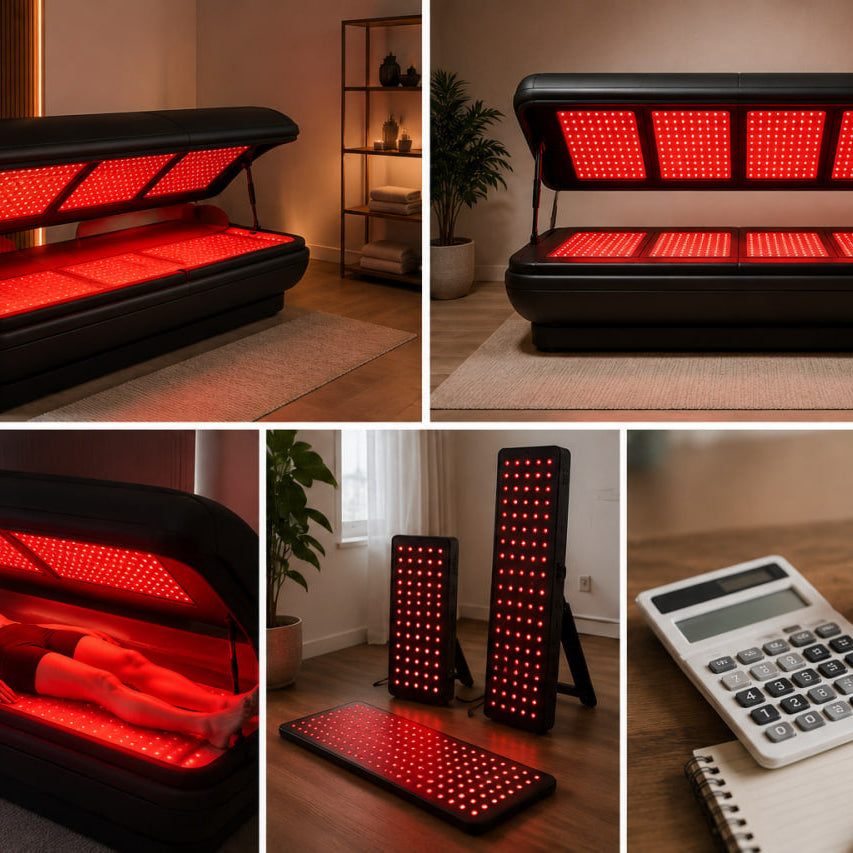
2026 Red light therapy bed cost can range from low-thousand home options to $20,000-$100,000+ full-body systems. Compare beds, panels, and hidden costs.
If you are searching red light therapy bed cost, the direct answer is this: a true full-body red light therapy bed usually costs far more than a regular red light panel. Smaller home-style mats and lay-down systems may start in the low thousands, but full-body LED beds commonly sit around $20,000 to $35,000+, while commercial or premium systems can reach $50,000 to $100,000+.
My personal take is simple: the price tag is only the first number. The real cost includes delivery, room space, electrical requirements, maintenance, warranty support, and whether you will actually use the bed enough to justify it. A red light therapy bed can feel luxurious, but for many home users, a panel setup may be the smarter first move.

Quick Q&A: What Most People Want to Know First
| Question | Short Answer | My Practical Note |
|---|---|---|
| How much does a red light therapy bed cost? | Expect roughly $20,000-$35,000+ for many full-body LED beds, with premium systems reaching much higher. | I would not treat this like buying a skincare device. It is closer to buying a large wellness appliance. |
| Are there cheaper red light bed options? | Yes, mats, pads, and simple lay-down systems can cost less, but they are not the same as a full-body canopy bed. | Make sure you compare device type, not just price. |
| Why are red light beds so expensive? | Size, LED count, cooling systems, frame design, acrylic surfaces, electronics, warranty, and freight all add cost. | The bed is expensive because the hardware is large and hard to ship. |
| Is a red light therapy bed worth it for home use? | Only if you have space, budget, power, and a routine that makes sense. | For a normal home, I would compare large panels before buying a bed. |
| Is a panel cheaper than a bed? | Usually yes. A panel setup is often far less expensive and easier to move. | Panels may not feel as luxurious, but they can be much easier to live with. |
The Real Price Range for Red Light Therapy Beds
The phrase “red light therapy bed” can mean several different things. Some people mean a soft LED mat. Some mean a flat full-body lay-down panel. Others mean a professional canopy bed that looks similar in shape to a tanning bed, but uses red and near-infrared light instead of UV tanning light.
That is why the cost range is so wide. A basic mat and a full commercial bed are not in the same category.
| Device Type | Typical Cost Range | What It Usually Means | Who It Fits |
|---|---|---|---|
| Red light mat or pad | $300-$2,000+ | A flexible or flat device used while lying down | Budget-conscious users who want a simple lay-down format |
| Home lay-down light system | $2,000-$8,000+ | A larger home device, but not always a full canopy bed | Users who want more coverage without a commercial bed |
| Full-body red light therapy bed | $20,000-$35,000+ | A true full-body LED bed with frame, canopy, cooling, and broad coverage | Dedicated home wellness rooms or small wellness businesses |
| Commercial red light bed | $50,000-$100,000+ | Professional-grade systems for clinics, spas, and recovery centers | Businesses, clinics, high-end wellness rooms |
| Multi-panel alternative | $1,000-$6,000+ | Several panels used together for broad body coverage | Home users who want value, flexibility, and easier setup |
Why Red Light Therapy Beds Cost So Much
A red light therapy bed is not expensive only because it looks impressive. The cost comes from the size and complexity of the device.
A full-body bed may include thousands or tens of thousands of LEDs, multiple wavelengths, cooling fans, a heavy frame, acrylic surfaces, electrical components, software controls, delivery packaging, and warranty support. That adds up quickly.
This is where many buyers get distracted. They look at the glow and forget the boring parts. The boring parts are what make the price real.
| Cost Factor | Why It Raises the Price | What I Would Check |
|---|---|---|
| LED quantity | More coverage requires more emitters | Do not compare LED count alone; check wavelength and output too. |
| Wavelength design | Many beds use red and near-infrared wavelengths | Look for clear numbers, not vague “full spectrum” language. |
| Cooling system | Large LED arrays need heat management | Check fan design and ventilation requirements. |
| Acrylic and frame | The surface must support body weight and allow light through | Ask about weight limit, cleaning, and replacement parts. |
| Freight shipping | Large beds are heavy and expensive to move | Confirm curbside, threshold, or white-glove delivery. |
| Warranty support | Large devices need serious service support | I would not buy a bed without clear warranty terms. |
Home Bed vs Commercial Bed: The Cost Difference
Not every buyer needs a commercial red light bed. A commercial unit may be designed for repeated daily sessions, business use, client throughput, software controls, and heavier-duty construction.
A home user usually needs something simpler: clear instructions, safe operation, enough coverage, reasonable warranty, and a setup that does not take over the house.
My view is that most people over-shop this category. They start looking at business-grade equipment when they really need to answer a home routine question.
| Feature | Home-Focused Bed | Commercial-Focused Bed |
|---|---|---|
| Price | Usually lower, though still expensive | Often much higher |
| Use volume | One household | Multiple clients per day |
| Controls | Basic presets or manual controls | More advanced session management |
| Durability needs | Personal use | Business-level wear and tear |
| Best buyer | Dedicated home wellness user | Spa, clinic, gym, or recovery studio |
The Hidden Costs People Forget
The listed price is not the whole price. This is the part I would slow down on before ordering.
A red light therapy bed can require freight delivery, room setup, electrical checks, cleaning supplies, replacement parts, and possibly a stronger outlet or dedicated circuit. Even if the bed ships free, “free shipping” may not mean the device is carried upstairs and installed in the exact room you want.
| Hidden Cost | Why It Matters | Question to Ask Before Buying |
|---|---|---|
| Freight delivery | Large beds may arrive by truck | Is delivery curbside, inside, or white-glove? |
| Electrical work | Some beds may need a dedicated circuit | What voltage, amps, and plug type are required? |
| Room preparation | The bed needs floor space and airflow | How much clearance is needed around the bed? |
| Cleaning supplies | Acrylic surfaces need proper care | What cleaner is approved by the manufacturer? |
| Repairs and parts | Large devices are harder to service | Who handles parts, labor, and shipping during warranty? |
| Returns | Returning a bed can be expensive | Who pays return freight if it does not fit your home? |
Does a Red Light Therapy Bed Need a Special Outlet?
Some beds can run from standard household power. Others may require a dedicated circuit or higher-power setup. The only safe answer is to check the specific model before buying.
I would not guess here. If a bed pulls a lot of power and your room already shares a circuit with lights, outlets, and appliances, you may end up tripping breakers or needing electrical work.
Here’s the practical way I’d look at it: ask the brand for voltage, wattage, amperage, plug type, and whether a dedicated circuit is required. Then ask an electrician if your room is ready.
Red Light Therapy Bed Cost vs Panel Cost
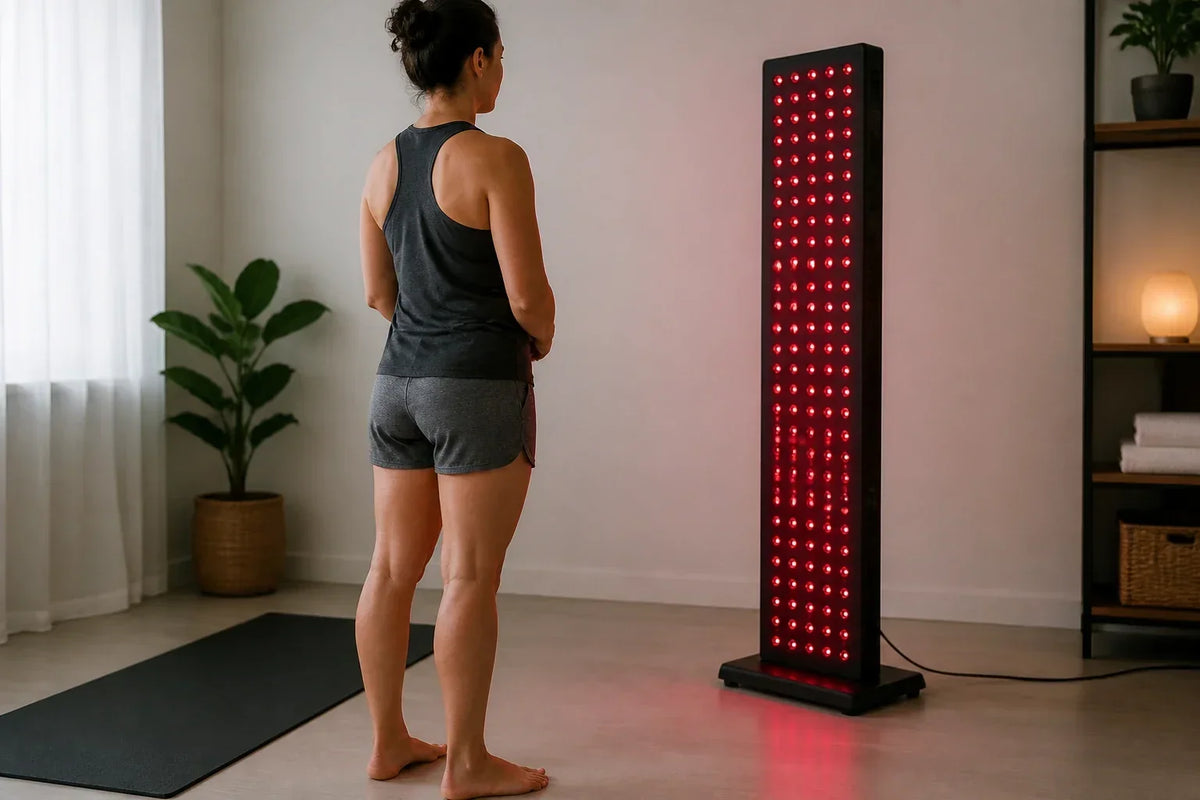
This comparison is important because many people start with “bed cost” but end up choosing panels. A panel setup may not feel as luxurious, but it often delivers better value for a normal home.
A bed gives passive full-body coverage. You lie down and the device surrounds you. A panel setup may require standing, sitting, or turning around, but it costs less, uses less space, and is easier to move.
| Comparison | Red Light Therapy Bed | Panel Setup |
|---|---|---|
| Typical cost | Higher, often tens of thousands for full beds | Lower and more scalable |
| Space | Permanent bed-sized footprint | Can often sit against a wall or move on a stand |
| Comfort | Very comfortable because you lie down | Less passive, but flexible |
| Electrical setup | May need more planning | Often easier for home outlets, depending on size |
| Maintenance | Large parts can be harder to repair | Individual panels are easier to replace or upgrade |
| Best fit | Luxury wellness rooms, clinics, serious users | Most home users who want broad coverage without bed-level cost |
Is a Red Light Therapy Bed Worth the Cost?
A red light therapy bed may be worth the cost if you have the budget, space, power, and lifestyle for it. It is not automatically worth it just because it is the most expensive option.
If I had a dedicated wellness room, ground-floor space, electrical support, and a budget that would not bother me, I would consider a bed. The comfort is real. The full-body experience is easy to understand.
But if I were buying for a normal home, I would probably start with a panel setup first. Panels are easier to justify, easier to move, and easier to upgrade. That does not make beds bad. It just makes panels more practical for many people.
| Your Situation | Better Starting Point | Why |
|---|---|---|
| You have a dedicated wellness room | Red light therapy bed | The space and routine may justify the cost. |
| You live in an apartment | Panel setup | Better flexibility and easier storage. |
| You are testing red light for the first time | Panel or smaller device | Lower commitment before a major purchase. |
| You want a business device | Commercial bed | Client throughput and durability may matter. |
| You care most about value | Panel setup | Lower cost and easier upgrades. |
What Specs Should You Compare Before Paying More?
Do not judge a red light therapy bed only by size or LED count. A huge device with unclear specs is not automatically better than a smaller device with clear engineering and instructions.
Look for wavelengths, irradiance information, treatment area, cooling system, session timer, eye protection, warranty, and service terms.
Cleveland Clinic explains that red light therapy is different from ultraviolet tanning light and should be used as directed. You can review its public overview here: Cleveland Clinic red light therapy overview.
FTC guidance also reminds businesses that health-related product claims should be truthful, not misleading, and supported by reliable evidence. You can review it here: FTC Health Products Compliance Guidance.
| Spec | Why It Matters | Good Sign |
|---|---|---|
| Wavelengths | Shows what type of light the bed uses | Clear red and near-infrared wavelength numbers |
| Irradiance | Helps explain light output | Transparent testing and realistic claims |
| Session timer | Prevents guessing | Built-in timer or clear routine guidance |
| Eye protection | Bright light can be uncomfortable near the face | Included goggles or clear safety notes |
| Cooling system | Protects electronics during use | Good ventilation and fan design |
| Warranty | Large devices are harder to service | Written coverage for parts, labor, and support |
My Practical View
My personal take is simple: a red light therapy bed is a luxury purchase first and a practical purchase second. It can be amazing if your room, budget, and routine are ready. But it can also become an expensive object that dominates a spare room.
The part I would pay attention to is not just whether you can afford the bed. It is whether you can live with it. Can you fit it? Can you power it? Can you clean it? Can you service it? Will you use it enough six months from now?
If I were helping a friend decide, I would say this: price the bed, then price the whole setup. Include delivery, room space, electrical checks, warranty, and the panel alternative. If the bed still makes sense after that, it may be worth considering. If not, a strong panel setup is probably the better move.
References
- LIT Method: Lumé Red Light Therapy Bed
- RehabMart: Professional Red Light Therapy Bed
- Joovv: Red Light Therapy Beds vs Panels
- Cleveland Clinic: Red Light Therapy Overview
- FTC: Health Products Compliance Guidance
FAQ
How much does a red light therapy bed cost?
A true full-body red light therapy bed often costs around $20,000-$35,000+, while commercial and premium systems can reach $50,000-$100,000+ depending on brand, features, and configuration.
Why are red light therapy beds so expensive?
They are large devices with many LEDs, frames, acrylic surfaces, cooling systems, controls, shipping needs, and service requirements. The cost is not just the light; it is the entire hardware system.
Is a red light therapy bed worth it for home use?
It may be worth it if you have a dedicated room, enough budget, suitable power, and a routine that justifies the size. For many home users, panels are more practical.
Is a red light therapy panel cheaper than a bed?
Yes. Red light panels are usually much cheaper than full-body beds and are easier to move, store, upgrade, and service.
Do red light therapy beds need special electrical work?
Some beds may need a dedicated circuit or specific outlet. Always check voltage, amperage, wattage, and plug type before buying.
What should I check before buying a red light therapy bed?
Check price, delivery, space, electrical needs, wavelengths, irradiance information, cooling design, warranty, support, return policy, and whether a panel alternative would make more sense.