Can you combine a traditional sauna with red light therapy? Learn whether to use red light inside or after a sauna, how to set up safely, and what to avoid.
Traditional sauna with red light therapy sounds like the perfect home wellness upgrade: deep heat, a quiet wooden room, then red light for a calm, modern recovery-style routine. But the real question is not just “can you combine them?” The better question is: should you place a red light panel inside a hot traditional sauna, or should you use red light before or after the sauna in a normal room? For most home users, the cleaner and safer answer is this: use a standard red light panel outside the traditional sauna, either before or after your heat session, unless the device is specifically designed and rated for sauna conditions.
This is where many buyers get confused. Some brands talk about red light saunas. Some home sauna owners already have a traditional sauna and want to add a panel. Some friends want the glow, the heat, and the full “spa at home” feeling in one session. I get it. It looks beautiful. But heat, humidity, wiring, LED performance, warranty, and comfort all matter. Let’s break it down in a way that actually helps you decide.
Editorial Review: This article was created with reference to public guidance from the FDA, FTC, Cleveland Clinic, and sauna safety resources. It is written for home wellness education and buying decisions, not for medical claims.

Quick Answer: Do Not Put a Regular Red Light Panel Inside a Traditional Sauna
A traditional sauna usually creates a high-heat environment. A standard red light therapy panel is usually built for room-temperature use. That gap matters. High heat can affect the device body, LEDs, power supply, display, cables, and internal electronics. It may also create warranty issues if the product manual does not allow sauna use.
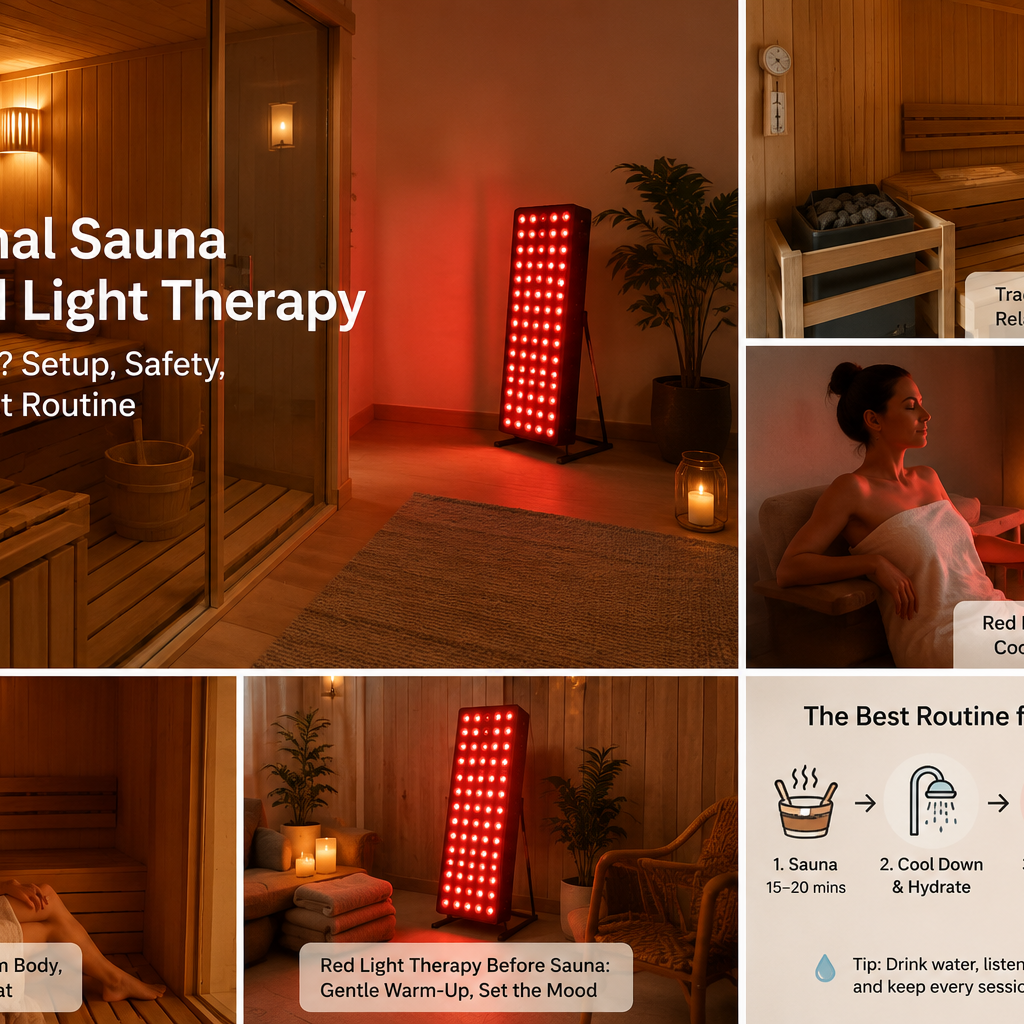
If you want a traditional sauna with red light therapy, the most practical setup is often separate: take your sauna session first, cool down, hydrate, then use a red light panel nearby in a normal-temperature space. Some users prefer the reverse order: red light first, then sauna. Both can work as a routine. What I would not do is place a normal panel inside a hot wooden sauna just because the idea looks good on Instagram.
| Setup Option | Best For | Practical Recommendation |
|---|---|---|
| Regular panel inside traditional sauna | Usually not recommended | Only do this if the panel manual clearly allows high-heat sauna use |
| Sauna-rated red light device inside sauna | Purpose-built sauna installations | Check heat rating, installation rules, wiring, and warranty |
| Red light panel before sauna | Users who like a calm warm-up ritual | Use in a normal room, then enter sauna separately |
| Red light panel after sauna | Users who want a relaxed cool-down flow | Cool down, hydrate, then use red light outside the sauna |
Why the Search Intent Matters
People searching for traditional sauna with red light therapy usually want one of three things. First, they want to know whether a red light panel can be installed inside a traditional sauna. Second, they want to compare red light therapy with infrared sauna. Third, they want a home routine that feels premium but does not create a safety or setup problem.
That is why a simple “yes, combine them” answer is not enough. The real answer depends on the device rating, sauna temperature, air flow, humidity, wiring, session timing, and how often you plan to use the setup. A home wellness setup should feel clean and repeatable, not risky or complicated.
Traditional Sauna vs Infrared Sauna vs Red Light Therapy
These three terms often get mixed together, but they are not the same thing. A traditional sauna heats the air around you, usually through a heater and stones. An infrared sauna uses infrared emitters to warm the body more directly at lower air temperatures. Red light therapy uses visible red and near-infrared wavelengths in a lower-heat light routine.
Cleveland Clinic explains that sauna use can support relaxation, but hydration and session limits matter. You can read their sauna overview here: Cleveland Clinic sauna safety overview. For red light and wellness products, the FDA general wellness policy is also useful because it helps explain why consumer product claims should stay within a low-risk wellness scope: FDA General Wellness Policy.
| Method | How It Works | Home User Takeaway |
|---|---|---|
| Traditional sauna | Heats the air inside a wooden sauna room | Great for heat-based relaxation, but high temperature matters |
| Infrared sauna | Uses infrared emitters to warm the body more directly | Usually runs at lower air temperatures than traditional sauna |
| Red light therapy panel | Uses red and near-infrared LEDs with minimal heat | Better used outside a traditional sauna unless sauna-rated |
Can You Add Red Light Therapy to a Traditional Sauna?
Yes, but only with the right design. If you mean “can I put my normal red light panel inside my traditional sauna?” I would be careful and usually say no. If you mean “can I create a routine that combines traditional sauna and red light therapy?” then yes, that can be done more cleanly by separating the devices.
A purpose-built sauna-rated light system is different from a regular consumer panel. Sauna-rated equipment should clearly state heat tolerance, installation conditions, electrical requirements, and warranty coverage for sauna use. If the product page does not say this clearly, do not guess.
What I Would Check First
Before adding red light to any sauna setup, check the device manual, maximum operating temperature, humidity tolerance, power cable rating, wall clearance, ventilation needs, and warranty rules. If one of these details is missing, that is a warning sign.
Why Outside the Sauna Is Often Better
Using the red light panel outside the sauna keeps the device in a stable room environment. It also makes the routine more comfortable. After a hot sauna, many people want to cool down, breathe, drink water, and sit quietly. A red light panel in a nearby wellness corner can fit that flow nicely.
Should You Use Red Light Before or After a Traditional Sauna?
There is no single perfect order for everyone. The best order is the one that feels natural and easy to repeat. If you like a calm start, use red light first. If you like a slow cool-down, use red light after the sauna. Personally, I prefer red light after the sauna because it gives the session a softer ending.
| Routine Order | Best For | Simple Flow |
|---|---|---|
| Red light before sauna | People who want a quiet warm-up | Red light session, water, sauna, shower, rest |
| Sauna before red light | People who want a relaxed cool-down | Sauna, cool down, water, red light, simple skincare or rest |
| Separate days | Busy users or heat-sensitive users | Sauna on one day, red light on another day |
How Long Should the Combined Routine Be?
The combined routine should not feel like a challenge. Traditional saunas can already feel intense because of the heat. Adding red light should not turn the session into a marathon. Start shorter, stay hydrated, and follow the manual for both the sauna and the red light device.
For sauna use, Cleveland Clinic highlights hydration as an important safety step and notes dehydration as a key risk when sweating. You can review their guidance here: Cleveland Clinic sauna hydration guidance. The FTC also reminds wellness brands that product claims should be truthful and supported by evidence: FTC Health Products Compliance Guidance.
Best Home Setup for a Traditional Sauna with Red Light Therapy
The cleanest home setup is a two-zone design. Zone one is the sauna room. Zone two is a normal-temperature red light corner. This could be a bedroom corner, home gym wall, bathroom-adjacent area, or small wellness bench near the sauna entrance.
Here is how I would build it: keep the sauna as a heat room, keep the red light panel in a dry room-temperature area, place water nearby, use a towel, and give yourself enough cooling time between steps. This setup feels less dramatic, but it is much more practical for long-term use.
Small Home Setup
If space is limited, place a red light panel on a stand outside the sauna door or in a nearby room. This allows you to move it when needed without exposing the device to high heat.
Home Gym Setup
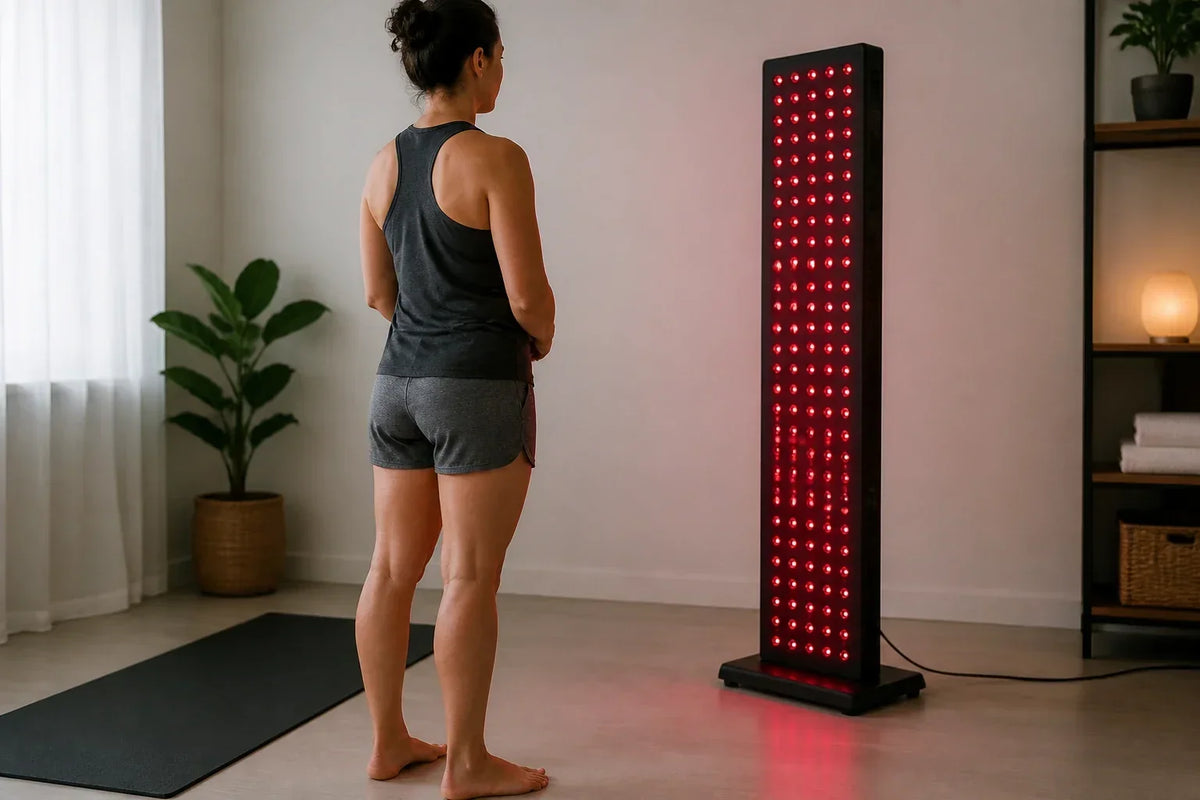
If your sauna is near a garage gym, a red light panel beside a yoga mat works well. You can stretch, sit, or stand after the sauna without moving through the house.
Luxury Wellness Room Setup
If you are building a premium wellness room, consider a sauna-rated red light system only if the manufacturer clearly supports that use. Otherwise, keep the red light station outside the sauna and make it visually beautiful with warm wood, plants, towels, and clean lighting.
Common Mistakes to Avoid
The first mistake is treating red light therapy and infrared sauna as the same thing. They are related by light language, but the user experience and heat profile are different. The second mistake is putting a regular panel inside a hot sauna without checking the manual. The third mistake is making the combined routine too long.
The fourth mistake is believing every “red light sauna” claim without reading the details. A good brand should clearly explain device rating, installation rules, session guidance, warranty, and safe-use instructions. If the page only shows mood photos and strong claims, I would slow down.
Buying Checklist
| Question | Good Sign | Warning Sign |
|---|---|---|
| Is the red light device sauna-rated? | Clear high-temperature rating and manual support | No mention of sauna use |
| Does the brand explain installation? | Mounting, spacing, wiring, and safety details are listed | Only lifestyle images |
| Can you use it outside the sauna? | Panel works well on a stand or wall nearby | Setup forces electronics into high heat |
| Is the routine repeatable? | Simple order, water nearby, clear timing | Too long, too hot, or hard to set up |
My Personal View
If you already have a traditional sauna and want red light therapy, I would not rush to put a panel inside the sauna. I would build a better ritual outside the sauna: heat first, cool down, drink water, then use red light in a calm room-temperature corner. That setup feels more controlled, more comfortable, and easier to maintain.
My advice is simple: do not chase the most intense setup. Chase the routine you can repeat without worrying about heat damage, cords, warranty, or discomfort. A traditional sauna with red light therapy can be a beautiful home wellness combination, but the smartest version is often not “everything inside one hot room.” It is a clean two-step routine that respects what each device is designed to do.