Red Light Therapy Mask vs Panel: Which One Fits Your Face, Body, and Budget?
Editorial Review: This article was created with reference to public guidance from the FDA, FTC, Cleveland Clinic, and the American Academy of Dermatology. It is written for at-home beauty and wellness education, not medical advice.
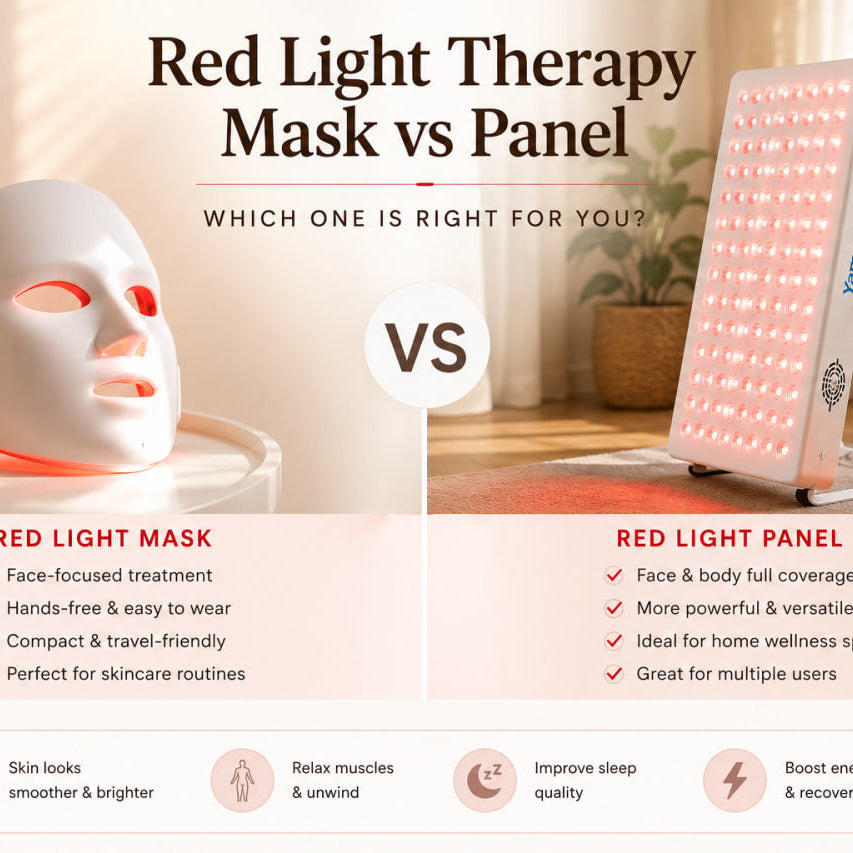
Red light therapy mask vs panel is not really about which device looks more popular online. It is about what you actually want to use at home: a simple face-focused skincare routine, or a more flexible setup for face, neck, chest, body, and shared household use. The short answer is simple: choose a mask if you only want an easy hands-free face routine; choose a panel if you want more coverage, more positioning options, and a device that can grow with your home wellness routine.
This is where many buyers get stuck. A mask feels easy. A panel feels more powerful and more versatile. A mask sits on your face. A panel sits in your room. A mask is usually easier to store. A panel usually gives you more ways to use it. So the better question is not “which one is better?” The better question is: which one will you actually use three or four times a week without turning it into another chore?

Quick Answer: Mask for Face, Panel for Flexibility
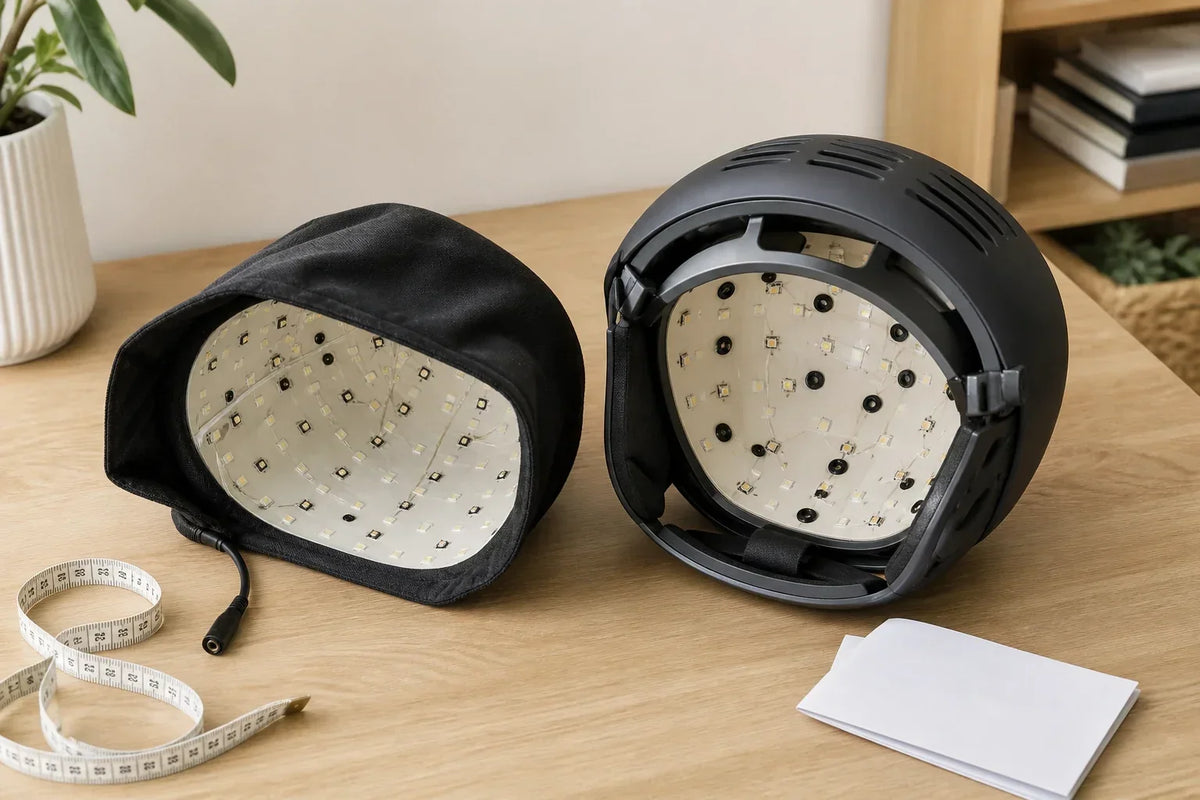
If your goal is mostly facial skincare, an LED red light mask may be the cleaner first choice. It is hands-free, easy to wear, and built around the shape of the face. You can use it after cleansing, sit back, and finish with serum or moisturizer afterward.
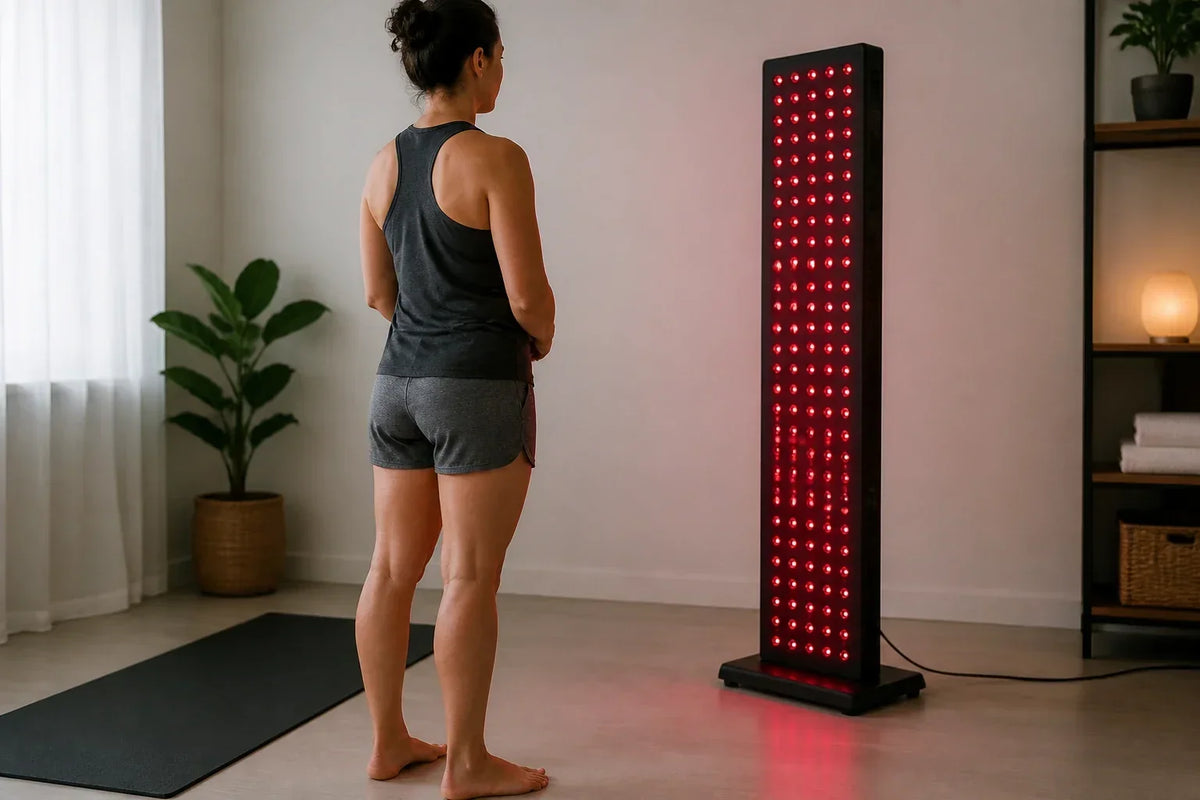
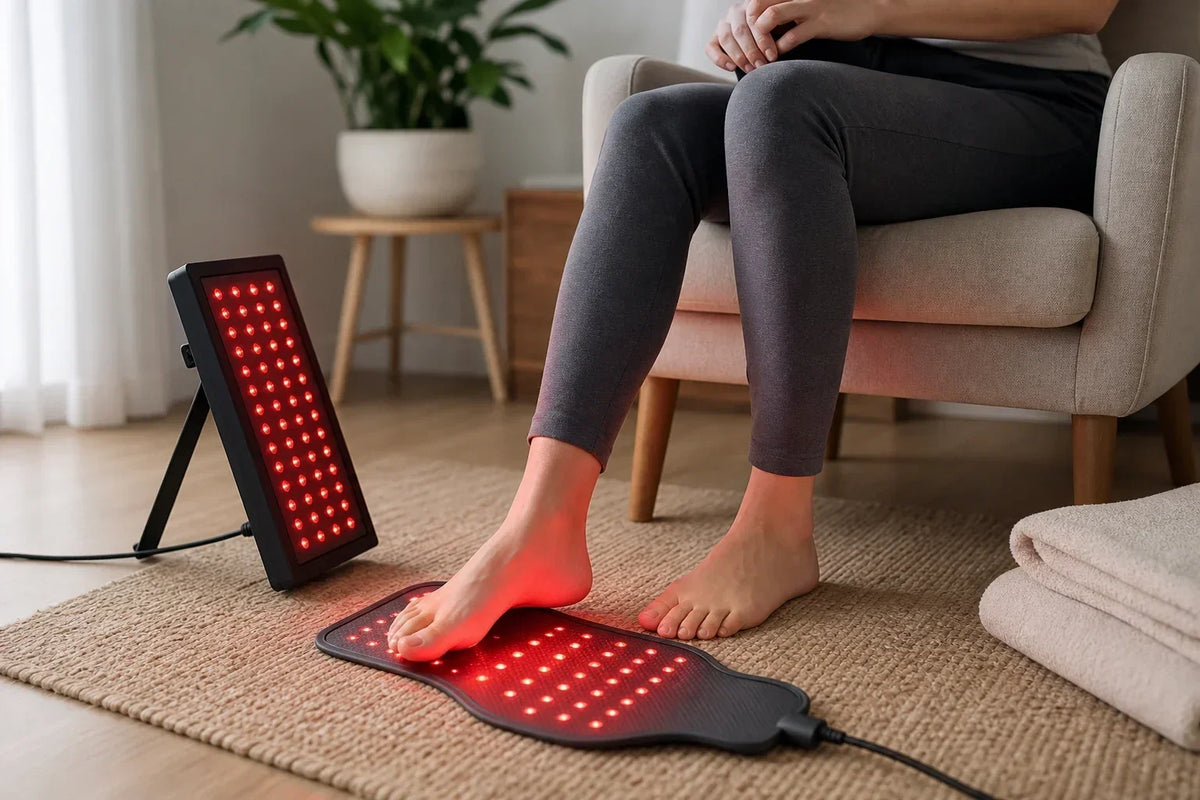
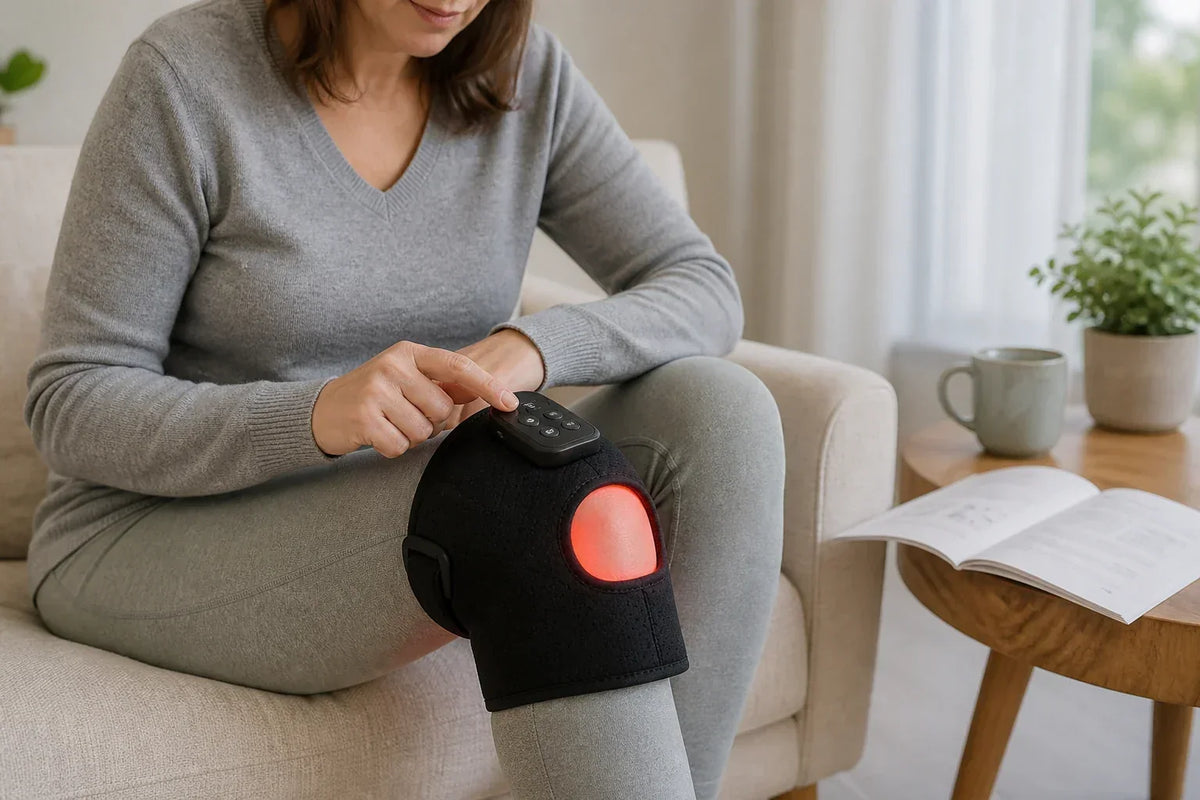
If your goal is broader home use, a red light therapy panel is usually the more flexible choice. You can use it while sitting, standing, stretching, or placing it near a bedroom, home gym, or wellness corner. A panel can support face and body routines, while a mask is mostly a face-only device.
| Device | Best For | Main Advantage | Main Tradeoff |
|---|---|---|---|
| LED Red Light Mask | Face-focused skincare routine | Hands-free, easy to wear, simple to store | Limited to face and sometimes neck area |
| Red Light Therapy Panel | Face, body, home gym, shared use | More coverage and flexible positioning | Needs space, distance control, and setup |
Why People Search Red Light Therapy Mask vs Panel
Most people searching this keyword are not beginners anymore. They already know red light devices exist. Now they are trying to avoid buying the wrong format. They want to know if a mask is enough, or if a panel gives better value for long-term home use.
The confusion is understandable. Beauty content often makes masks look effortless. Wellness content often makes panels look more serious. Both can make sense, but they solve different problems. A mask is like a dedicated skincare tool. A panel is more like a home wellness station.
Mask vs Panel: The Real Buying Difference
The biggest difference is not just “power.” It is coverage, distance, comfort, and routine style. A mask sits close to the skin and is designed around the face. A panel is used from a distance, so you need to follow the brand’s instructions for placement and session time.
Cleveland Clinic notes that at-home LED light devices should be used according to instructions, and users should look for FDA-cleared or FDA-approved labeling and use eye protection when recommended. You can read their overview here: Cleveland Clinic LED Light Therapy Overview.
| Comparison Point | Red Light Mask | Red Light Panel |
|---|---|---|
| Coverage | Mostly face, sometimes neck if designed for it | Face, chest, back, legs, or broader body areas depending on size |
| Ease of Use | Very easy: wear it and follow the timer | Requires distance, angle, and placement |
| Storage | Small and easy to store | Needs more room or a dedicated corner |
| Routine Style | Beauty vanity or evening skincare | Bedroom, home gym, wellness room, shared household use |
| Long-Term Value | Good if you only care about face use | Better if you want one device for more areas |
When a Red Light Therapy Mask Makes More Sense
A red light mask makes sense if your routine is face-first. If you mainly care about a smoother-looking complexion, a calmer-looking skincare routine, and a device that feels easy after cleansing, a mask is convenient.
It also works well for people who do not want to think about distance. You do not need to set up a stand, move a panel, or measure how far you are sitting. You put the mask on, follow the timer, and move on with your skincare steps.
Who This Fits
A mask fits people who want a quick face routine, live in a small apartment, travel often, or do not want a visible device in the room. It also fits people who already have a skincare habit and just want to add one more easy step.
What to Watch
Check comfort, strap design, eye opening, session time, charging method, and how easy it is to clean. If the mask feels heavy, tight, or awkward, it may not become a habit.
When a Red Light Therapy Panel Makes More Sense
A red light panel makes sense if you want more than a face-only routine. If you want to use one device in a bedroom, home gym, or wellness space, a panel gives more flexibility. It can be used while sitting, standing, or stretching, depending on the setup and instructions.
For users comparing home devices, a panel with common wavelengths like 660nm red light and 850nm near-infrared light can fit a wider routine than a mask. If you want broader home coverage, a Yamuri red light therapy panel is the type of device format worth comparing before you buy a face-only mask.
Who This Fits
A panel fits people who want face and body flexibility, have a home gym or bedroom corner, or want a device that multiple people in the household can use. It also fits buyers who prefer one larger device instead of several small beauty tools.
What to Watch
Check the panel size, recommended distance, stand stability, session timer, brightness, warranty, and return policy. A good panel should be simple to position and clear about how to use it.
Which One Is Better for Face Use?
For face-only convenience, a mask usually wins. It is built for the face, easy to wear, and does not require a room setup. If you are someone who likes skincare routines at the vanity or on the couch, the mask experience may feel more natural.
For face plus neck, chest, or body flexibility, a panel may be better. You can sit in front of it and use it across a larger area. It is not as effortless as wearing a mask, but it gives you more control over positioning.
| User Goal | Better Choice | Why |
|---|---|---|
| Simple face routine | Mask | Hands-free and face-shaped |
| Face plus neck or chest | Panel | Broader coverage and adjustable distance |
| Small apartment skincare | Mask | Easy to store and quick to use |
| Home gym or body routine | Panel | More practical for larger areas |
| Shared household device | Panel | More versatile for different users |
What About Wavelengths and Device Specs?
Do not choose only by photos. Look at the actual specs. Many consumer red light devices mention red light and near-infrared light, but the useful details are wavelength, coverage area, recommended distance, session time, safety instructions, and whether the brand explains its claims carefully.
The FDA’s general wellness guidance explains how low-risk products may support a healthy lifestyle when claims stay within a general wellness scope. You can review it here: FDA General Wellness Policy. The FTC also reminds brands that health-related product claims should be truthful, not misleading, and supported by reliable evidence: FTC Health Products Compliance Guidance.
Step-by-Step: How to Choose Between a Mask and a Panel
Here is the simple decision path I would use before buying.
Step 1: Decide Your Main Area
If your main area is only the face, start with a mask. If you want face, neck, chest, body, or shared household use, look at a panel first.
Step 2: Think About Your Room
If you have no room to leave a device visible, a mask is easier. If you have a bedroom corner, vanity area, or home gym space, a panel can fit into your home routine.
Step 3: Check Your Patience
If you want the lowest-friction routine, choose a mask. If you do not mind sitting or standing in front of a device and following distance guidance, choose a panel.
Step 4: Compare Long-Term Value
A mask is great for one job. A panel can do more jobs. If you think your routine may grow beyond face use, the panel often gives more long-term flexibility.
Common Mistakes to Avoid
The first mistake is buying a mask and later realizing you wanted body coverage. The second mistake is buying a panel and then not having a clean place to use it. The third mistake is ignoring eye comfort and device instructions.
The American Academy of Dermatology says users should choose FDA-cleared red-light devices and follow the directions that come with the device. You can read their guidance here: AAD red light therapy safety guidance.
| Mistake | Why It Happens | Better Move |
|---|---|---|
| Buying only by influencer photos | The device looks easy online | Check specs, fit, and routine style |
| Choosing a mask for body goals | The mask feels simpler | Choose a panel if coverage matters |
| Choosing a panel with no space | The panel feels more serious | Make sure your room supports the setup |
| Ignoring instructions | Users guess session time and distance | Follow the manual and safety guidance |
Buying Checklist
Before you choose a red light therapy mask vs panel, use this checklist. It will save you from buying the device that looks good but does not fit your real routine.
| Question | Choose Mask If... | Choose Panel If... |
|---|---|---|
| What area matters most? | Your goal is mostly face use | You want face and broader body flexibility |
| How much space do you have? | You need easy storage | You have a fixed home corner |
| How do you like routines? | You want hands-free skincare | You are comfortable sitting or standing near a device |
| Who will use it? | Mainly one person | Multiple household users may share it |
My Personal View
If someone asks me “red light therapy mask vs panel,” my honest answer is this: buy the device that matches your real habit, not your ideal version of yourself. If you only care about your face and want a simple skincare step, a mask is clean and convenient. If you want one device for more than face use, I would lean toward a panel.
If I were choosing for my own home, I would pick a panel if I had the space because it gives me more ways to use it over time. But if I lived in a small apartment and only wanted a 10-minute face routine after cleansing, I would not overcomplicate it. A routine you can repeat is better than a bigger device you avoid.
You can compare more home device formats in the red light therapy devices for home use collection, or continue reading practical guides in the Red Light Therapy Encyclopedia.