What serum to use with red light therapy is really two questions in one: which serum ingredients make sense, and should you apply serum before or after your red light session? For most at-home masks and panels, the cleaner routine is simple: cleanse your face, dry your skin, use red light on bare skin, then apply a lightweight serum such as hyaluronic acid, peptides, ceramides, niacinamide, or a gentle antioxidant formula. The main exception is a device-specific wand that requires an activating serum, in which case the product manual wins.
This is where many people get stuck. They buy a red light mask, add a few serums to the bathroom counter, and suddenly the routine feels like a puzzle. Should vitamin C go first? Can retinol be used after? Is moisturizer enough? My honest take: do not overbuild the routine. A clean face before red light and a simple hydrating serum after is usually the most repeatable setup.

Quick Answer: Use Serum After Red Light Therapy Most of the Time
For most LED masks and red light panels, use the device before serum. This keeps skincare layers from sitting between your skin and the light, and it keeps the inside of a mask or the surface near your device cleaner. After the session, apply serum, then moisturizer.
Cleveland Clinic notes that people using at-home red light devices should follow directions, shield the eyes when needed, and care for the device properly. You can read their overview here: Cleveland Clinic red light therapy overview. For a home routine, this matters more than chasing a complicated serum stack.
| Routine Step | Best Timing | Practical Reason |
|---|---|---|
| Cleanser | Before red light | Removes makeup, sunscreen, oil, and daily buildup |
| Red light mask or panel | After cleansing, before serum | Keeps the session clean and easy to repeat |
| Hydrating serum | After red light | Works well as a soft post-session skincare step |
| Moisturizer | After serum | Helps the routine feel comfortable and complete |
| Sunscreen | Final morning step | Belongs at the end of daytime skincare |
Why People Ask What Serum to Use with Red Light Therapy
Most users want to make their red light routine feel more complete. They are not trying to build a lab-level skincare system. They simply want to know what pairs well with a mask, panel, or wand without making skin feel sticky, heavy, or overloaded.
The mistake I would avoid is thinking every strong skincare ingredient needs to be used around red light. Sometimes the most useful serum is not the strongest one. It is the one your skin accepts easily and that you can apply consistently after the session.
Best Serums to Use After Red Light Therapy
The safest starting point is a lightweight, water-based serum. Look for formulas that focus on hydration, comfort, and a smoother-looking finish. You do not need a dramatic formula for every session.
| Serum Type | Best For | How to Use with Red Light |
|---|---|---|
| Hyaluronic acid | Hydration and a plump-looking finish | Apply after red light, then seal with moisturizer |
| Peptides | Firm-looking skincare routines | Use after a mask or panel session |
| Ceramides | Comfort-focused routines | Use after red light, especially at night |
| Niacinamide | Even-looking tone and balanced routine | Use after red light if your skin already likes it |
| Gentle antioxidant serum | Morning or evening glow routines | Use after red light, then moisturize |
Can You Use Hyaluronic Acid with Red Light Therapy?
Yes, hyaluronic acid is one of the easiest serum choices for many users. It is lightweight, familiar, and fits well after a red light session. If your skin feels dry after cleansing, hyaluronic acid followed by moisturizer can make the routine feel more comfortable.
Here is the practical order I would use: cleanse, dry face, red light therapy, hyaluronic acid serum, moisturizer. If you use red light in the morning, finish with sunscreen. Simple, clean, and easy to repeat.
Can You Use Vitamin C Serum with Red Light Therapy?
Vitamin C can fit into a routine, but I would usually apply it after red light rather than before. Vitamin C formulas vary a lot. Some feel gentle; some feel strong or tingly. If your skin is easily reactive, start slowly and do not combine too many active steps at once.
For a morning routine, a simple order can be: cleanse, red light session, vitamin C serum if tolerated, moisturizer, sunscreen. If your skin feels uncomfortable, use a gentler hydrating serum after red light and keep vitamin C for another time.
What About Retinol or Strong Actives?
This is where I would slow down. Retinol, exfoliating acids, and strong resurfacing formulas are not my first choice before a red light session. If you use them, place them after the session or use them on a separate night, especially if you are still learning how your skin responds.
The American Academy of Dermatology explains that people often start retinoids slowly and use moisturizer to reduce dryness or discomfort. You can read their guidance here: AAD retinoid and retinol guidance. For red light users, the takeaway is simple: do not turn every night into a high-intensity skincare night.
| Product Type | Use Before Red Light? | Better Approach |
|---|---|---|
| Hyaluronic acid serum | Usually no need | Use after red light for hydration |
| Peptide serum | Usually after | Apply after the session |
| Vitamin C serum | Usually after | Use after red light, especially in the morning |
| Retinol | Not ideal before | Use after or on separate nights |
| Exfoliating acid serum | Avoid before | Keep it separate if your skin is sensitive |
| Heavy oil serum | Avoid before | Use later if needed, not under a mask |
Mask, Panel, or Wand: Serum Timing Changes Slightly
Serum timing depends on the device type. A mask sits close to your face, so using thick products underneath can feel messy. A panel does not touch the skin, but clean skin still makes the routine simpler. A wand is different because some models require a conductive or activating serum.
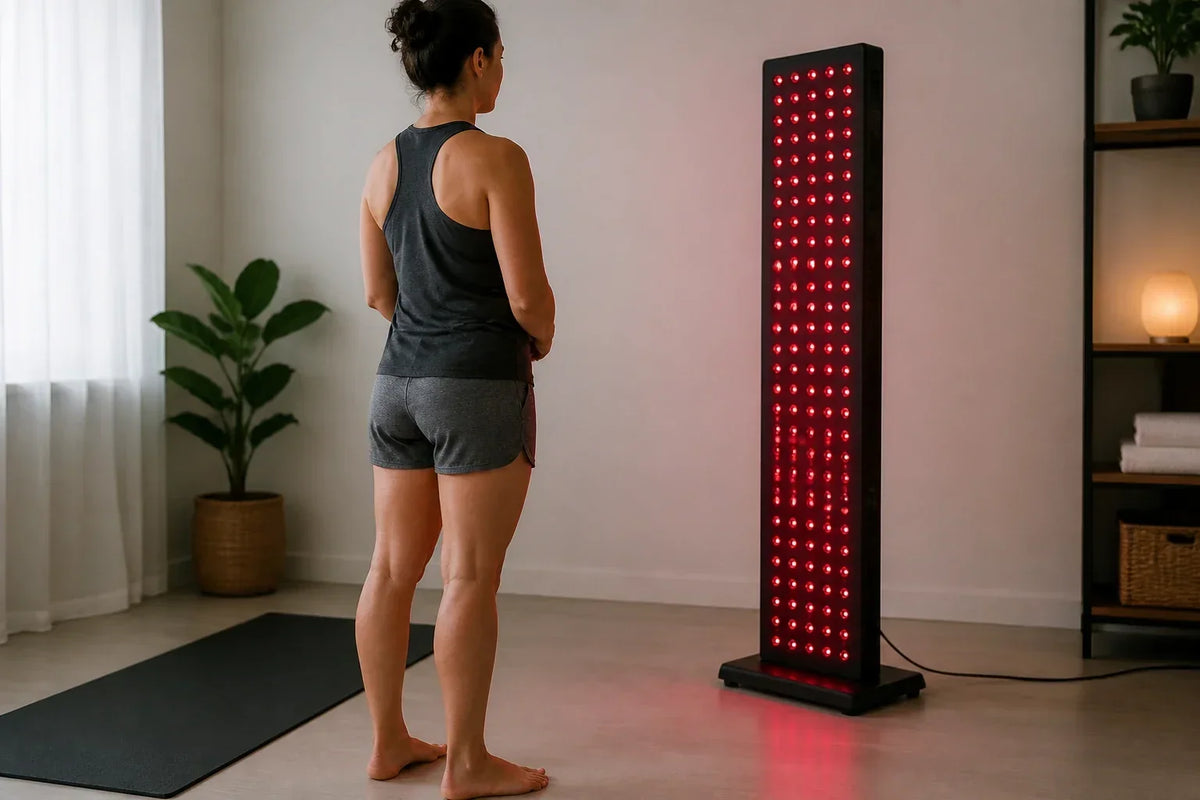
If you are using a red light panel for face and body routines, keep the setup simple. Clean skin first, red light second, serum third. If you are comparing home devices, a panel with 660nm red light and 850nm near-infrared light can fit bedroom, vanity, or home gym routines. You can view a panel-style option here: Yamuri red light therapy panel.
| Device Type | Serum Timing | Why |
|---|---|---|
| LED face mask | Usually after | Keeps the mask clean and avoids product transfer |
| Red light panel | Usually after | Clean skin makes the session easier to standardize |
| Handheld wand | Follow the manual | Some wands require an activating serum before use |
| Body panel routine | After, if using skincare | Simple routine and cleaner setup |
Step-by-Step Routine for Beginners
If you are new to red light therapy and skincare pairing, keep the routine basic for the first few weeks. That gives you a clear baseline before adding stronger products.
Step 1: Cleanse and Dry
Remove makeup, sunscreen, face oil, and heavy cream. Dry your skin gently. A clean face is easier to work with and keeps the device cleaner.
Step 2: Use Red Light as Directed
Follow the device manual for time, distance, eye protection, and frequency. Do not guess or extend sessions just because the routine feels gentle.
Step 3: Apply a Simple Serum
Start with hyaluronic acid, peptides, ceramides, or a gentle calming formula. Avoid stacking multiple strong active serums right away.
Step 4: Finish with Moisturizer
Moisturizer helps the routine feel complete. In the morning, sunscreen should be your final step.
What Serum Ingredients I Would Avoid Before Red Light
Before red light, I would avoid thick oils, dense balms, strong exfoliating acids, fresh self-tanner, sticky serums, and products that make your skin feel hot or tingly. These can make the routine less comfortable and harder to judge.
The FTC reminds brands that health-related product claims should be truthful, not misleading, and supported by reliable evidence. You can read the guidance here: FTC health products compliance guidance. I think users should apply the same mindset to skincare pairings: be careful with big promises and pay attention to how your own routine feels.
Common Mistakes to Avoid
The first mistake is applying too much serum before a mask. The second mistake is using a strong active serum right before red light and blaming the device when skin feels uncomfortable. The third mistake is changing too many steps at once.
If you want to know whether red light and serum are working well together, keep the routine stable. Use the same device schedule, same serum, and same order for a few weeks before judging. You can explore more home-use guides in the Red Light Therapy Encyclopedia.
My Personal View
If someone asks me what serum to use with red light therapy, my honest answer is: start boring. Use red light on clean skin, then apply a lightweight hydrating serum. Hyaluronic acid and peptides are easier to work with than a crowded shelf of strong actives.
If I were setting this up for my own home, I would choose one simple serum for the first month, use the red light device exactly as directed, and take notes on how my skin feels. The routine that wins is not the most complicated routine. It is the one you can repeat without second-guessing every step.