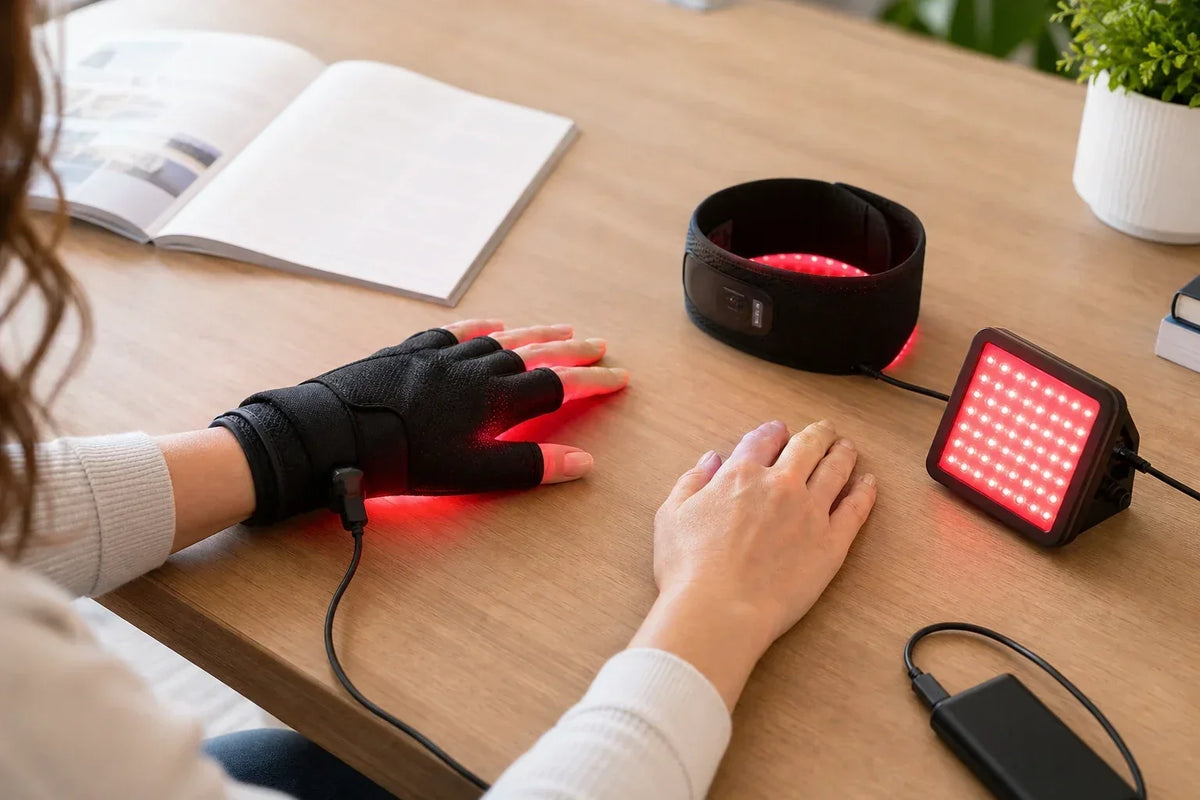
Red light therapy for fertility at home is being discussed, but evidence is limited. Learn what research says, what to avoid, and when to seek guidance.

Editorial Review: This article was created with reference to public fertility and photobiomodulation resources, including ASRM, ACOG, NIH/PMC, FDA general wellness guidance, and FTC health product compliance guidance. It is written for consumer education and product understanding, not medical advice.
If you are searching red light therapy for fertility at home, the honest answer is this: red and near-infrared light have been studied in fertility-related settings, but at-home red light therapy should not be treated as a proven fertility solution. The evidence is still early, the protocols vary, and many studies involve clinical settings, lab samples, assisted reproduction, or specialized equipment rather than a simple home panel routine.
My personal take is simple: fertility is not the area where I would gamble on a viral wellness shortcut. If someone is trying to conceive, the smartest first step is understanding the timeline, getting the right evaluation when needed, and not letting a home device delay real answers.
That does not mean the topic is useless. It means we need to separate three things: what photobiomodulation research is exploring, what a home red light device can reasonably claim, and what someone trying to conceive should actually do next.
Quick Q&A: What Most People Want to Know First
| Question | Short Answer | My Practical Note |
|---|---|---|
| Can red light therapy improve fertility at home? | There is not enough reliable evidence to say that at-home red light therapy improves fertility. | I would not use it as a replacement for fertility testing or professional guidance. |
| Has red light been studied for fertility? | Yes. Red and near-infrared photobiomodulation has been studied in female fertility and sperm-related contexts. | The key issue is that studies do not automatically translate into a safe home routine. |
| Can I use a red light panel on my abdomen? | I would be cautious and avoid making fertility claims from a general-use panel. | If you are actively trying to conceive, ask a qualified clinician before using light devices near reproductive areas. |
| Can red light therapy help male fertility? | Some research looks at sperm motility and photobiomodulation, often in lab or clinical contexts. | That is different from shining a home panel on sensitive areas. |
| Is red light therapy safe while trying to conceive? | Safety depends on device type, body area, dose, timing, and personal health situation. | I would not assume “low risk” means “right for fertility use.” |
| When should I see a fertility specialist? | Guidelines commonly recommend evaluation after 12 months of trying if under 35, and after 6 months if 35 or older. | If there are known concerns, do not wait just because you are testing home wellness ideas. |
The Short Answer: Interesting Research, Not a Home Fertility Plan
Red light therapy for fertility at home sounds attractive because it feels simple: buy a device, use it regularly, and hope the body responds. But fertility is not simple. Ovulation, sperm quality, timing, age, hormones, uterine factors, tubal factors, lifestyle, medications, stress, sleep, and underlying conditions can all matter.
A 2024 NIH/PMC case series reported outcomes using multiwavelength red and near-infrared photobiomodulation in women diagnosed with unexplained age-related fertility challenges. You can review it here: NIH/PMC case series on red and near-infrared PBM and female fertility outcomes.
That paper is interesting, but I would not read it as a green light for self-directed at-home fertility use. Case series evidence can raise questions and guide future research, but it is not the same as a broad, proven home protocol.
| What People Hope For | What Evidence Currently Supports | What I Would Do |
|---|---|---|
| A simple at-home fertility boost | Not clearly proven for home use | Do not rely on a device as your main plan. |
| Better egg or sperm quality | Some early and specialized research exists | Ask whether the study matches your situation. |
| A natural fertility routine | General wellness routines may support healthy habits | Keep claims modest and track the basics first. |
| A non-invasive option | Many light devices are non-invasive, but use still matters | Body area, dose, and timing are not details to guess. |
Why People Search Red Light Therapy for Fertility at Home
The search intent is easy to understand. Fertility journeys can be expensive, emotional, and slow. People want something they can do at home, something that feels active, and something that does not require another appointment or another confusing lab result.
This is where many home users get confused. A topic can have promising research without being ready for casual home use. That gap is especially important when the topic involves fertility.
ASRM says fertility evaluation may begin after 12 months in women under 35, after 6 months in women 35 or older, and sooner when known factors are present. You can review its committee opinion here: ASRM fertility evaluation committee opinion.
ACOG also explains that experts recommend evaluation after 1 year of regular intercourse without birth control, or sooner depending on age and risk factors. You can review its patient guidance here: ACOG evaluating infertility guidance.
Female Fertility: What the Research Does and Does Not Say
Female fertility research involving red and near-infrared light often discusses photobiomodulation, mitochondria, ovarian aging, uterine factors, or assisted reproduction contexts. But the details matter.
Some studies use professional laser or LED systems. Some involve specific wavelengths and protocols. Some focus on IVF-related situations. Some are animal or lab studies. A home red light panel sitting in a bedroom is not the same research setting.
My practical view is that a person should not take “red and near-infrared light is being researched” and turn it into “this device will help me conceive.” The first statement can be true. The second is a claim that needs much stronger support.
| Research Area | What It May Explore | Home Use Limitation |
|---|---|---|
| Age-related fertility research | Red and NIR PBM in specific clinical-style protocols | Not the same as self-directed home use. |
| IVF or assisted reproduction context | Light protocols around specialized fertility care | Clinical monitoring changes the situation. |
| Animal or cell studies | Biological mechanisms and early signals | Cannot be copied directly at home. |
| General wellness devices | Routine, comfort, and lifestyle support | Should not be marketed as fertility solutions without evidence. |
Male Fertility: Sperm Research Is Not the Same as a Home Panel Routine
There is also research on photobiomodulation and sperm function. For example, a PubMed Central study examined low-level laser and LED photobiomodulation on human spermatozoa motility and DNA integrity. You can review it here: NIH/PMC study on photobiomodulation and human sperm motility.
A broader review also discusses photobiomodulation in male reproductive research. You can read it here: NIH/PMC review on photobiomodulation and male reproductive research.
These studies are worth reading, but I would be very careful about how they are interpreted. Sperm samples in controlled conditions are not the same as shining a bright home panel on sensitive tissue. Dose, distance, tissue temperature, wavelength, and exposure timing all matter.
| Claim You May See Online | More Careful Reading | My Practical Note |
|---|---|---|
| Red light improves sperm. | Some studies examine sperm motility in controlled settings. | That does not create a safe home protocol. |
| Use a panel near reproductive areas. | This is a sensitive use case and should not be guessed. | I would ask a qualified clinician first. |
| More light means better results. | Photobiomodulation responses can depend on dose. | More is not automatically better. |
| Any red light device can work. | Device design, wavelength, output, and instructions differ. | A generic panel is not a fertility device. |
Can You Use Red Light Therapy on the Abdomen at Home?
This is one of the most common practical questions. Some people want to use red light on the lower abdomen because they read about ovarian or uterine blood flow, mitochondria, or reproductive health online. I would be cautious with that leap.
A general red light therapy panel may be designed for body wellness routines, not fertility. Unless the device is specifically cleared, labeled, or guided for a fertility-related use, I would not position it as one.
If this were my routine and fertility were the goal, I would talk with a fertility specialist before using light devices near the abdomen or reproductive areas. That is not because every device is scary. It is because timing, pregnancy possibility, personal medical history, and body area matter.
What About Trying to Conceive or Early Pregnancy?
This is where the answer needs to be especially careful. If someone may already be pregnant or is actively trying to conceive, I would not experiment with new device routines near the abdomen without professional guidance.
Most home red light product pages are not designed to answer fertility-specific questions. A device manual may explain distance and timing for general use, but it may not tell you how to use it around ovulation, implantation, fertility medication, IVF cycles, or possible early pregnancy.
That uncertainty is enough reason to slow down.
| Situation | What I Would Do | Why |
|---|---|---|
| Trying naturally for a few months | Focus on timing, sleep, nutrition, and basic tracking | Do not overcomplicate too early. |
| Trying for 12 months under age 35 | Consider fertility evaluation | Guidelines commonly use this timeline. |
| Trying for 6 months at age 35 or older | Seek evaluation sooner | Time matters more with age. |
| Known reproductive concern | Do not delay professional input | Home wellness routines should not postpone care. |
| IVF or fertility medication cycle | Ask your fertility team before adding devices | Timing and protocol matter. |
| Possible early pregnancy | Avoid guessing with new device exposure | Get individualized guidance. |
How to Think About Wavelengths Without Overpromising
Many fertility-focused red light articles mention wavelengths such as 630nm, 660nm, 810nm, 830nm, or 850nm. These are common red and near-infrared wavelengths used in photobiomodulation discussions.
But wavelength is only one piece. Irradiance, dose, distance, body area, tissue depth, session length, and study design all matter. A wavelength number alone does not make a device suitable for fertility use.
Here’s the practical way I’d look at it: specs are useful for comparing devices, but they are not a fertility plan. If a brand says “850nm reaches deeper, therefore fertility,” I would want stronger evidence before accepting that claim.
| Spec | Why It Matters | What It Does Not Prove |
|---|---|---|
| Wavelength | Shows what type of light is emitted | It does not prove fertility results. |
| Irradiance | Helps describe light output at a distance | It does not tell you where to use it for fertility. |
| Session time | Controls exposure | Longer is not automatically better. |
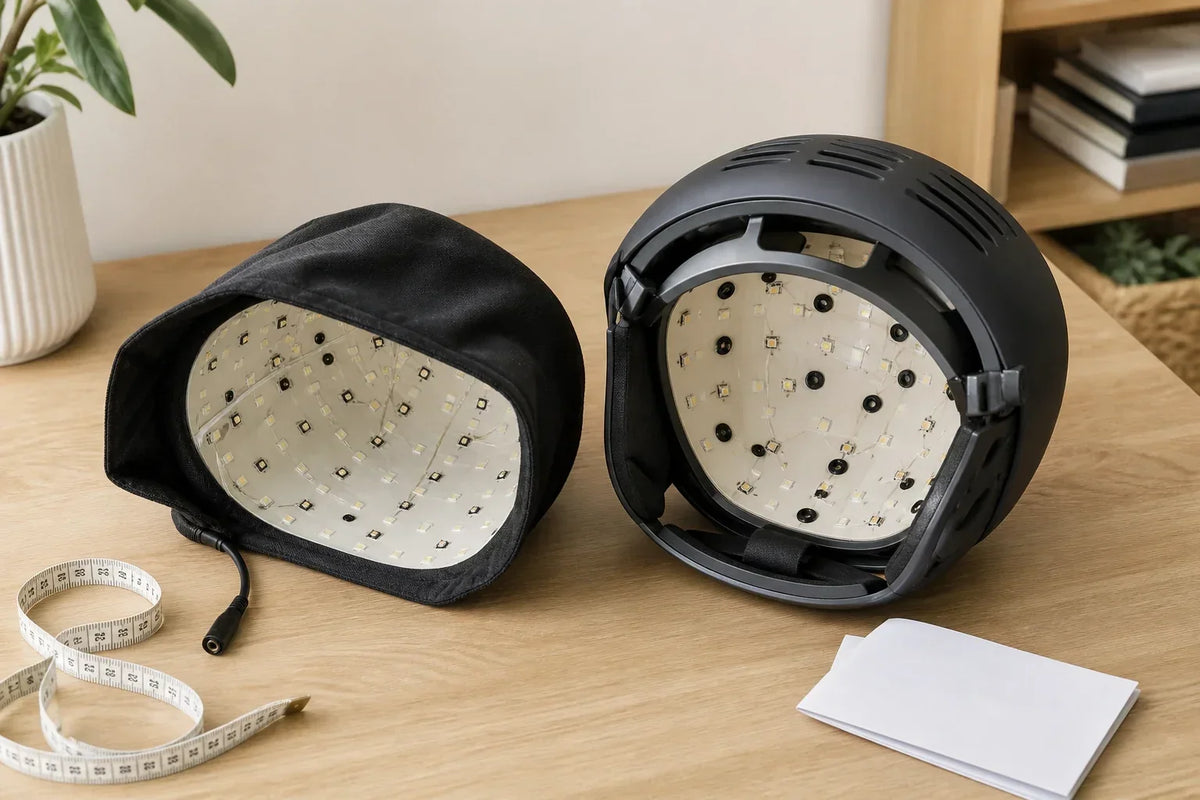
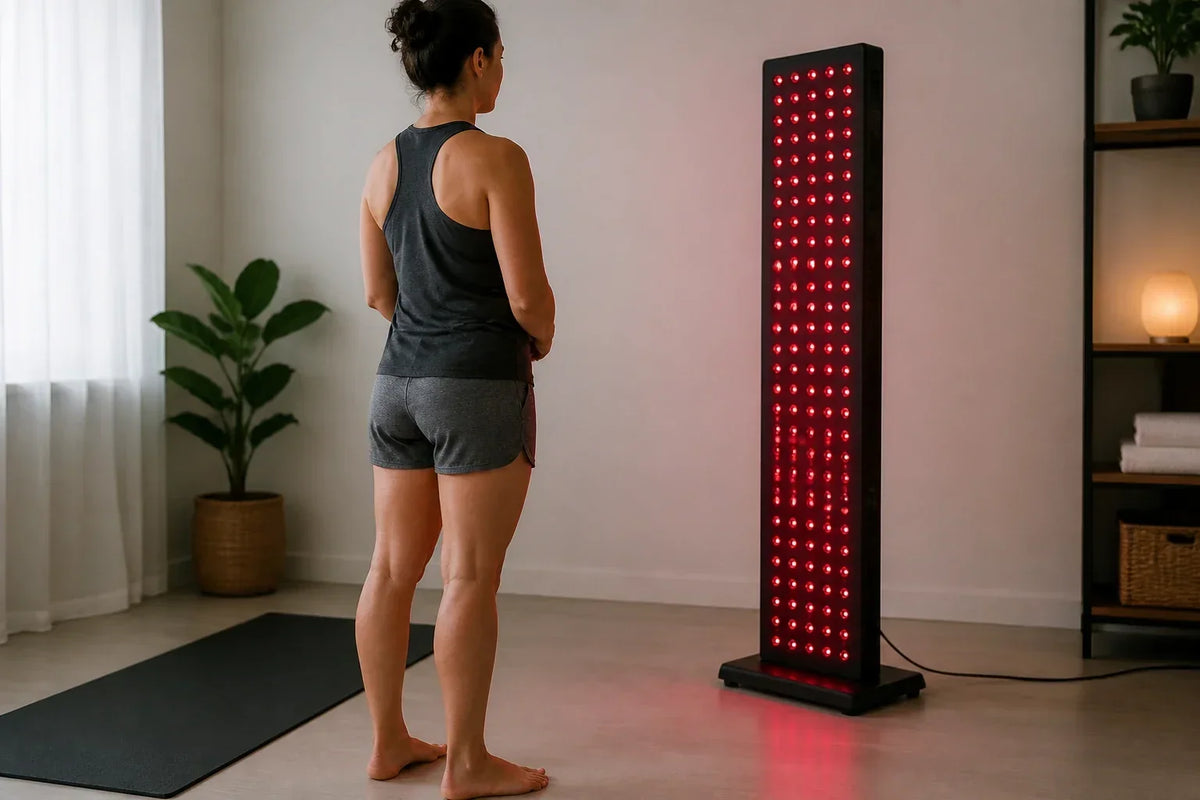
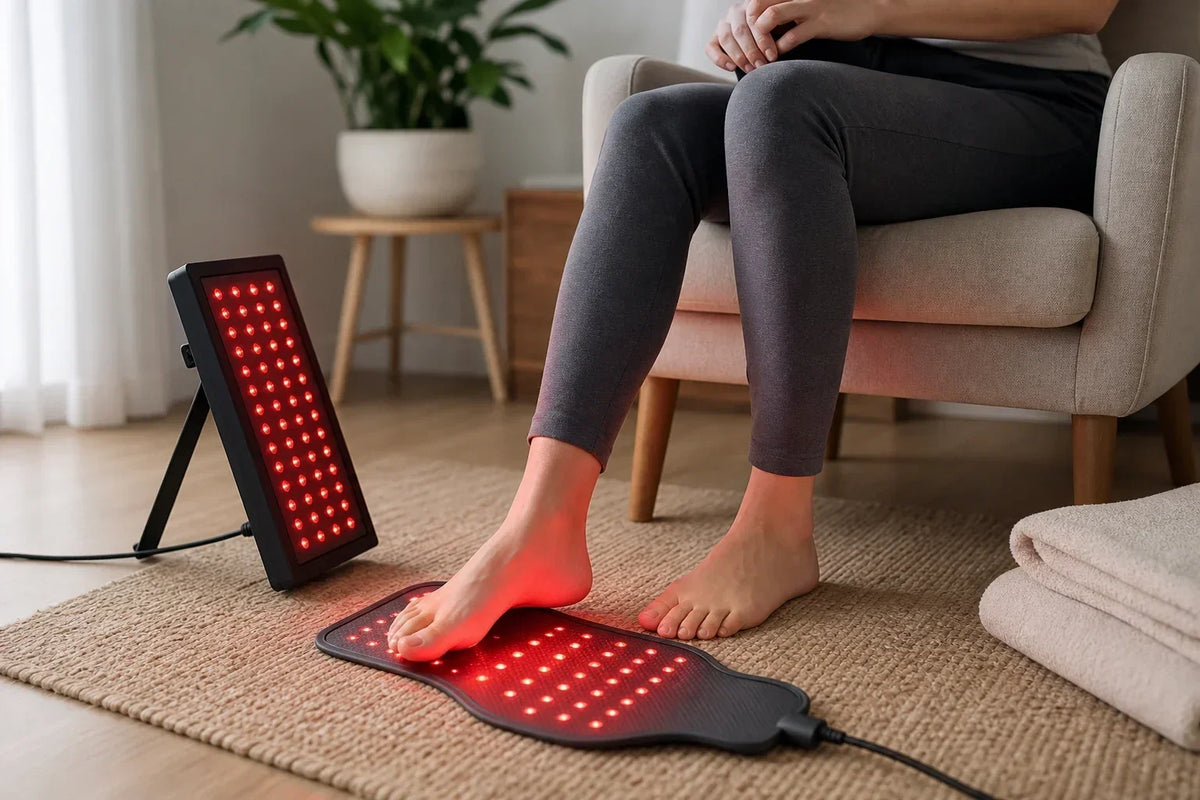
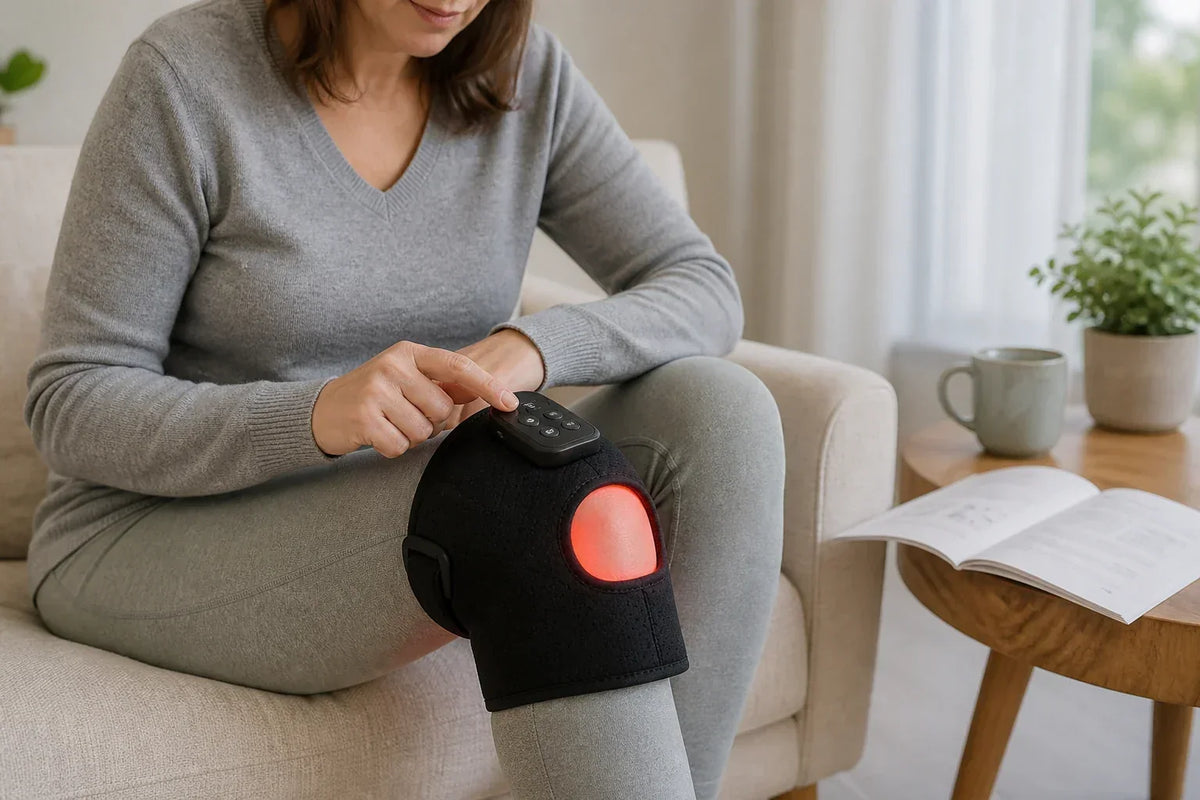
| Device category | Panel, belt, laser, clinic device, or LED system | Different devices should not be treated as identical. |
| Clinical protocol | May be used in a research or professional setting | It should not be copied without guidance. |
Marketing Claims: Where I Would Be Careful
Fertility claims can become misleading quickly. A company may mention mitochondria, blood flow, ovarian health, sperm motility, or “natural support,” then imply more than the evidence can support.
FTC guidance says health-related claims should be truthful, not misleading, and supported by reliable evidence. You can review it here: FTC Health Products Compliance Guidance.
FDA general wellness guidance also clarifies how low-risk wellness products are approached when they are positioned around general wellness rather than medical claims. You can review it here: FDA General Wellness Policy for Low Risk Devices.
In my view, the safer wording is “being researched,” “may be of interest,” or “general wellness routine,” not “boosts fertility” or “helps you get pregnant.”
Common Mistakes With Red Light Therapy for Fertility at Home
The biggest mistake is letting a home wellness routine delay a fertility evaluation. The second is copying clinic or lab research as if it were a bedroom protocol. The third is using a device near sensitive body areas without understanding instructions.
| Mistake | Why It Happens | Better Move |
|---|---|---|
| Using red light as the main fertility plan | It feels active and easy | Use evidence-based fertility timing and evaluation first. |
| Copying research protocols | Study abstracts sound promising | Do not translate clinical research into home use on your own. |
| Ignoring age-based timelines | People hope home routines will be enough | Follow fertility evaluation timelines. |
| Assuming all panels are fertility devices | They share red and NIR wavelengths | Check intended use and avoid unsupported claims. |
| Using sensitive areas casually | Influencer routines make it look simple | Ask a qualified clinician before targeted reproductive use. |
| Expecting quick results | Fertility content online can be emotionally persuasive | Track real fertility markers and get proper guidance. |
What I Would Actually Do
If I were helping a friend think about red light therapy for fertility at home, I would first ask where they are in the journey. Are they just starting? Have they been trying for months? Are they over 35? Is there a known issue? Are they already working with a clinic?
If they were early in the process, I would focus on basics first: cycle tracking, timing, sleep, alcohol intake, nutrition, stress load, exercise, and making sure both partners are part of the conversation.
If they were already near the evaluation timeline, I would not spend months experimenting with a device before booking an appointment. That is the part I would pay attention to. Fertility has a time element, especially with age.
If they still wanted to use red light as part of a general wellness routine, I would keep it conservative: use the device only as directed, avoid fertility claims, avoid sensitive targeted exposure without guidance, and do not use it as an excuse to delay proper testing.
References
- ASRM: Fertility Evaluation of Infertile Women
- ACOG: Evaluating Infertility
- NIH/PMC: Multiwavelength Red and Near-Infrared PBM and Female Fertility Outcomes
- NIH/PMC: Low Level Laser and LED Photobiomodulation and Human Sperm Motility
- NIH/PMC: Photobiomodulation and Male Reproductive Research
- NIH/PMC: Low-Level Laser Therapy Pretreatment in Recurrent Implantation Failure
- FTC: Health Products Compliance Guidance
- FDA: General Wellness Policy for Low Risk Devices
FAQ
Can red light therapy improve fertility at home?
There is not enough reliable evidence to say that at-home red light therapy improves fertility. It should not replace fertility evaluation, lab testing, or professional guidance.
Is red light therapy for fertility proven?
Red and near-infrared photobiomodulation has been studied in fertility-related contexts, but the evidence is still limited and often involves clinical, lab, or assisted reproduction settings.
Can I use red light therapy while trying to conceive?
If you are trying to conceive, especially if you may be pregnant or are working with a fertility clinic, ask a qualified clinician before adding light devices near the abdomen or reproductive areas.
Can red light therapy help male fertility?
Some studies look at sperm motility and photobiomodulation, but these findings should not be turned into a self-directed home protocol for sensitive areas.
What wavelength is used in red light fertility research?
Research often discusses red and near-infrared wavelengths, but wavelength alone does not prove fertility results. Dose, device type, body area, timing, and clinical context matter.
When should I see a fertility specialist instead of trying home devices?
Common guidance recommends fertility evaluation after 12 months of trying if under 35, after 6 months if 35 or older, and sooner if there are known concerns or risk factors.