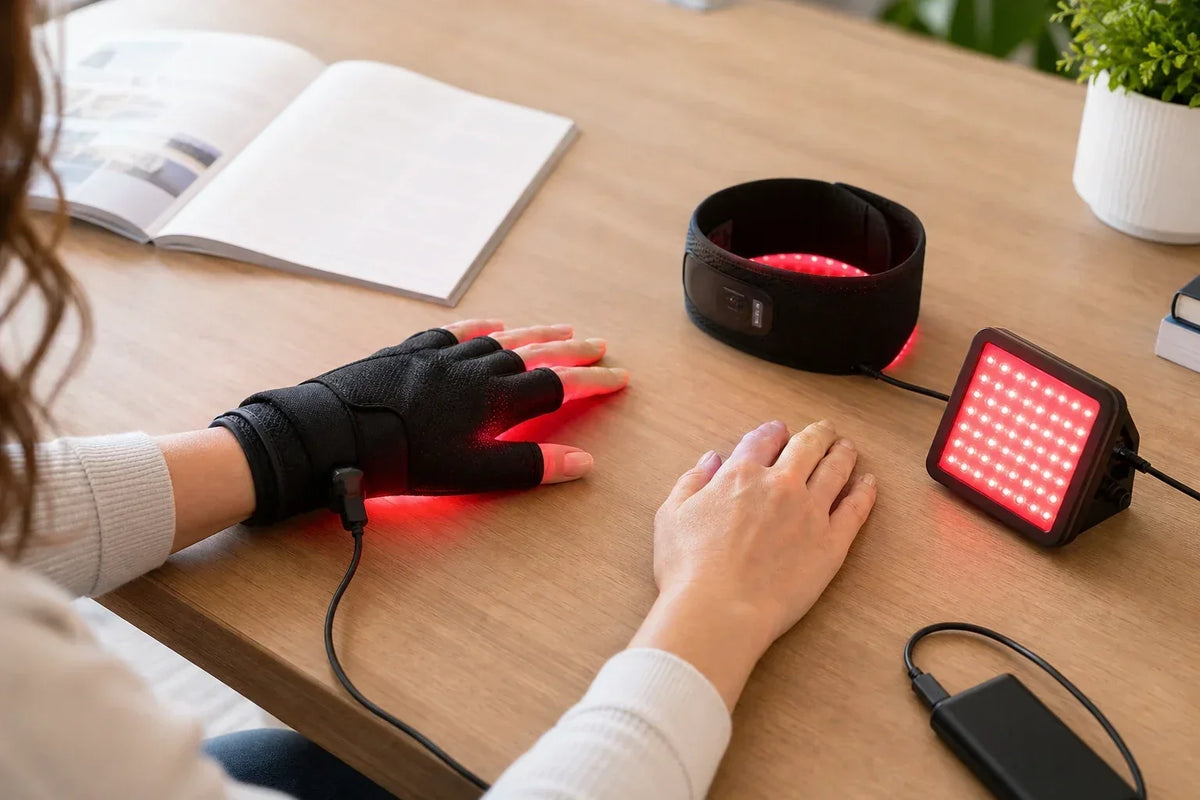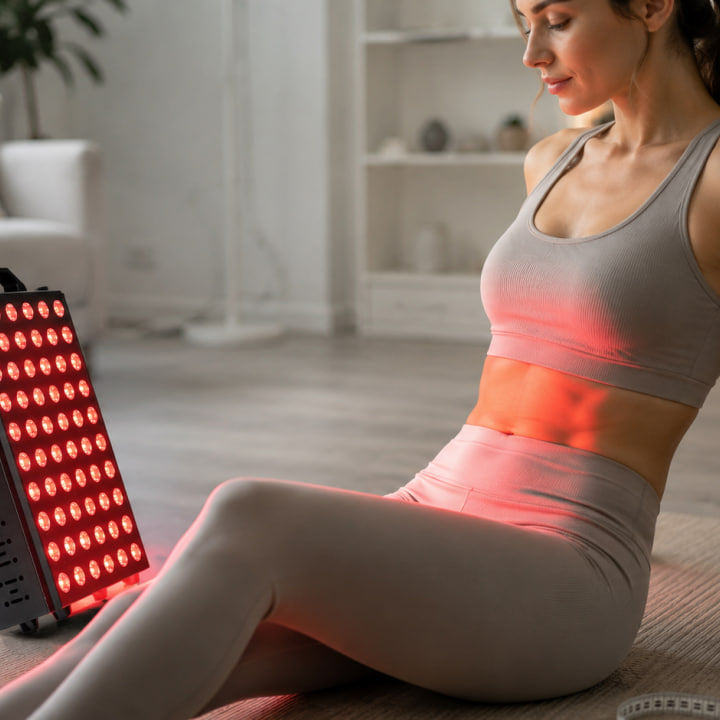
Red light therapy for belly fat explained: what research says about waist inches, body contouring, weight loss limits, at-home panels, and realistic results.
Editorial Review: This article was created with reference to public body contouring, red light therapy, and consumer health claim resources, including Cleveland Clinic, FDA, FTC, NIH/PMC, PubMed, and WebMD. It is written for consumer education and at-home routine planning, not medical advice or a weight-loss promise.

If you searched red light therapy for belly fat, the honest answer is this: red light and low-level laser light have been studied for body contouring and temporary circumference reduction, but at-home red light therapy should not be treated as a proven way to lose belly fat or drop body weight. The better way to understand it is as a possible body-contouring support tool, not a replacement for nutrition, movement, sleep, and realistic weight management.
My personal take is simple: if a website makes red light sound like a “lie down and melt belly fat” shortcut, I would be careful. The more realistic question is whether light-based body contouring can support the look of the waistline or help with small measurement changes when paired with a consistent lifestyle routine.
The key is to separate three ideas: belly fat loss, waist circumference reduction, and body contouring appearance. They sound similar, but they are not the same thing.
Quick Q&A: What Most People Want to Know First
| Question | Short Answer | My Practical Note |
|---|---|---|
| Does red light therapy reduce belly fat? | Some low-level laser and red light studies look at body contouring and waist circumference, but it should not be treated as a guaranteed belly fat solution. | I would think “possible inch-change support,” not “fat-loss shortcut.” |
| Can red light therapy help with weight loss? | It is not a replacement for calorie balance, nutrition, movement, or professional weight guidance. | If the scale is the goal, red light alone is not the main tool. |
| Is red light therapy for belly fat the same as body contouring? | Most credible discussions place it closer to body contouring than true weight-loss treatment. | This distinction matters for SEO, expectations, and compliance. |
| How long does red light therapy take for belly fat? | Studies and commercial protocols vary, often using multiple sessions over several weeks. | I would not judge any waist routine after one or two sessions. |
| Can I use a red light panel on my stomach at home? | You can use a home panel only as directed by the device manual, but do not assume it is a fat-reduction device. | A general wellness panel is not automatically a body-contouring device. |
| What actually helps belly fat most? | Consistent nutrition, activity, sleep, and long-term habits remain the foundation. | I would use red light only as an optional support routine, not the core plan. |
First, Belly Fat Loss and Body Contouring Are Not the Same
The biggest problem with the phrase “red light therapy for belly fat” is that it mixes two different goals. One goal is losing body fat. The other is improving the look or measurement of a specific area.
Weight loss usually means a broader body change influenced by nutrition, activity, energy balance, sleep, stress, and consistency. Body contouring is different. It focuses more on the shape, outline, or circumference of a specific area.
Cleveland Clinic describes body contouring as procedures that can change the shape or contour of an area, with nonsurgical options including methods that use cold, heat, lasers, and other approaches. You can review its overview here: Cleveland Clinic body contouring overview.
| Goal | What It Means | Where Red Light May Fit | My Practical View |
|---|---|---|---|
| Belly fat loss | Reducing body fat through long-term lifestyle and energy balance | Not the main tool | I would not rely on light alone for this. |
| Waist circumference change | Measurement around the waist changes over time | Some studies look at this area | Track inches, not just photos. |
| Body contouring | Changing the appearance or outline of a treated area | This is the more accurate category | Use careful language and realistic expectations. |
| Skin appearance | How the belly area looks in texture and tone | Red light may be discussed for skin appearance | This is separate from fat loss. |
What the Research Says About Red Light and Waist Circumference
Low-level laser therapy, often shortened to LLLT, has been studied for fat layer reduction and body contouring. Some research has reported changes in waist, hip, thigh, or upper abdomen circumference after structured protocols.
For example, a PubMed-indexed pilot study compared different low-level laser therapy frequencies and measured weight, waist circumference, body fat percentage, and quality of life. You can review the abstract here: PubMed pilot study on low-level laser therapy for weight reduction.
A PubMed Central article also reviewed low-level laser therapy for fat layer reduction, describing it as a potential body contouring approach while discussing proposed mechanisms and study limitations. You can review it here: NIH/PMC review on low-level laser therapy for fat layer reduction.
Here’s the practical way I’d look at it: the research is interesting, but it does not mean every red light panel sold for home wellness is the same as the studied devices, settings, wavelengths, power, and treatment protocols.
| Research Point | What It Suggests | What It Does Not Prove |
|---|---|---|
| LLLT has been studied for body contouring | There may be measurable circumference changes in some protocols | It does not prove all home panels reduce belly fat. |
| Waist measurements are often used | Some studies focus on inches or circumference | Inches are not the same as full-body fat loss. |
| Protocols are structured | Timing, frequency, wavelength, and device type matter | You should not copy a study with a random device. |
| Results may be modest | Small changes may matter for body contouring | It is not a dramatic transformation guarantee. |
Why “Belly Fat” Claims Can Be Misleading
Many product pages use “belly fat” because it is the phrase people search. But from a trust and compliance point of view, it is safer to explain exactly what is being discussed: fat loss, circumference, water, body contouring, or skin appearance.
WebMD notes that some providers use red light therapy as a weight-loss or body sculpting service, but the effect may involve reduced circumference in the treated area and may not reflect real weight loss. You can review the WebMD overview here: WebMD red light therapy overview.
My view is direct: if the page promises “red light burns belly fat while you do nothing,” I would not trust it. A stronger and cleaner explanation is that certain light-based technologies have been studied for body contouring, while true fat loss still depends heavily on long-term habits.
At-Home Red Light Panels vs Clinic Body Contouring Devices
A home red light panel and a clinic body-contouring device may both involve red light, but they are not automatically the same. Device design, wavelength, irradiance, distance, treatment area, session time, and regulatory positioning can all differ.
The FDA has a public page on non-invasive body contouring technologies, covering device categories and safety considerations. You can review it here: FDA non-invasive body contouring technologies.
This is where many home users get confused. They see a study about low-level laser body contouring and assume their bedroom LED panel has the same purpose. That is not a safe assumption.
| Factor | Clinic Body Contouring Device | At-Home Red Light Panel |
|---|---|---|
| Primary positioning | May be designed for body contouring or circumference reduction | Often positioned for general wellness or skin appearance |
| Protocol | Structured sessions under provider guidance | User follows manual at home |
| Measurement | May track waist, hips, thighs, or abdomen | Often no formal measurement plan |
| Device output | Specific system design and setting | Varies widely by product |
| Claims | Should match clearance and evidence | Should avoid unsupported fat-loss promises |
Can You Use Red Light Therapy on the Stomach?
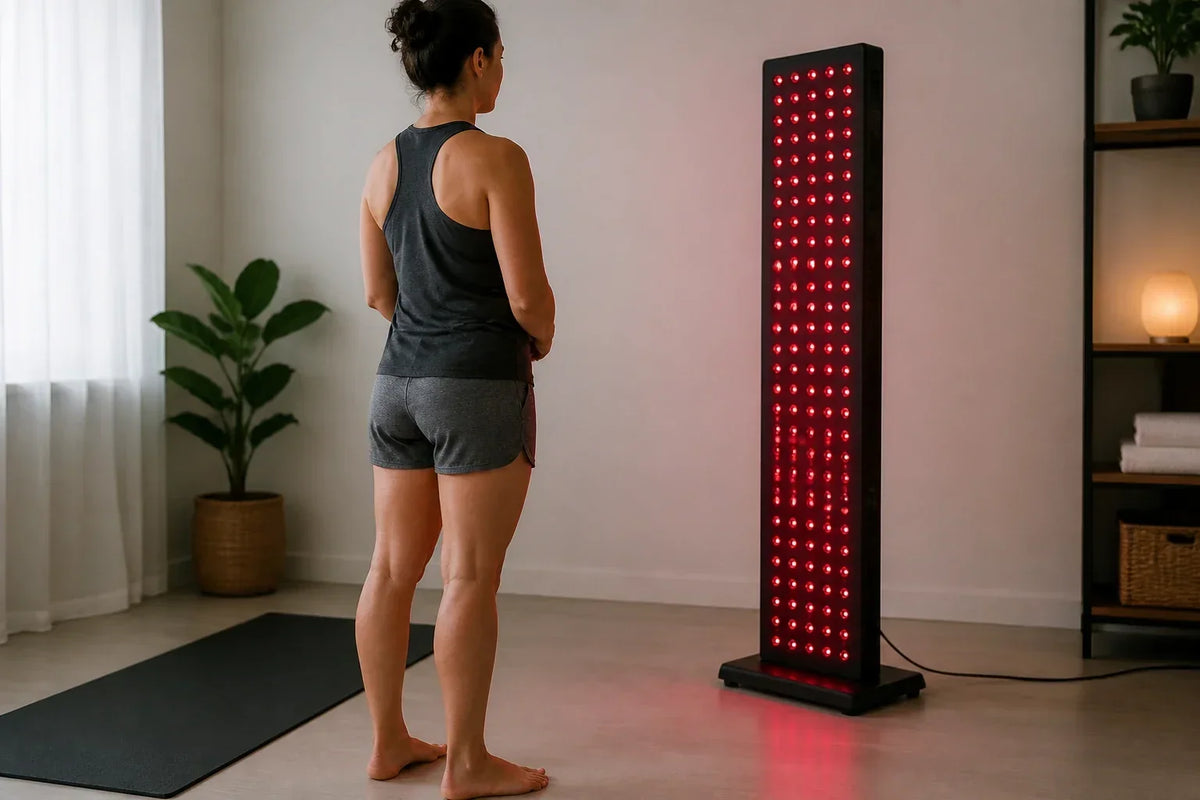
Many people want to know whether they can simply aim a red light panel at the belly. For general body-use devices, you should follow the product manual for distance, timing, frequency, and eye protection. But using a device on the stomach does not automatically mean it is reducing belly fat.
If this were my routine, I would use stomach-area red light only as a consistent wellness or body-care habit, not as the whole plan for abdominal fat loss. I would track waist measurements, nutrition, steps, workouts, and sleep at the same time.
The part I would pay attention to is whether the device is actually labeled and designed for the claim you care about. A general red light therapy panel should not be treated like a clinical body-contouring device unless the manufacturer’s instructions and evidence support that use.
How Long Does Red Light Therapy Take for Belly Fat?
There is no universal time. Some body-contouring studies use structured protocols over several weeks. Some commercial services schedule repeated sessions. Some home users do 10 to 20 minutes per area, but that does not mean the same thing as a studied body-contouring protocol.
A six-week low-level laser therapy study reported reductions in waist, hip, thigh, and upper abdomen circumference after one weekly treatment for six weeks. You can review the full article here: NIH/PMC six-week low-level laser therapy protocol.
I would not judge anything after one session. If you are tracking the belly area, use the same tape measure, same body position, same time of day, and the same measurement point. Otherwise, normal water, food, posture, and bloating changes can confuse the result.
| Timeframe | What to Track | My Practical Note |
|---|---|---|
| First week | Comfort, warmth, routine consistency | Do not expect visible belly change. |
| Weeks 2–4 | Waist measurement, photos, routine adherence | Use the same measurement method every time. |
| Weeks 4–8 | Whether inches, fit, or appearance changes are stable | Compare against nutrition and activity changes too. |
| After 8 weeks | Whether the habit is worth continuing | If nothing else changed, do not expect the device to do all the work. |
What Actually Helps Belly Fat Most?
This is the part that feels less exciting but matters more. If the goal is real belly fat reduction, the core tools are still nutrition, movement, resistance training, sleep, stress management, alcohol moderation, and long-term consistency.
Harvard Health’s weight-loss resources emphasize combining diet and exercise when the goal is losing weight, especially abdominal fat. You can review the weight-loss topic page here: Harvard Health weight-loss resources.
My personal view: red light can be the extra 5% of a body-care routine, but it should not replace the 95% that actually drives body composition over time.
| Foundation Habit | Why It Matters | How Red Light Might Fit Around It |
|---|---|---|
| Nutrition consistency | Controls the main weight-management driver | Use red light as a routine anchor, not a replacement. |
| Resistance training | Supports body composition and shape | Pair red light with post-workout wind-down if you like the habit. |
| Daily movement | Helps overall energy balance | Do not sit under a panel instead of moving. |
| Sleep | Poor sleep can make routine consistency harder | A calm evening routine may help you stay structured. |
| Measurement tracking | Shows whether the waist is actually changing | Track waist, photos, and habits together. |
Common Mistakes With Red Light Therapy for Belly Fat
The biggest mistake is expecting a red light device to outwork lifestyle habits. The second mistake is confusing temporary waist measurement changes with actual fat loss. The third is using a general-use panel as if it were a professional body-contouring system.
FTC guidance says health-related claims should be truthful, not misleading, and supported by reliable evidence. You can review the guidance here: FTC Health Products Compliance Guidance.
FTC has also taken action against deceptive advertising involving low-level light therapy device claims, which is a useful reminder that light-based wellness claims need careful wording. You can review its release here: FTC action on low-level light therapy claims.
| Mistake | Why It Happens | Better Move |
|---|---|---|
| Expecting belly fat to melt away | Marketing language makes it sound passive | Think body contouring support, not fat-loss magic. |
| Ignoring food and movement | The device feels easier than habit change | Build the routine around nutrition and activity first. |
| Measuring inconsistently | Waist size changes throughout the day | Measure at the same time and same point. |
| Copying clinic studies at home | Both use red light or lasers | Do not assume your device matches the study device. |
| Using overlong sessions | More feels like it should work faster | Follow the device manual and avoid overuse. |
| Buying based on before-after photos only | Photos can be affected by posture, lighting, and timing | Look for specs, instructions, evidence, and claims. |
How to Build a Realistic Belly-Focused Routine
If I were helping a friend use red light therapy for belly fat concerns, I would not start with the device. I would start with a simple tracking plan. Waist measurement once a week. Photos once every two weeks. Daily step target. Two to four strength sessions per week. A realistic food plan. Then, if they still want red light, add it as a consistent body-care step.
The routine should be boring enough to repeat. If the plan is too intense, most people quit before they learn anything.
- Choose one waist measurement point and use it every time.
- Measure in the morning before food when possible.
- Use the red light device only as the manual directs.
- Do not increase session time beyond instructions.
- Pair the routine with movement and nutrition consistency.
- Review progress after 6 to 8 weeks, not after one session.
- Keep expectations around body contouring and routine support, not guaranteed fat loss.
My Practical View
My personal take is simple: red light therapy for belly fat is a keyword people search because they want a shortcut. I understand the appeal. The belly area is frustrating, and people want something that feels direct. But a home red light panel should not be sold or used as a guaranteed belly-fat remover.
If this were my routine, I would use red light as an optional add-on for consistency, body care, and measurement tracking. I would not let it replace food planning, walking, resistance training, or sleep. I also would not trust any page that makes the process sound effortless.
The part I would pay attention to is the language: body contouring, waist circumference, temporary inch changes, and supportive routine are more honest than “burn belly fat.” That honesty actually makes the article stronger for readers and safer for SEO.
So, can red light therapy help with belly fat? It may have a role in body-contouring conversations, especially around waist measurement and appearance. But for real belly fat loss, the foundation is still the unglamorous routine: nutrition, movement, sleep, and time.
References
- Cleveland Clinic: Laser Lipolysis
- Cleveland Clinic: Body Contouring
- WebMD: Red Light Therapy Overview
- PubMed: Low-Level Laser Therapy for Weight Reduction
- NIH/PMC: Low-Level Laser Therapy for Fat Layer Reduction
- NIH/PMC: Six-Week Low-Level Laser Therapy Protocol
- FDA: Non-Invasive Body Contouring Technologies
- Harvard Health: Weight Loss Resources
- FTC: Health Products Compliance Guidance
- FTC: Deceptive Advertising of Light Therapy Device Claims
FAQ
Does red light therapy reduce belly fat?
Red light and low-level laser methods have been studied for body contouring and waist circumference changes, but at-home red light therapy should not be treated as a guaranteed belly fat reduction method.
Can red light therapy help with weight loss?
Red light therapy is not a replacement for nutrition, movement, sleep, or long-term weight-management habits. It is more accurately discussed as a possible body-contouring support tool.
How long does red light therapy take for belly fat?
There is no universal timeline. Studies and commercial protocols often use repeated sessions over several weeks. For home users, any tracking should include waist measurements, photos, and lifestyle habits.
Can I use a red light panel on my stomach?
You can use a body-safe red light panel on the stomach only according to the device manual. Do not assume a general red light panel is designed or proven for belly fat reduction.
Is red light therapy for belly fat the same as body contouring?
Most reliable discussions place this topic closer to body contouring or circumference reduction than true weight loss. That distinction helps keep expectations realistic.
What should I do if I want to reduce belly fat?
Focus first on nutrition consistency, movement, resistance training, sleep, and long-term habit tracking. Red light can only be considered an optional support step, not the foundation.