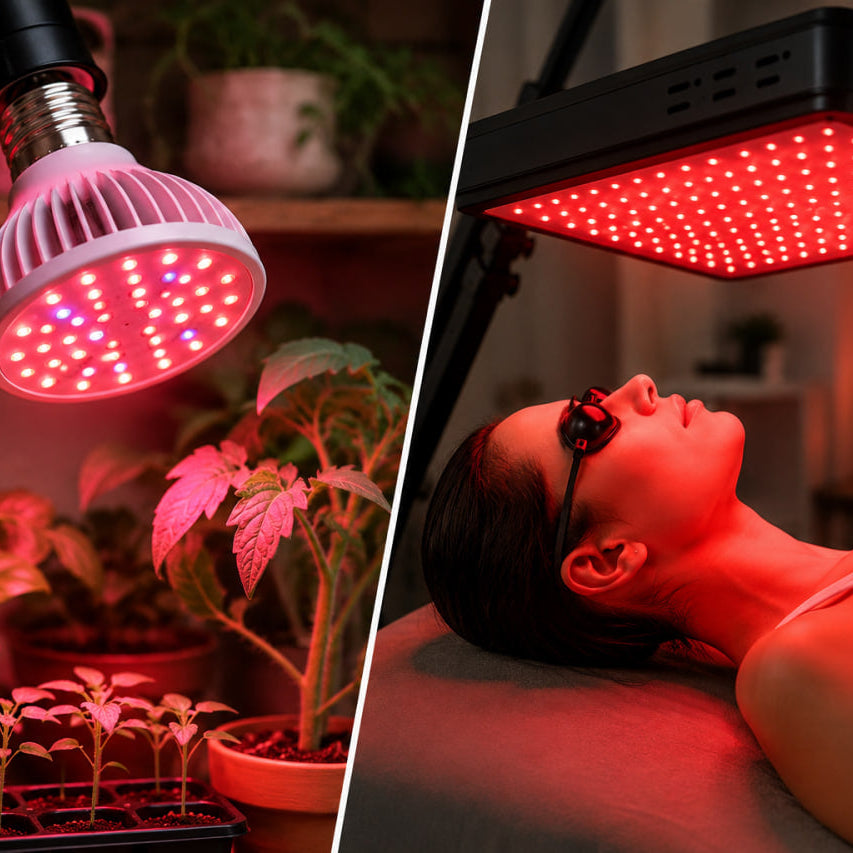
A red LED grow bulb is made for plants, not red light therapy. Learn how red grow bulbs work, when to use them, and why full-spectrum may be easier.
Editorial Note: This article explains what a red LED grow bulb is, how it differs from a red light therapy device, and what home users should know before buying or using one. It is written for consumer education, not medical advice or plant science consulting.
If you searched red LED grow bulb, you are probably trying to figure out one of two things: whether red LED bulbs help plants grow, or whether a cheap grow bulb can be used like a red light therapy device. The direct answer is simple: a red LED grow bulb is mainly designed for plants, not for human red light therapy. It can be useful in indoor gardening, especially when combined with the right light spectrum, timing, distance, and plant type. But it should not be treated as the same thing as a red light therapy panel.
My personal take is simple: this is one of those keywords where people get pulled in two directions. Gardeners want better seedlings, herbs, flowers, or houseplants. Red light therapy users see a cheap red bulb and wonder if it can replace a proper wellness device. I would keep the two use cases separate. A grow bulb belongs in a plant setup. A red light therapy device should be designed, labeled, and instructed for human use.
Quick Q&A: What Most People Want to Know First
| Question | Short Answer | My Practical Note |
|---|---|---|
| What is a red LED grow bulb? | It is an LED bulb that emits red light for indoor plant growth or plant-stage support. | I would think of it as a gardening light first, not a wellness light. |
| Do plants need red light? | Red light can support parts of plant growth, especially flowering and stem-related responses. | Red alone is not always the best full solution. Many plants do better with a balanced spectrum. |
| Is a red LED grow bulb enough for seedlings? | Usually not by itself. Seedlings often need broader light, especially enough blue light. | If I were starting seeds, I would compare full-spectrum or red-blue grow lights first. |
| Can I use a red LED grow bulb for red light therapy? | I would not use a plant grow bulb as a red light therapy device. | A grow bulb is not built around human-use distance, irradiance, eye guidance, or body routine instructions. |
| Is red light better than blue light for plants? | Not exactly. Red and blue light do different things, and plant needs vary by stage. | The better question is what your plant is doing right now: seedlings, leaves, flowers, or fruit. |
| Should I buy red-only or full-spectrum? | For most home growers, full-spectrum or red-blue LED grow bulbs are easier to use. | Red-only bulbs are more specific and can be limiting if used alone. |
What a Red LED Grow Bulb Actually Does
A red LED grow bulb is built to provide red wavelengths that plants can use as part of their light environment. Indoor plants do not only need “brightness.” They respond to light quality, intensity, timing, and distance.
University of Minnesota Extension notes that red light or mixed light bulbs can be suitable for promoting bud formation in flowering plants. You can review its indoor plant lighting guide here: University of Minnesota Extension indoor plant lighting guide.
That does not mean every plant should sit under a red-only bulb all day. A plant that is trying to produce strong leaves, compact growth, or healthy seedlings may need more than red light alone.
| Light Type | Common Plant Role | Home Grower Takeaway |
|---|---|---|
| Red light | Often linked with flowering, stem responses, and plant signaling | Useful, but not always enough by itself. |
| Blue light | Often linked with compact vegetative growth and leaf development | Important for seedlings and leafy growth. |
| Full-spectrum white light | Attempts to imitate a broader daylight-like range | Usually easier for beginners. |
| Red-blue grow light | Combines two important plant-useful ranges | Common for indoor growing, though the color can look purple. |
| Far-red light | Can influence plant shape and flowering responses in some contexts | More advanced; not the first thing I would chase as a beginner. |
Red Light vs Blue Light for Plant Growth
Red and blue light are both important in indoor plant lighting, but they are not interchangeable. UGA Extension explains that blue light is generally associated with compact, vegetative growth, while red light typically promotes stem elongation and flowering, though plant species can respond differently. You can review its grow light article here: UGA Extension grow light spectrum guide.
Here’s the practical way I’d look at it: if your plant is young and leafy, I would not rely on a red-only bulb. If your plant is mature and flowering, red light may matter more. If you are unsure, full-spectrum is usually less confusing.
| Plant Stage | What It Usually Needs | Is Red-Only Enough? | Better Starting Point |
|---|---|---|---|
| Seed starting | Strong, balanced light for compact growth | Usually not ideal alone | Full-spectrum or red-blue LED grow light |
| Leafy herbs | Enough intensity and balanced spectrum | Often too narrow alone | Full-spectrum grow bulb |
| Flowering plants | Red light can be more relevant | May help as part of a plan | Mixed spectrum with sufficient red |
| Houseplants in low light | Reliable supplemental light | Depends on plant type | White full-spectrum grow bulb |
| Fruit-bearing plants | High light intensity and balanced spectrum | Usually not enough alone | Stronger full-spectrum fixture |
Why Full-Spectrum Grow Bulbs Are Often Easier
A red LED grow bulb can be useful, but full-spectrum bulbs are often easier for regular home users. They are more natural-looking, easier to live with indoors, and usually support a broader range of plant needs.
NASA’s plant-growth work explains that plants reflect a lot of green light and use more red and blue wavelengths, and its Veggie chamber uses LED spectra suited for plant growth. You can read NASA’s overview here: NASA article on growing plants in space.
From an editor’s point of view, the full-spectrum choice is less exciting but often more practical. You do not have to guess whether your plant is getting enough blue, green, red, or other useful light. You still need to check brightness, distance, and timing, but the color choice becomes simpler.

Can a Red LED Grow Bulb Replace Sunlight?
No grow bulb fully replaces sunlight in the broadest sense. A good grow bulb can supplement light indoors, especially for plants that do not get enough window light. But sunlight is broad, strong, and changes throughout the day.
A red LED grow bulb is more specific. It gives one narrow part of the plant-light picture. That can be useful, but it can also be limiting.
My practical view: if a plant is struggling in a dark room, do not just add the cheapest red bulb and expect a miracle. Look at the whole setup: plant type, pot, water, window light, light duration, bulb distance, and whether the bulb actually provides enough usable light.
Can You Use a Red LED Grow Bulb for Red Light Therapy?
This is the Yamuri-relevant question, and I would answer it clearly: I would not use a red LED grow bulb as a red light therapy device.
A plant grow bulb is made for plants. It may not list the same human-use information that a proper red light therapy panel should provide, such as recommended body distance, irradiance, eye protection, session time, and intended use instructions.
Cleveland Clinic explains that red light therapy is different from ultraviolet tanning light and should be used as directed. You can review its overview here: Cleveland Clinic red light therapy overview.
| Comparison | Red LED Grow Bulb | Red Light Therapy Device |
|---|---|---|
| Main purpose | Indoor plant lighting | Human wellness or skincare-style light routines |
| Designed for | Plants, seedlings, flowers, herbs | People using a guided light device |
| Specs you need | PAR/PPFD, spectrum, wattage, coverage area | Wavelength, irradiance, distance, timer, eye guidance |
| Eye guidance | Often plant-focused, not therapy-focused | Should include human-use safety instructions |
| Best use | Plant shelf, seed-starting area, indoor garden | At-home red light routine as directed |
What Specs Matter for a Red LED Grow Bulb?
If you are buying for plants, do not only look at the word “red.” A good plant light product should tell you more than color.
The specs that matter include spectrum, wattage, coverage area, recommended hanging height, daily light duration, heat output, bulb base, fixture compatibility, and whether the bulb is meant for seedlings, houseplants, flowering plants, or fruiting plants.
| Spec | Why It Matters | My Practical Note |
|---|---|---|
| Spectrum | Tells you what color ranges the bulb emits | Red-only is specific; full-spectrum is easier for beginners. |
| PPFD or PAR information | Helps estimate usable plant light | Better than judging by brightness alone. |
| Coverage area | Shows how many plants the bulb can support | A tiny bulb cannot cover a wide shelf well. |
| Distance from plant | Changes light intensity and heat exposure | Follow the recommended hanging height. |
| Daily timing | Plants need a light schedule | A timer is often worth adding. |
| Heat output | Can stress plants if too close | LEDs run cooler than many older bulbs, but distance still matters. |
How Long Should Plants Be Under a Red LED Grow Bulb?
The right timing depends on plant type, growth stage, light intensity, and how much natural light the plant already receives. Many indoor plants and seedlings need long light windows, but that does not mean every plant wants red light all day.
I would use a timer rather than trying to remember. A consistent schedule is better than turning the light on randomly for two hours one day and sixteen hours the next.
If the grow bulb manufacturer gives a timing guide, start there. If you are growing seedlings, herbs, or flowering plants, also check a trusted gardening source for that plant type.
Where Should You Put a Red LED Grow Bulb?
Placement matters more than many people think. A bulb that is too far away may look bright to your eyes but deliver weak plant light. A bulb too close may create heat stress or uneven growth.
If I were setting up a small indoor plant shelf, I would avoid placing a red grow bulb randomly across the room. I would position it above the plants, follow the recommended distance, and use a timer.
- Place the bulb above the plant, not across the room.
- Follow the recommended distance from the manufacturer.
- Use a timer for consistent daily lighting.
- Watch for stretching, pale leaves, curling, or heat stress.
- Adjust based on plant response instead of guessing.
Common Mistakes With Red LED Grow Bulbs
The biggest mistake is buying a red bulb because it looks powerful. Plants do not care how dramatic the light looks in a room. They respond to useful light, intensity, duration, and spectrum.
The second mistake is using red-only light for every plant stage. The third is thinking a grow bulb is the same thing as a red light therapy device.
| Mistake | Why It Happens | Better Move |
|---|---|---|
| Buying red-only for seedlings | Red light sounds plant-friendly | Consider full-spectrum or red-blue lighting for early growth. |
| Using brightness as the only guide | Human eyes judge light poorly for plants | Check PAR, PPFD, distance, and coverage. |
| Putting the bulb too far away | The room still looks bright | Place the bulb at the recommended height. |
| Running the light randomly | No timer is being used | Use a repeatable daily schedule. |
| Using a grow bulb for therapy | Both lights look red | Use plant lights for plants and therapy devices for human routines. |
My Practical View
My personal take is simple: a red LED grow bulb can be useful, but it is not the first bulb I would recommend to every beginner. If you are growing flowering plants and understand your setup, red light can have a place. If you are just trying to keep houseplants healthy indoors, a full-spectrum LED grow bulb is usually less confusing.
If you came here because you saw the word “red” and thought it might be the same as red light therapy, I would separate the two immediately. A grow bulb is not a shortcut therapy panel. The shape, purpose, instructions, and safety information are different.
If I were helping a friend choose, I would ask one question first: are you buying this for plants or for yourself? If the answer is plants, compare grow light specs. If the answer is red light therapy, look for a device designed for human use, with clear wavelength, distance, session time, and eye-safety instructions.
References
- University of Minnesota Extension: Lighting for Indoor Plants
- UGA Extension: Not All Grow Lights Are Created Equal
- NASA: Growing Plants in Space
- NASA Spinoff: Space Station Garden Shines Light on Earth-Based Applications
- Cleveland Clinic: Red Light Therapy Overview
FAQ
What is a red LED grow bulb?
A red LED grow bulb is a plant lighting bulb that emits red wavelengths used in indoor gardening. It is mainly designed for plants, not human red light therapy.
Is red LED light good for plants?
Red LED light can be useful for some plant growth stages, especially flowering and stem-related responses. However, many plants also need blue light or broader full-spectrum light.
Can I use only a red LED grow bulb for seedlings?
I would not rely on red-only light for seedlings. Seedlings often need strong, balanced light, and blue light can be important for compact vegetative growth.
Is a red LED grow bulb the same as a red light therapy device?
No. A red LED grow bulb is designed for plants. A red light therapy device should be designed for human use and provide guidance on wavelength, distance, session time, and eye safety.
Can I use a grow light bulb for red light therapy?
I would not recommend using a grow light bulb as a red light therapy device. Grow bulbs may not provide the right human-use instructions, safety guidance, or irradiance information.
Should I buy red-only or full-spectrum grow lights?
For most home growers, full-spectrum or red-blue grow lights are easier and more flexible. Red-only bulbs can be useful in specific situations but are less beginner-friendly.