If you are looking at red light therapy beds for home use, the real question is not just “Can I buy one?” The answer is yes. The better question is whether your home, budget, electrical setup, and daily routine actually make sense for one.
My personal take is simple: a red light therapy bed is the most luxurious way to get full-body coverage at home, but it is also the easiest red light purchase to underestimate. People see the spa-style experience first. They often think about the wiring, room size, delivery weight, and maintenance later.
A full-body bed can be a serious home wellness upgrade, but it behaves more like a large appliance than a skincare gadget. If I were setting one up for myself, I would measure the room, check the outlet, think about delivery, and compare a multi-panel setup before even looking at the final price.

Quick Q&A: What Most People Want to Know First
| Question | Short Answer | My Practical Note |
|---|---|---|
| Can you use a red light therapy bed at home? | Yes, but it needs space, power, ventilation, and a realistic budget. | I would treat it like buying a sauna or treadmill, not like buying a face mask. |
| How much does a red light therapy bed cost? | Home-style beds can start in the low thousands, while commercial-style systems can climb much higher. | The listed price is only part of the cost. Delivery, warranty, and possible electrical work matter too. |
| How much space do you need? | Plan for roughly a bed-sized footprint, plus room for the canopy, airflow, and cleaning access. | If a room already feels tight, a vertical panel setup will probably feel better day to day. |
| Do you need a special outlet? | Some beds may need a dedicated circuit or higher-power outlet. Always check the device specs. | This is where I would call an electrician before ordering, not after the freight truck arrives. |
| Are panels a better alternative? | For many home users, yes. Panels are usually easier to move, store, maintain, and plug in. | A panel setup is less glamorous, but it is often the smarter home decision. |
What a Red Light Therapy Bed Actually Is
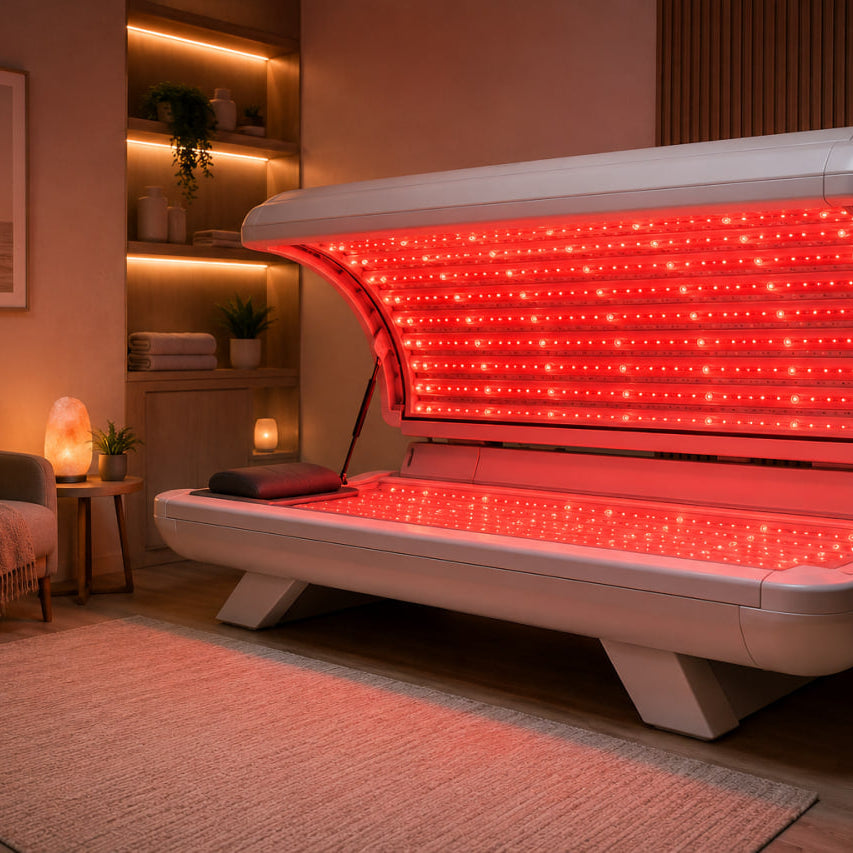
A red light therapy bed is a full-body light device designed to surround the body with red and often near-infrared light. It usually looks similar to a tanning bed, but a proper red light bed is not designed around ultraviolet tanning exposure.
Most users look at red light beds because they want broad coverage without moving a handheld device around. You lie down, the light surrounds you, and the session feels passive. That is the appeal.
Cleveland Clinic explains that red light therapy uses low levels of red light and is different from ultraviolet light used in tanning booths. You can review their general overview here: Cleveland Clinic red light therapy overview.
Still, “full-body coverage” does not automatically mean “best choice for every home.” The right choice depends on space, cost, power, comfort, and how often you will actually use it.
Cost: What You Should Expect Before Shopping
The cost of red light therapy beds for home use can vary widely. Smaller mats and entry-level lay-down devices may sit in a lower price range, while true full-body beds and prosumer systems can become expensive quickly.
I would not judge a bed only by the sticker price. A cheap bed with poor support can become more expensive if something fails. A premium bed can also be overkill if your real goal is a simple home routine a few times per week.
| Option | Typical Cost Level | Best Fit | My Practical View |
|---|---|---|---|
| Red light mat | Lower to mid-range | Users who want a lay-down format without a full bed | Good for space-saving homes, but not the same experience as a canopy bed. |
| Entry home bed | Mid to high range | Users with dedicated space and a fixed routine | Worth considering only after checking delivery, outlet, and warranty details. |
| Prosumer full-body bed | High range | Large home gyms, wellness rooms, or serious users | I would not buy this casually. It needs a real room plan. |
| Commercial-style bed | Very high range | Clinics, spas, studios, or business use | Usually too much for a normal bedroom setup. |
| Multi-panel setup | Flexible range | Home users who want full-body coverage without a bed | This is the option I would compare first before committing to a bed. |
The Space Reality: A Bed Is Not a Small Device
The biggest surprise with a red light therapy bed is the physical footprint. A mask fits in a drawer. A panel can stand near a wall. A bed becomes part of the room.
You need enough floor space for the bed itself, clearance for opening the canopy, and room for airflow. If the bed has fans, vents, acrylic surfaces, or hinged parts, it needs breathing room.
If this were my setup, I would not squeeze a red light bed into a spare room just because it technically fits. I would want enough space to walk around it, clean it, and open it without hitting furniture.
| Space Factor | What to Check | Why It Matters |
|---|---|---|
| Floor footprint | Measure length, width, and total room layout | The bed usually needs a permanent spot. |
| Canopy clearance | Check how the top opens and where it moves | A tight wall or low ceiling can make daily use annoying. |
| Ventilation | Leave space near fan and vent areas | Good airflow helps the device stay cooler. |
| Cleaning access | Make sure you can reach acrylic and side areas | A device you cannot clean easily becomes frustrating. |
| Delivery path | Measure doors, stairs, hallways, and turns | The bed may arrive in large, heavy parts. |
Weight and Delivery: The Part People Forget
A full-size red light therapy bed can be heavy. Depending on the build, frame, acrylic, electronics, and cooling system, you may be dealing with hundreds of pounds after assembly.
This is one reason I prefer ground-floor installations for large beds. Carrying oversized equipment upstairs is not just inconvenient. It can create delivery problems, wall damage, and stress before you even use the device once.
If the brand offers white-glove delivery, read exactly what that includes. “Curbside freight” and “room-of-choice setup” are not the same thing.
What I Would Check Before Ordering
- Assembled weight
- Box dimensions
- Whether the bed arrives in pieces
- Whether stairs are included in delivery
- Whether the company offers setup support
- Whether returns require freight shipping
Electrical Requirements: Check This Before You Buy
Power is where many home buyers get surprised. A strong full-body red light bed may draw much more power than a small panel or LED mask.
In the United States, many bedroom outlets are on 110/120V circuits. Some rooms share a circuit with lights, bathroom outlets, or other appliances. A high-draw red light bed may need a dedicated circuit, and some systems may require a higher-voltage setup.
I would be careful here. If a bed needs more power than your room can supply, the relaxing home routine quickly becomes a breaker-tripping routine.
| Setup Type | Power Situation | Home Check | My Practical Note |
|---|---|---|---|
| Small mat or compact device | Usually easier to run from standard outlets | Confirm wattage and manual instructions | Still avoid overloaded power strips. |
| Large home bed | May need a stronger or dedicated circuit | Check voltage, amps, plug type, and breaker rating | I would ask an electrician before purchase. |
| Commercial-style bed | May require specialized electrical work | Confirm installation requirements in writing | Not something I would plug into a random bedroom outlet. |
| Multi-panel stand | Often more flexible for home outlets | Check total wattage if linking several panels | Still easier to plan than a full bed in most homes. |
Red Light Therapy Bed vs. Panel Alternatives
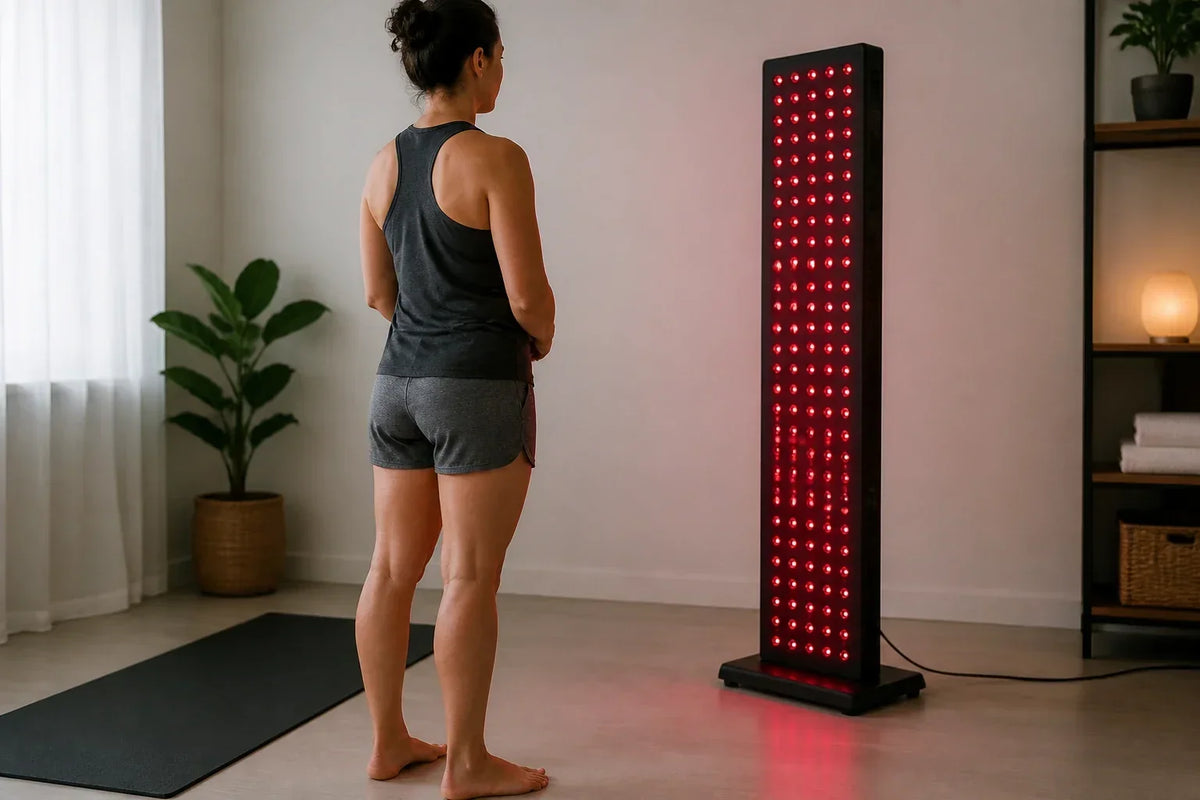
This is the most important decision in the whole article. A red light therapy bed feels premium because you can lie down and let the light surround you. A panel setup feels more practical because it is easier to move, store, repair, and fit into a normal home.
If I were choosing for a regular home, I would compare a bed against two to four large panels on a stand before making the final call. A bed wins on comfort. Panels win on flexibility.
| Feature | Red Light Therapy Bed | Multi-Panel Setup |
|---|---|---|
| Coverage | Broad, passive, often top-and-bottom exposure | Broad coverage, but you may need to turn around |
| Comfort | More relaxing because you lie down | Less passive, but still workable |
| Space | Permanent bed-sized footprint | Can often be moved or stored near a wall |
| Cost | Usually higher | Usually more scalable |
| Electrical planning | More likely to require serious planning | Usually simpler, though still check total draw |
| Maintenance | Large parts can be harder to repair or ship | Individual panels are easier to replace or service |
When a Red Light Therapy Bed Makes Sense
A bed makes sense when comfort and passive full-body coverage are your top priorities. If you have a dedicated wellness room, ground-floor space, strong electrical support, and a budget that does not make you nervous, a bed can be a beautiful setup.
It also makes sense for users who dislike standing in front of panels. Some people simply prefer lying down for a set session. I understand that. A routine you enjoy is easier to repeat.
A Bed May Fit You If:
- You have a dedicated room or home gym.
- You want a spa-style experience at home.
- You prefer lying down instead of standing.
- You have confirmed electrical requirements.
- You are comfortable with freight delivery and a permanent setup.
- You have checked warranty and service support carefully.
When a Panel Setup Is Probably Smarter
A panel setup is probably smarter if you live in an apartment, have limited space, want to move the device, or do not want to deal with freight and electrical upgrades.
My view is that many home users do not actually need a bed. They need consistent coverage, a simple schedule, and a device they will not avoid using. Panels can do that with fewer logistics.
A panel alternative may not look as impressive as a bed, but it can be easier to live with. That matters more than people admit.
| Your Situation | Better Starting Point | Why |
|---|---|---|
| Small apartment | Panel setup | Less permanent space required |
| Shared bedroom | Panel or compact device | A bed can dominate the room |
| Ground-floor home gym | Bed or panel setup | Both can work if power and space are ready |
| Tight budget | Panel setup | More scalable and easier to upgrade later |
| Luxury wellness room | Bed | Comfort and full-body relaxation may justify the size |
Specs That Matter: Wavelengths, Output, Cooling, and Warranty
Once cost and space make sense, then you can look at specifications. I would not start with LED count alone. A big number can look impressive without telling you whether the device is well designed.
For home red light devices, common wavelengths include red light around 660nm and near-infrared light around 850nm. A published study on red and near-infrared light used wavelengths including 611-650nm and 570-850nm ranges in a controlled setting. You can read the paper here: NIH/PMC red and near-infrared light study.
That does not mean every home bed performs the same. Device design, distance, cooling, LED quality, acrylic surface, and session guidance all matter.
| Spec | Why It Matters | What I Would Look For |
|---|---|---|
| Wavelengths | Shows what type of light the device uses | Clear red and near-infrared wavelength numbers |
| Irradiance | Suggests light output at a measured distance | Transparent testing, not just huge marketing numbers |
| Cooling | Protects electronics during longer sessions | Visible ventilation design and fan information |
| Acrylic quality | Affects comfort, cleaning, and light transmission | Clear care instructions and replacement support |
| Warranty | Large devices are harder to service | Domestic support, parts availability, and written terms |
Safety and Use: Do Not Turn a Bed Into a Guessing Game
Whole-body devices need careful use because the light is close, bright, and broad. The device manual should guide session time, distance, eye protection, and who should ask a professional before using it.
The American Academy of Dermatology notes that red light therapy devices are generally considered safe when used as directed, but long-term effects are still being studied and users should follow safety directions. You can review their public guide here: American Academy of Dermatology red light therapy guide.
My safer answer is this: wear the eye protection provided by the manufacturer, follow the timer, and do not assume longer sessions are better.
| Safety Point | What to Do | Why I Care About It |
|---|---|---|
| Eye protection | Use goggles or shields recommended by the device maker | Full-body beds place light close to the face. |
| Session time | Use the manufacturer’s timer guidance | More time is not automatically more useful. |
| Skin comfort | Stop if the session feels uncomfortable | Comfort is part of a sustainable routine. |
| Photosensitivity concerns | Ask a qualified professional before use | Some users should be more cautious with light devices. |
| Children and pets | Keep them away during sessions | Bright devices are not toys. |
Cleaning and Maintenance
A bed has more maintenance than a panel because you lie directly on the surface. Sweat, lotion, hair, and dust can build up quickly.
I would keep cleaning simple and boring: use only the cleaner recommended by the manufacturer, wipe the acrylic after use, and keep vents clear. Avoid harsh glass cleaners unless the manual specifically approves them.
Cooling fans matter too. If the device uses fans, dust buildup can make the system work harder. That is not a glamorous detail, but it can affect how long the device lasts.
Common Mistakes I Would Avoid
The biggest mistake is buying the bed before planning the room. The second mistake is assuming a high price automatically means the device fits your home. The third mistake is ignoring service and warranty details.
From an editor’s point of view, this is where many red light bed articles feel incomplete. They talk about full-body coverage, but they skip the boring home logistics that decide whether the device is easy to live with.
| Mistake | What Happens | Better Move |
|---|---|---|
| Buying before measuring | The bed technically fits but feels cramped | Measure floor, ceiling, canopy movement, and walking space |
| Skipping electrical checks | The device may trip breakers or need upgrades | Check voltage, amps, plug type, and circuit before ordering |
| Only comparing LED count | You may miss output, cooling, and build quality | Compare wavelengths, testing, warranty, and support |
| Ignoring delivery type | Freight arrives but setup becomes your problem | Confirm curbside, threshold, or room-of-choice delivery |
| Forgetting maintenance | The bed becomes annoying to clean and service | Check cleaning rules and replacement part access |
My Practical View: The Home Decision I Would Make
If I had a dedicated wellness room, a ground-floor setup, upgraded electrical support, and a budget that would not bother me, I would consider a red light therapy bed. The comfort is real. The simplicity of lying down and getting broad coverage is hard to beat.
But for a normal home, I would personally start with a panel setup first. Not because beds are bad, but because panels are easier to live with. They are easier to move, easier to upgrade, easier to service, and usually easier to justify.
The part I would pay attention to is not the most luxurious device. It is the device I would actually use three months later. A huge bed in a cramped spare room may look impressive on day one and feel like a burden by week six.
My honest advice: buy the bed only if your room, wiring, delivery plan, and budget are already ready. If you are trying to force the setup to work, panels are probably the better home alternative.
References
- Cleveland Clinic: Red Light Therapy Overview
- American Academy of Dermatology: Red Light Therapy Safety
- NIH/PMC: Red and Near-Infrared Light Parameters
- FDA: General Wellness Policy for Low Risk Devices
- FTC: Health Products Compliance Guidance
FAQ
Are red light therapy beds good for home use?
They can be a good fit for homes with enough space, proper power, a realistic budget, and a dedicated wellness area. For smaller homes, panels may be easier to use and maintain.
How much does a red light therapy bed for home use cost?
Costs vary widely. Entry-style lay-down devices may start in the low thousands, while full-body beds and commercial-style systems can cost much more. Delivery, electrical work, and warranty support should be included in your budget.
How much space does a red light therapy bed need?
Plan for a bed-sized footprint plus extra clearance for opening the canopy, airflow, cleaning, and safe movement around the unit.
Do red light therapy beds need special outlets?
Some large beds may need a dedicated circuit or higher-power outlet. Always check the device’s voltage, amperage, plug type, and installation requirements before ordering.
Is a red light therapy bed better than panels?
A bed is more passive and comfortable, while panels are usually more flexible, easier to move, and easier to fit into a normal home. The better choice depends on your space and routine.
What should I check before buying a red light therapy bed?
Check cost, room size, delivery path, electrical requirements, wavelengths, warranty, cleaning instructions, cooling design, and whether a panel setup would meet your needs with fewer logistics.