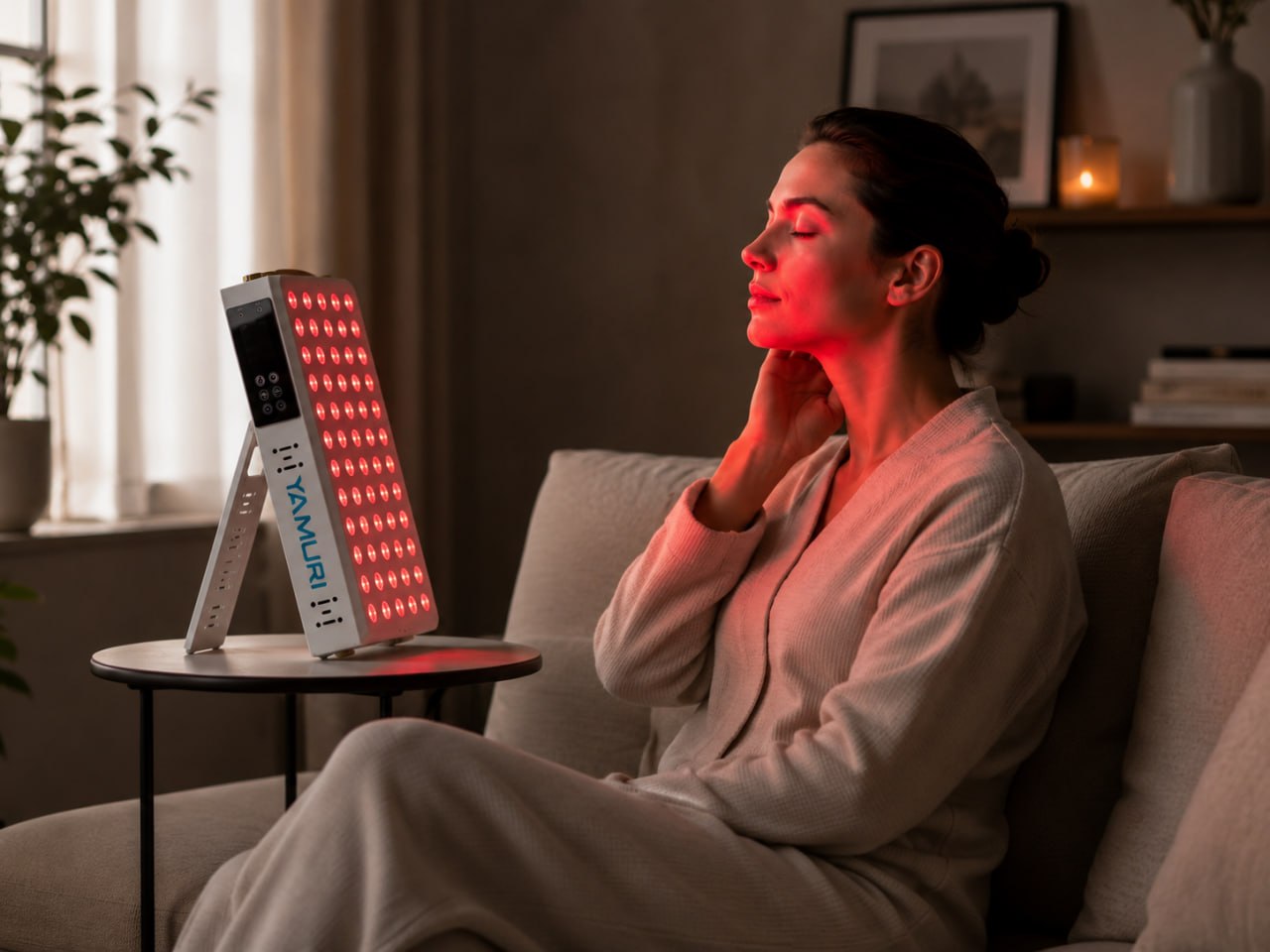
Quick answer: Yes, many people can use red light therapy at home with a consumer device, a simple routine, and realistic expectations. The key is choosing the right device, following the manual, keeping sessions reasonable, and using it as a steady home wellness habit.
| Question | Short answer | Best next step |
|---|---|---|
| Can you do red light therapy at home? | Yes, with a home-use device and a realistic routine. | Start with the manual and short sessions. |
| Is it safe at home? | It can be practical for general wellness use when used as directed. | Check distance, session time, and eye comfort. |
| How often should I use it? | A few sessions per week is a reasonable beginner starting point. | Keep the first month consistent. |
| Mask or panel? | A mask is face-focused. A panel is more flexible. | Choose by body area, not by hype. |
| 660nm or 850nm? | 660nm is commonly used for skin appearance. 850nm is commonly included for broader body-area routines. | A combined panel is usually more flexible. |

My Honest Take Before You Buy Anything
Can you do red light therapy at home? Yes. But I would not buy a device for the version of yourself who has unlimited time and perfect discipline. Buy for your real life.
A panel can have strong specs, a clean product photo, and impressive wavelength numbers. None of that matters if it is annoying to set up, too large for your space, or too easy to ignore after work.
For most beginners, the smarter move is not chasing the biggest device first. It is choosing a red light therapy setup that fits your bathroom, bedroom, home office, or workout corner. If the routine feels easy, you are much more likely to keep it.
What Does Red Light Therapy at Home Mean?
Red light therapy at home usually means using a red light panel, LED mask, handheld device, or larger body panel in your own space. Most home devices use visible red light, near-infrared light, or both.
Red light is commonly found around 630nm to 660nm. In home routines, 660nm red light is often used for skin appearance and surface-level use. Near-infrared light is commonly found around 810nm to 850nm. In many home panels, 850nm near-infrared light is included for broader body-area routines and post-workout use.
A simple way to think about it: red light is more connected with skin appearance routines, while near-infrared light is often used in broader body-area routines. A combined 660nm and 850nm panel gives a beginner more room to grow.
| Light type | Common range | Home-use fit | Plain-English meaning |
|---|---|---|---|
| Red light | 630nm-660nm | Skin appearance, face, neck, targeted surface-level routines | Easy to see and easy to understand for beginners. |
| Near-infrared light | 810nm-850nm | Broader body-area and post-workout routines | Often included when users want more than face-only use. |
| Combined red + near-infrared | Commonly 660nm + 850nm | Flexible home wellness routines | One setup can support more use cases. |
If you are still comparing wavelengths, read our infrared vs red light therapy guide.
Our Take: Choose by Routine, Not by Hype
| Yamuri editor note | We would not suggest choosing a red light therapy device only because it has the largest size or the most dramatic product photo. A better way is to ask where the device will live in your home. Will it stay beside your bed? In a home office? Near a workout corner? If the device does not fit that space, it may not fit your life either. |
|---|
This is where a lot of shoppers get distracted. They compare the biggest panels, the longest feature lists, and the most polished photos. But home red light therapy is a routine product. The best device is the one you can use without turning your day upside down.
Is Red Light Therapy at Home Safe?
For general home wellness use, red light therapy devices are commonly used by consumers. Still, safety depends on the device, distance, session time, eye comfort, and your personal situation.
A home red light therapy device is still a device. Read the manual, start slowly, and avoid turning your first week into a marathon.
| Our practical rule | We prefer a boring routine over an aggressive one. Ten comfortable minutes that you can repeat is better than pushing too long in the first week and quitting. Home red light therapy should feel simple, not stressful. |
|---|
| Safety point | What to do | Why it matters |
|---|---|---|
| Manual first | Read the product instructions before your first session. | Each device has its own distance and timing guidance. |
| Start short | Begin with shorter sessions instead of going long right away. | A comfortable first week builds trust in the routine. |
| Distance | Use the recommended distance from the panel. | Distance changes how intense the session feels. |
| Eye comfort | Avoid staring directly into bright LEDs. Use eye protection if recommended. | Comfort helps make the routine repeatable. |
| Personal concerns | Ask a qualified professional if you are unsure whether a device fits your situation. | A home guide should not replace personal advice. |
How Often Can You Do Red Light Therapy at Home?
Many home users start with a few sessions per week. Some later move toward more frequent use if the device instructions support it and the routine feels comfortable.
There is no single perfect schedule for every person because device power, distance, body area, and lifestyle all matter. I would rather see a beginner use a device three times a week for a month than promise daily use and quit after five days.
| Week | Goal | What to focus on | Do not overthink |
|---|---|---|---|
| Week 1 | Get comfortable | Short sessions, same distance, same area. | Do not chase a dramatic routine. |
| Week 2 | Build consistency | Use the same setup a few times. | Do not change timing and distance together. |
| Week 3 | Make it automatic | Attach it to a habit like after shower or after workout. | Do not rely on motivation alone. |
| Week 4 | Decide if it fits | Ask whether the routine feels easy enough to keep. | Do not buy more gear before you know your pattern. |
How Long Should a Home Session Be?
Session length should come from your device manual. Many home routines are short, often a few minutes to about twenty minutes depending on the panel, distance, and target area.
The beginner mistake is changing too many things at once. They change distance, session length, frequency, and body area in the same week. Then they have no idea what feels right.
A better method is simple: choose one body area, use the recommended distance, start with a shorter session, keep the routine steady for a week, and adjust slowly if needed.
Can You Do Red Light Therapy at Home Every Day?
Some people use red light therapy every day, but beginners do not need to start that way. Daily use sounds attractive, but it can also create pressure. If you miss one day, you feel like you failed. That is not helpful.
A few sessions per week is often a better starting point. Once the device becomes part of your normal routine, you can decide whether more frequent use makes sense based on the product instructions.
For most people, consistency beats intensity.
Which Home Device Should You Choose?
There are three common home red light therapy device types: masks, small panels, and larger panels. Do not choose by product photo first. Choose by the body area and the room where you will actually use it.
| Device type | Best fit | Limitation | Yamuri-style recommendation |
|---|---|---|---|
| LED mask | Face-only routines | Limited to one area | Good if your only goal is facial use. |
| Small panel | Face, neck, hands, shoulders, one targeted area | Slower for broad coverage | Best first step for small spaces and simple routines. |
| Medium panel | Daily home routine with more coverage | Needs a fixed place to use | Good balance for users who want flexibility. |
| Large panel | Back, legs, chest, or broader coverage | More space and setup needed | Makes sense when body coverage matters more than portability. |
For first-time home users, start with the Yamuri red light therapy panels collection and choose by coverage area. For face and neck routines, a compact 660nm and 850nm panel may be easier to use consistently. For daily home setups, the daily home red light therapy panel can fit users who want more coverage. For broader body coverage, a larger red light therapy panel usually makes more sense.
Red Light Therapy at Home for Skin Appearance
If your main goal is skin appearance, a red light device with 660nm red light is a common starting point. This type of routine is usually simple: clean your skin, sit at the recommended distance, keep the session short enough to repeat, and stay consistent for several weeks.
The important word is realistic. Home red light therapy is not a one-night transformation. It is closer to skincare, stretching, or getting better sleep. You build a routine, repeat it, and give it time.
If you mainly care about the face and neck, a smaller panel or face-focused device may be enough. If you want to use one device across different areas, a panel is usually more useful than a mask.
Red Light Therapy at Home for Post-Workout Routines
Some people use red light and near-infrared light as part of a post-workout routine. This is where a larger panel can make more sense.
If your routine involves the back, shoulders, legs, or broader body areas, a tiny face device may feel too limited. Near-infrared light, often around 850nm in home panels, is commonly included for broader body-area use.
This is the part many shoppers skip. They compare prices first, but they should compare use cases first.
How Far Should You Sit from a Red Light Therapy Panel?
The right distance depends on the device. Always check the manual first. Most home panels are designed to be used from a short distance, not pressed directly against the body unless the brand clearly says the device is made for contact use.
A good routine should answer three questions: where will I use it, how far will I sit, and when will I use it each week? If you cannot answer these, the problem is not the device yet. The problem is that the routine is not clear.
Red Light Therapy Panel vs Mask for Home Use
A mask is easy to understand because it has one clear job: face use. That is why some beginners like it. But once people start thinking about the neck, chest, shoulders, hands, or legs, a mask can feel limited very quickly.
This is why we usually see panels as the more flexible long-term choice for home users. A mask is more specific. A panel is more versatile. If you are buying one device for long-term home use, versatility matters.
| Comparison point | Mask | Panel |
|---|---|---|
| Main use | Face-focused routine | Face, neck, upper body, legs, or broader body areas depending on size |
| Flexibility | Low | Medium to high |
| Storage | Easy | Depends on panel size |
| Beginner fit | Good for face-only users | Better for users who want one flexible device |
| Long-term value | Narrower | Usually stronger if you want multiple use cases |
What Should You Look for Before Buying?
Before buying a home red light therapy device, check the basics. This is not about chasing the longest spec sheet. It is about avoiding a device that looks powerful but does not fit your home routine.
| Buying factor | What to check | Why it matters |
|---|---|---|
| Wavelengths | Look for clear wavelength information such as 660nm and 850nm. | Clear specs help users understand the device. |
| Coverage area | Match the size to face-only, targeted, or broader body routines. | Wrong size is one of the fastest ways to stop using the device. |
| Instructions | The brand should explain distance and session time clearly. | A vague manual makes beginners guess. |
| Ease of use | Think about where the device will stay. | If setup is annoying, consistency drops. |
| Eye comfort | Check whether eye protection is recommended. | Comfort supports long-term use. |
| Warranty and support | Look for clear product details and customer support. | This matters more for larger panels. |
Common Beginner Mistakes
| Mistake | Why it hurts the routine | Better move |
|---|---|---|
| Using it too long at first | The first week feels too intense or inconvenient. | Start shorter and build slowly. |
| Buying too small for broad use | A face device will not feel practical for back or legs. | Choose coverage based on real use area. |
| Ignoring distance | The session becomes inconsistent. | Keep the same distance for the first few weeks. |
| Expecting instant drama | Unrealistic expectations lead to quitting. | Think in routine, not overnight change. |
| No regular schedule | The device sits unused. | Attach it to a normal habit, like after shower or after workout. |
Who Is Home Red Light Therapy Best For?
Home red light therapy makes sense for people who want a simple wellness routine they can repeat at home. It may be a good fit if you want a skin appearance routine, a post-workout wellness routine, a device that fits into a busy schedule, or a flexible panel for multiple body areas.
It may not be the right fit if you do not want to follow instructions, cannot stay consistent, or expect overnight changes. This is not meant to scare anyone away. It is just the honest answer.

Quick Start Routine for Beginners
- Choose one goal first: face, targeted body area, or broader wellness routine.
- Choose the device size based on coverage area.
- Read the manual before use.
- Start with shorter sessions.
- Keep distance consistent.
- Use the device a few times per week.
- Track whether the routine fits your life.
- Adjust slowly.
That is enough. You do not need a complicated spreadsheet. You just need a repeatable routine.
FAQ: Red Light Therapy at Home
| Question | Answer |
|---|---|
| Can you do red light therapy at home? | Yes, many people can use a home-use red light therapy device if they follow the instructions and keep expectations realistic. |
| Is a panel better than a mask? | A mask is simple for face-only use. A panel is more flexible for multiple body areas. |
| How often should beginners start? | A few sessions per week is usually easier to keep than an aggressive daily plan. |
| Should I choose 660nm or 850nm? | 660nm is commonly used for skin appearance. 850nm is commonly included for broader body-area routines. Many home users prefer a combined device. |
| Do I need the biggest panel? | Not always. Choose by routine and coverage area, not by size alone. |
References and Further Reading
The following sources are provided for general educational reading. External links use nofollow attributes and open in a new window.
Final Answer: Can You Do Red Light Therapy at Home?
Yes, you can do red light therapy at home. The better question is whether your device, schedule, and expectations make sense.
My final advice is simple: buy for your real life, not for an ideal routine you may never follow. If you only have ten quiet minutes after a shower, build around that. If you want face and neck use, start there. If you want broader body coverage, choose a panel that can handle more than one area.
Red light therapy at home works best when the routine feels easy enough to repeat. That is the point I would keep in mind before comparing specs, sizes, or product photos.